Favorite family photographs work as powerful memory tools in dementia not because they restore lost memories, but because they activate emotional and visual recognition pathways that remain intact when words and names fade. The "hidden meaning" is that photographs function as identity anchors, communication bridges, and practical wayfinding aids—doing neurological work that spoken conversation alone cannot. For someone experiencing dementia, a treasured family photo can trigger recognition, reduce anxiety, and reinforce a sense of self even when the person cannot name the faces or recall the moment. This is not sentimental magic; it is neurology.
Medical information disclaimer: This article is for general educational purposes only and does not provide medical advice, diagnosis, or treatment. Always consult a physician or other qualified health professional about symptoms, medications, tests, or treatment decisions.
Table of Contents
- Why Photographs Work When Names Don't
- Photographs as Anchors for Identity and Self
- Reducing Distress and Behavioral Symptoms
- Creating an Effective Photo Environment
- Understanding the Limits of Photograph Therapy
- Frequently Asked Questions
Why Photographs Work When Names Don't
Emotional memory, which is the response to and feeling associated with visual stimuli, persists longer than verbal recall in dementia, making photographs a more effective memory trigger than words alone, according to research on emotional memory in Alzheimer's disease. The amygdala—your brain's emotional center—remains relatively intact during early-to-moderate dementia stages.
Visual recognition of family members' faces triggers this limbic system, allowing recognition to occur even when someone cannot say a relative's name. A single photograph can simultaneously activate procedural memory (learned skills and familiar routines) and long-term episodic memories; even in advanced dementia, viewing family photos has been documented to trigger moments of recognition, joy, and gratitude toward achievements or relationships that still define a person. This is why a photo of a child or grandchild may evoke a smile and an emotional response even after the person loses the ability to recall details or name the person in the image.
Photographs as Anchors for Identity and Self
Dementia erodes autobiographical memory—the story someone has built about their own life—and that erosion directly undermines sense of self. Family photographs serve as tools for identity formation and communication, helping dementia patients connect the past with the present to establish a stronger sense of self, according to research on identity and dementia. A photograph of someone at a wedding, holding a grandchild, or at a favorite location becomes evidence that "this is who I am"—not because it proves a memory exists, but because it anchors identity in something visible and external when internal memory cannot.
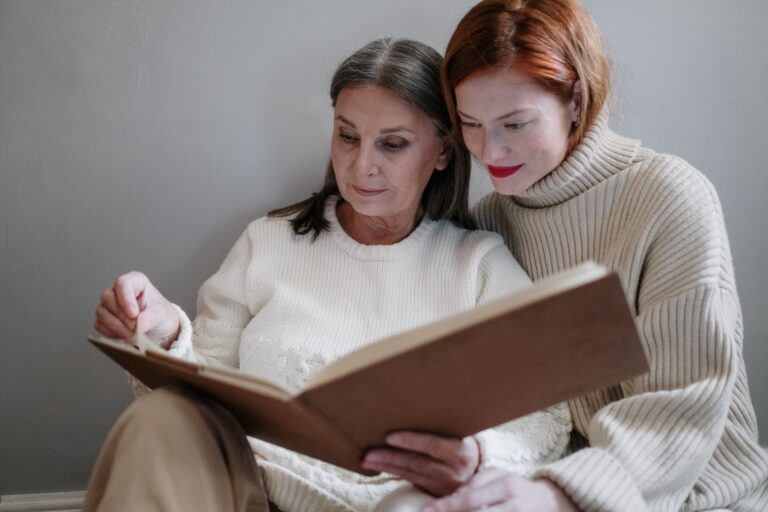
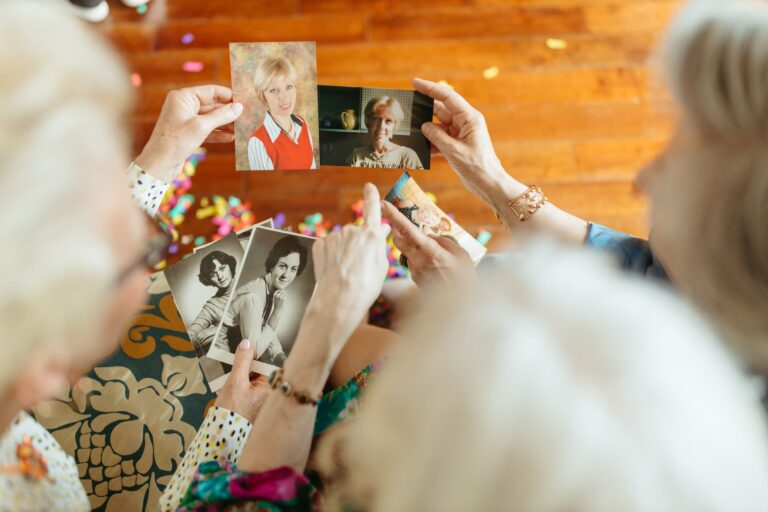
Viewing photographs together with family members and caregivers rebuilds emotional bridges eroded by disease and cultivates compassionate care. Caregivers who feel emotionally connected through shared photographs are more likely to provide attentive, sustained support. The act of sitting together with photos transforms them from images into moments of connection.
Reducing Distress and Behavioral Symptoms
Photo reminiscence therapy significantly reduces behavioral and psychological symptoms, including agitation and anxiety, with long-term care residents exhibiting measurable decreases in depression, enhanced mood, and fewer disruptive behaviors compared to control groups without visual memory interventions, according to a 2024 meta-analysis of research on reminiscence and dementia. The mechanism is not complex reasoning or memory recovery; it is emotional regulation and the calming effect of familiar faces and scenes.
Beyond mood, photographs placed strategically in living spaces function as practical tools. Photographs of family members placed in prominent locations can reduce disorientation and wandering while decreasing use of sedative medications, with dementia patients achieving better wayfinding and behavioral regulation when photos are part of their environment. A photo near a bathroom or bedroom answers the unspoken question "where am I?" through visual recognition rather than language.
Creating an Effective Photo Environment
Photo walls and digital life books combining images, music, and narration improve person-centered care delivery by staff and maintain autobiographical memory, with research emphasizing that photo-sharing should aim for emotional connection, not correction or memory testing. This distinction matters: a caregiver who shows a photograph and says "this is your daughter Susan" is testing memory and risking frustration.
A caregiver who shows the same photo and says "this brings me joy" or "I see the love in this moment" builds connection without judgment. Practical steps for using photographs effectively:.
- Place labeled family photos in common areas and near the person's bed or favorite chair
- Choose recent photos and images from different life stages—variety activates different memory pathways
- Frame or display photos prominently rather than storing them in albums only for special viewing
- View photos together with the person, focusing on emotional response rather than correcting or testing memory
- Rotate images occasionally to maintain novelty and engagement without overwhelming
Understanding the Limits of Photograph Therapy
While photographs are powerful, therapeutic benefit may be temporary or session-dependent, with short-term mood and cognitive improvements documented but sustained long-term behavioral change requiring repeated exposure and integration into routine care rather than one-time interventions. Showing a treasured photograph once may lift mood for an hour; integrating photographs into daily life through consistent placement and routine viewing creates lasting benefit.
This is not a limitation of the tool—it is a realistic description of how any supportive care works in dementia. The goal is not recovery or restoration of memory, but sustained emotional connection, behavioral stability, and maintenance of identity over time.
Frequently Asked Questions
Will photographs help my loved one remember who I am?
Not in the way recovery means. Photographs activate emotional recognition and may trigger a sense of familiarity or warmth rather than a recovered memory of your relationship. The goal is emotional connection and comfort, not memory restoration.
Should I test their memory by showing photos and asking who is in them?
No. Testing memory creates frustration and erodes the emotional benefit. Instead, share photos to build connection—name the person yourself, talk about what you see, or simply sit together with the image.
How often should we look at photographs together?
Consistency matters more than frequency. Integrating photos into daily routines—morning viewing, bedside display, common areas—provides sustained benefit. Research shows repeated exposure works better than occasional intense sessions.
Which photographs work best?
Recent photos, images showing emotional moments (smiling, hugging, celebrating), and pictures of important people in the person's life. Photos from different life stages can activate different memory pathways. Avoid blurry or ambiguous images.