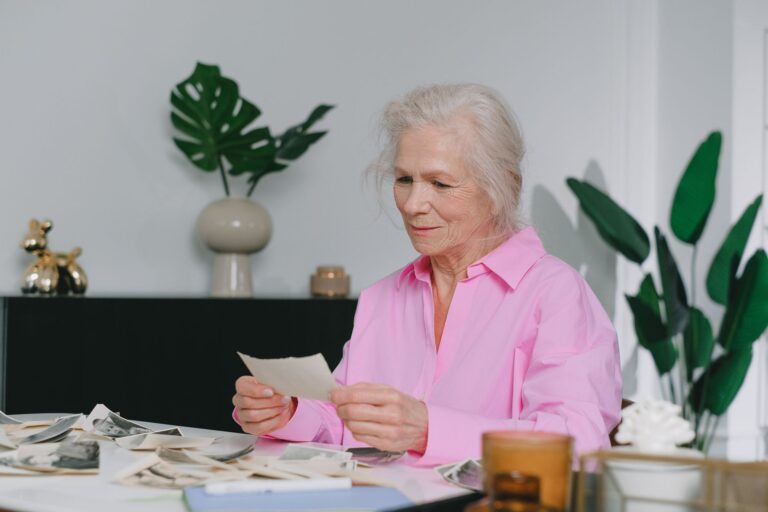
Reminiscence conversations are guided talks about past experiences that use photos, familiar objects, music, and keepsakes as prompts. For early-stage dementia, a step-by-step approach means picking one theme at a time, asking one simple question at a time, and favoring connection over correction. These talks draw on long-term autobiographical memory, which often stays stronger longer than recent memory. That makes the early stage a practical window to start, build a routine, and record what matters for future care.
Medical information disclaimer: This article is for general educational purposes only and does not provide medical advice, diagnosis, or treatment. Always consult a physician or other qualified health professional about symptoms, medications, tests, or treatment decisions.
Table of Contents
- What should you gather first?
- How do you lead the talk?
- What if sad memories come up?
- What can this realistically do?
- Frequently Asked Questions
What should you gather first?
Start with one theme, such as childhood, work, holidays, or music. Add a small memory box or life-story scrapbook with key people, places, and events, as described in Alzheimer's Society guidance on therapy approaches for memory loss. Choose items the person already enjoys or recognizes.
A wedding photo, a work badge, a favorite song, or a familiar kitchen tool can each anchor a short talk. Keep the set small and within reach. One folder, box, or playlist is easier to use than a large collection.
How do you lead the talk?
Set a calm time, limit distractions, and sit where the person can see and hear you well. Hold up one item, name it plainly, and ask one question at a time.
Use short simple sentences, yes/no choices, or two options. The U.S. National Institute on Aging advises this style, plus extra response time and no arguing about facts, in its guidance on helping family and friends understand Alzheimer's disease.
- Show one photo or object and say what it is.
- Ask, "Did you enjoy this music?" or "Was this at home or on holiday?"
- Pause, listen, and follow the person's lead.
- Do not correct errors or test memory.
What if sad memories come up?
Let the person express feelings without rushing to fix them. Pause, offer comfort, and redirect gently if distress grows. Stay with the emotion, not the facts of the story.
Connection matters more than finishing the tale or getting details right. End early when needed and return to a soothing theme. A familiar song, a warm drink, or a short walk can close the talk kindly.
What can this realistically do?
Research suggests modest effects rather than strong ones. A 2018 Cochrane review by Woods and colleagues pooled 22 randomized trials with 1,972 people with dementia and found possible small benefits to quality of life, cognition, communication, and mood, with inconsistent effects across settings. Benefits tend to be strongest in mild-to-moderate dementia, while biographical approaches show weaker effects in severe dementia, according to an Iriss review of reminiscence and life story work.
Reminiscence does not treat, slow, or reverse dementia itself. Its practical value is comfort, engagement, and person-centred knowledge that helps family and staff give better care. Note favorite topics, calming music, important names, and preferred routines in the scrapbook for use during transitions.
Frequently Asked Questions
How long should a session last?
Keep it short, often 15 to 30 minutes, and stop sooner if attention fades or distress appears.
How often should we do it?
Aim for a regular, low-pressure rhythm, such as twice a week, using one theme and a few familiar items each time.