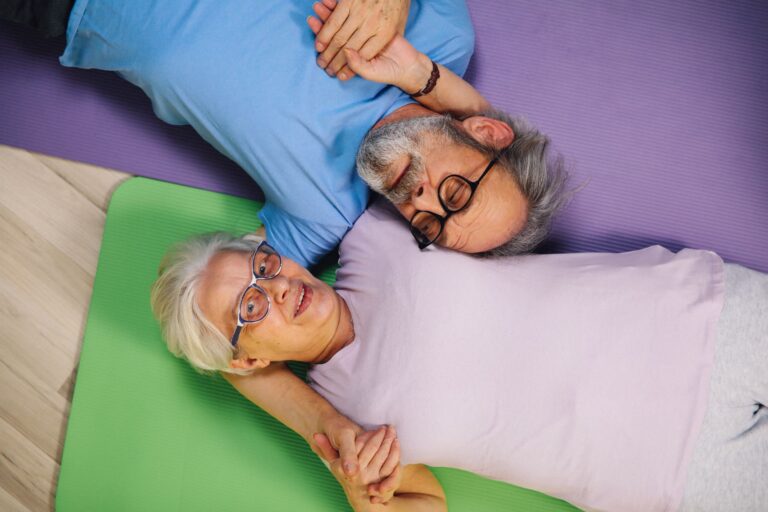
You can build balance training into a realistic dementia prevention routine by pairing short balance-plus-strength sessions with regular walking, starting at low intensity and increasing slowly. Balance training means controlled movements that challenge steadiness, such as standing on one foot or heel-to-toe standing near support. Physical activity supports brain health alongside other habits. The World Health Organization recommends regular physical activity, not smoking, healthy diet, and blood-pressure control to lower dementia risk, according to its 2019 dementia-risk guidance.
Medical information disclaimer: This article is for general educational purposes only and does not provide medical advice, diagnosis, or treatment. Always consult a physician or other qualified health professional about symptoms, medications, tests, or treatment decisions.
Table of Contents
- What a slow-start week looks like
- Why balance helps protect the brain
- How light exercise still counts
- How to increase safely over time
What a slow-start week looks like
For adults 65 and older, WHO guidance calls for 150–300 minutes per week of moderate aerobic activity plus muscle work on two or more days and balance-plus-strength work on three or more days, as summarized by the Barcelona Institute for Global Health in its review of WHO activity guidance. That target is a direction, not a day-one rule.
A slow start keeps the same mix in much smaller doses. A practical week pairs brief walks with short home balance sessions. For example, walk on most days and add balance work on three days.
- Start each balance session beside a sturdy counter or chair for support.
- Practice feet-together standing, heel-to-toe standing, and brief single-leg stands.
- Add sit-to-stand repetitions and light calf raises for leg strength.
- Stop before fatigue and keep walking pace easy enough to talk.
Why balance helps protect the brain
Falls can injure the brain, and brain injury raises dementia risk. People sustaining traumatic brain injury were 24 percent more likely to develop dementia in a 2.8-million-person study, reported by Hospital Health from Lancet Psychiatry in its report on brain injury and dementia. Fewer falls therefore means fewer chances for this kind of harm.
Balance exercise directly lowers fall risk. Balance and functional exercises cut the fall rate by 24 percent in community-dwelling older adults, while combined balance-plus-resistance programs cut it by about 34 percent across 108 trials, according to the American Academy of Family Physicians summary of Cochrane evidence in its falls-prevention review. Leg strength matters because stronger legs steady recovery steps.
How light exercise still counts
You do not need intense workouts for benefit. In the EXERT trial, the largest exercise study in mild cognitive impairment, both low-intensity and moderate-high-intensity exercise produced less cognitive decline than usual care in older adults at risk for Alzheimer's. Light movement is therefore a valid starting point, not a wasted effort.
Use that finding to stay consistent rather than pushing hard early. Choose walking, gentle cycling, water exercise, or dancing for aerobic time. Keep balance sessions short, repeat the same routine until it feels stable, then add one small challenge at a time.
How to increase safely over time
The National Institute on Aging advises beginning at low intensity, gradually increasing amount, and mixing aerobic, strength, and balance activities. Increase only one factor at a time: session length, walking speed, hill or distance, or balance difficulty. Keep support nearby when trying narrower stances, eyes-closed balance, or uneven surfaces.
Seek clinician input when a chronic condition, heart symptom, dizziness, joint problem, recent fall, or new medication affects safety. Bring a short list of current activities, falls or near-falls, and symptoms during exertion. Ask which exercises fit, what warning signs should stop activity, and when to recheck progress.