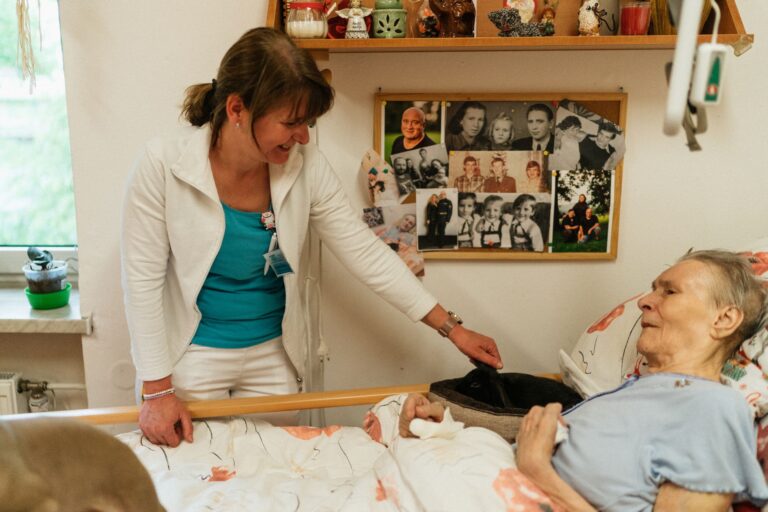
A life story book for someone in late-stage dementia is a short, highly visual collection of photographs, names and key biographical details, built in simple steps: gather material with family, choose a handful of images per life period, pair each with one large-print caption, and make the result durable enough to handle daily. In the later stages the format matters as much as the content — Dementia UK's life story guide advises clear, easy-to-read text in two contrasting colours, laminated pages, and memory boxes of physical objects alongside or instead of a book. Life story work is a standard reminiscence tool in dementia care, and it rests on a useful fact: autobiographical memories remain relatively intact late into the disease, according to research background published via PLOS ONE. A book built around those long-held memories gives family and care staff a reliable way in, even when recent memory and speech have largely gone.
Medical information disclaimer: This article is for general educational purposes only and does not provide medical advice, diagnosis, or treatment. Always consult a physician or other qualified health professional about symptoms, medications, tests, or treatment decisions.
Table of Contents
- Why a life story book still works in late-stage dementia
- Step 1 — Gather the material
- Step 2 — Build the pages for late-stage eyes and hands
- Step 3 — Add objects and sound, not just pages
- Step 4 — Put it to work with care staff
- Frequently Asked Questions
Why a life story book still works in late-stage dementia
The Alzheimer's Association notes that a person in late-stage dementia experiences the world primarily through the senses, and that some core of self may remain even when speech is lost. Its late-stage caregiving guidance specifically recommends looking through old photos, playing favourite music and reading beloved books aloud as ways to connect — exactly the activities a life story book structures. The evidence base is modest but encouraging.
A systematic review of 14 studies by Elfrink and colleagues in International Psychogeriatrics found most life story books were tangible paper books rather than digital, and reported positive effects on cognitive function and depressive symptoms, while cautioning that larger randomized trials are still needed. A 2023 review of reviews in PLOS ONE found that in six of seven reviews, life story books enhanced communication between the person with dementia and relatives, care staff and other residents — the carers benefited too. Researchers also note that as dementia progresses, it becomes increasingly important to offer multisensory cues in a structured way fitted to the person's unique life story. In practice that means a late-stage book leans on images, objects and sound rather than paragraphs of text.
Step 1 — Gather the material
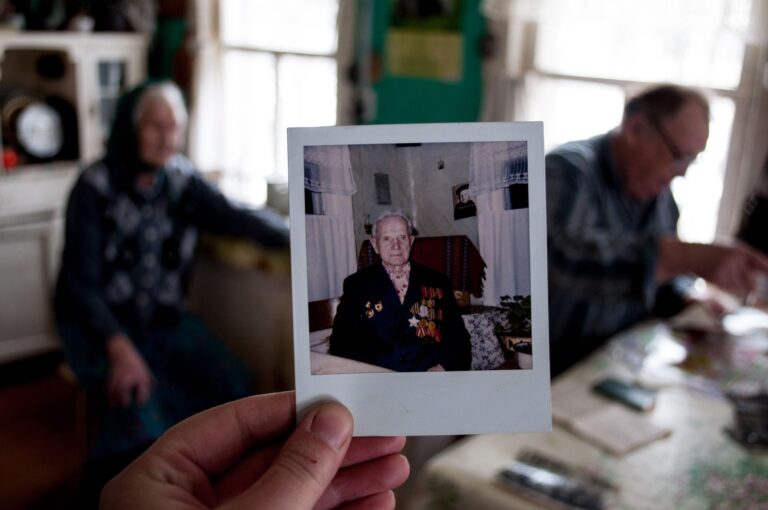
Start by collecting photographs, and lean toward the oldest ones: childhood, early adulthood, wedding, first home, working years. Because early autobiographical memory holds up best, a photo from 1965 will often prompt more recognition than one from last year. Involve other family members, and the person themselves as far as they can participate — pointing, smiling or lingering on a photo counts as input.
Dementia UK offers a free downloadable template covering topics such as food preferences, hobbies and wishes for future care, which works as a checklist of what to gather even if you build your own book. Alongside photos, note the short facts that personalize care: names of parents, siblings, children and pets; jobs held; places lived; favourite music and foods. Care staff use these details to open conversations and tailor routines.
Step 2 — Build the pages for late-stage eyes and hands
Keep it simple. Use one photo per page, or at most two, with a single large caption naming the people and place: "Margaret and her sister Joan, Blackpool, 1958." Dementia UK's advice is clear text in two contrasting colours — dark lettering on a pale page reads far better than decorative fonts or busy layouts.
Order the book chronologically, earliest first, so the strongest memories come first. Keep the whole thing short — a book someone can get through in one sitting is used; a scrapbook of two hundred pages is shelved.
- Choose sharp, uncluttered photos where faces are large and recognisable.
- Write captions as statements, not questions; "Do you remember?" can feel like a test.
- Laminate the pages or use wipe-clean sleeves so the book survives daily handling.
- Bind it in a folder that opens flat and turns easily with limited dexterity.
Step 3 — Add objects and sound, not just pages
For the later stages specifically, Dementia UK recommends memory boxes of meaningful physical objects alongside or instead of a book, because handleable items suit people with sight loss, perceptual problems or advanced dementia better than text. A regimental badge, a baking cutter, a swatch of a familiar fabric, a garden trowel — things the hands know.
Video recordings are a further option the same guide suggests: a short clip of a familiar voice or place can reach someone a page cannot. Pair the book with the person's favourite music during visits, since sensory connection is the route the Alzheimer's Association recommends at this stage. Treat the book, box and recordings as one kit that lives within reach — by the bed or chair, not in a drawer — so staff and visitors actually use it.
Step 4 — Put it to work with care staff
The point of life story work is not the object but the conversations it starts; the PLOS ONE review of reviews found improved communication with care staff and other residents, not only family. Hand a copy to the care home or ward and walk one or two staff members through it. For hospital stays and new care settings, the Alzheimer's Society's free "This is Me" leaflet — in its fourth edition and endorsed by the Royal College of Nursing since 2010 — records background, important people, places, preferences and routines on a short form staff can absorb in minutes.
It works as a one-page companion to the full book: the book for visits and quiet time, the leaflet for handovers. Update both when preferences change, and expect to simplify the book further as the dementia progresses — fewer pages, bigger images, more objects. A caption nobody reads aloud anymore can be replaced by a photograph that still earns a smile.
Frequently Asked Questions
Is a paper book better than a tablet for late-stage dementia?
The Elfrink systematic review found most life story books studied were tangible paper books, and physical formats suit late-stage needs: they can be handled, laminated and left within reach without charging or unlocking.
What if looking at the book causes distress?
Skip the page or close the book and try another sense — music or a familiar object. Leave out painful chapters entirely; the book exists to comfort and connect, not to be a complete biography.
Who should make the book — family or care staff?
Either, ideally together. Family hold the photos and stories; staff know what format survives daily use, and the 2023 PLOS ONE review found the communication benefits extend to both groups.