Simple strength exercises for dementia should match the person's present abilities, not a stage label alone. Use familiar movements in early dementia, guided or seated exercises in the middle stage, and closely supported chair-based movement in later dementia. Strength exercise asks the muscles to work against gravity, body weight, a resistance band, or a light weight. The aim is manageable activity that fits the person's mobility, cognition, health conditions, and preferences.
Medical information disclaimer: This article is for general educational purposes only and does not provide medical advice, diagnosis, or treatment. Always consult a physician or other qualified health professional about symptoms, medications, tests, or treatment decisions.
Table of Contents
- Use ability, not the stage label
- Early stage—preserve familiar routines
- Middle stage—add guidance and shorten sessions
- Later stage—prioritize supported movement
- Check safety and keep expectations realistic
Use ability, not the stage label
dementia stages are broad guides. Symptoms overlap, and people progress differently, so two people described as being in the same stage may need very different support. The Alzheimer's Society advises adapting activity to the individual's current abilities.
Before choosing an exercise, consider whether the person can follow the movement, remain steady, and complete it without distress. Also notice which activities feel familiar or enjoyable. A slower, simpler version is often more appropriate than an entirely new routine. Keep the movement easy to recognize:.
- Demonstrate it instead of relying on a long explanation.
- Change one part of the activity at a time.
- Exercise alongside the person when guidance is needed.
- Move from standing to seated activity if standing becomes difficult.
- Stop if the person becomes uncomfortable, frightened, dizzy, or short of breath.
Early stage—preserve familiar routines
In early-stage dementia, many activities may remain manageable independently or with limited support. The person can often continue familiar exercise while simplifying movements or slowing the pace when necessary. Suitable options may include sit-to-stands, heel and toe raises, arm raises, leg straightening, or seated rowing motions.
Choose movements the person already recognizes and can perform steadily. Resistance bands or light weights can add difficulty gradually, but added resistance is optional. Avoid turning exercise into a memory test. A demonstration, a consistent order, and fewer movement choices can reduce cognitive demands while preserving participation.
Middle stage—add guidance and shorten sessions
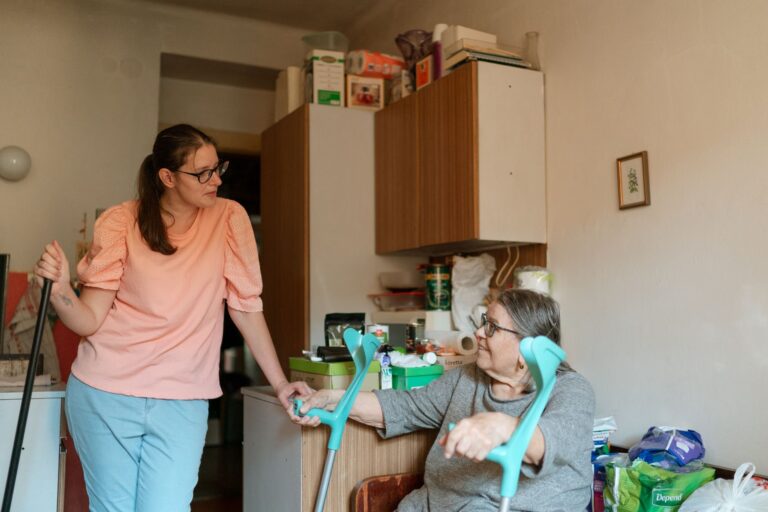
Middle-stage dementia commonly brings a greater need for help with daily tasks. Strength activity may therefore work better when a caregiver demonstrates each movement, joins in, and keeps the routine simple and enjoyable. Several short sessions may be easier than one long workout.
The World Health Organization recommends physical-exercise interventions for people living with dementia, typically lasting 30–45 minutes, three or four times weekly, for more than 12 weeks. That overall pattern can be divided into shorter periods when one continuous session is not manageable. Seated work can reduce the demands of standing. The Alzheimer's Society's chair-based examples include heel and toe raises, leg straightening, arm raises, rowing motions, and sit-to-stands for those who can rise safely.
Later stage—prioritize supported movement
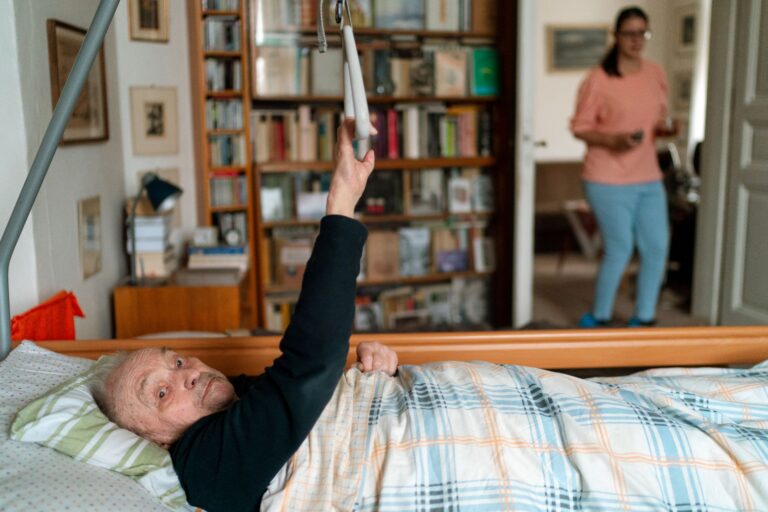
In later-stage dementia, a person may lose the ability to walk, stand, or rise from a chair. Fall risk also increases, so the practical focus shifts from completing a conventional workout to enabling safe, supported movement. Depending on current ability, activity may involve supported walking or chair-based arm and leg movements.
A physiotherapist or occupational therapist can advise on positioning, assistance, and appropriate adaptations when mobility has changed substantially. Do not force standing exercises because they once formed part of the routine. If rising from a chair is no longer manageable, use seated arm raises, leg straightening, or heel and toe movements instead.
Check safety and keep expectations realistic
Seated exercise is not automatically risk-free because it can strain the lower back. Consult a clinician before beginning, particularly if the person has balance problems, frequent falls, heart symptoms, bone or joint problems, dizziness, or breathing problems.
Strength activity should not be presented as a proven way to slow dementia. In the 494-person DAPA randomized trial reported in The BMJ, four months of supervised moderate-to-high-intensity aerobic and strength exercise improved fitness but did not slow cognitive impairment or improve daily function or quality of life.