Seeing joy during a grandchild's visit can mean the person with dementia feels safe, happy, or emotionally connected in that moment. It does not prove recognition, lasting memory, or cognitive improvement. A person may respond warmly to familiar company without knowing exactly who someone is. Alzheimer's Society explains that feelings of happiness and safety can remain even when a loved one cannot be recognized or placed.
Medical information disclaimer: This article is for general educational purposes only and does not provide medical advice, diagnosis, or treatment. Always consult a physician or other qualified health professional about symptoms, medications, tests, or treatment decisions.
Table of Contents
- How can joy remain when memory fades?
- Which signals should a caregiver watch?
- How should the next visit be planned?
- Help the grandchild participate without pressure
- When does a behavior change need medical attention?
How can joy remain when memory fades?
Memory and emotion do not always fade together. In one small experiment, 17 people with very mild-to-mild probable Alzheimer's disease watched happy film clips. They reported increased happiness afterward despite severely impaired recall of what they had watched.
The study, Feelings Without Memory in Alzheimer Disease, suggests that a positive feeling can outlast memory of its cause. However, it involved laboratory films, not family visits, and did not study later-stage dementia. It supports a possibility, not a prediction for any individual. For a caregiver, the useful question is not "Did they know their grandchild?" It is "Did this interaction help them feel comfortable and engaged?".
Which signals should a caregiver watch?
Speech and recognition are only two forms of communication. A person with dementia may express emotion through facial expressions, gestures, sounds, and behavior. Observe the whole visit rather than relying on one smile. Notice whether the person becomes engaged, remains comfortable, or begins to lose attention.
Frustration, withdrawal, or a clear change in behavior may indicate that the interaction has become tiring or overstimulating. These signals are individual. A lively conversation may delight someone one day and overwhelm that same person on another day. Mood and current abilities matter more than completing a planned activity.
How should the next visit be planned?
Treat joy as a cue to repeat the conditions that appeared to support it. Keep the visit low-pressure and choose an activity that does not depend on remembering names, dates, or relationships.
Possible activities include: Large gatherings can overwhelm some people with dementia. The Alzheimer's Association's activity guidance advises matching activities to the person's abilities and mood, then changing or ending them when attention fades or frustration rises.
- Listening to familiar music
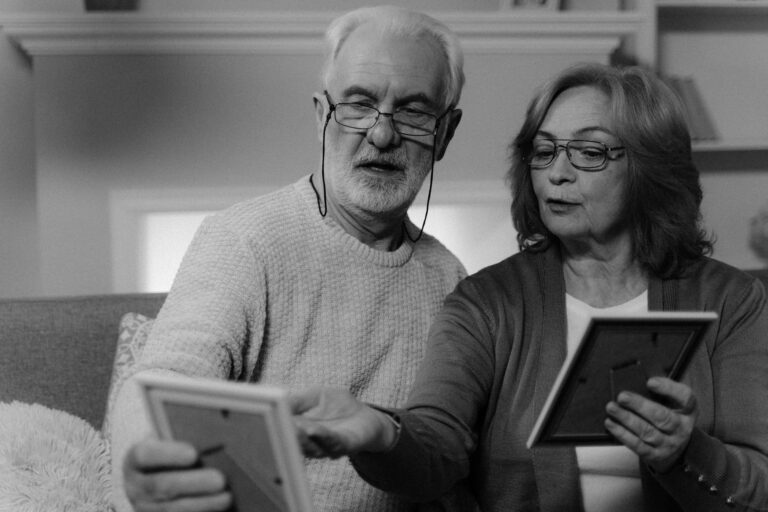
- Looking at family photographs without quizzing
- Reading a short passage aloud
- Folding towels or doing another simple shared task
- Sitting together without requiring conversation
Help the grandchild participate without pressure
Children and teens may feel sad, afraid, confused, guilty, or embarrassed about a relative's dementia. Adults should explain the changes honestly and allow the grandchild to express those feelings. Before the visit, make clear that forgotten names or unusual behavior are caused by dementia.
Give the grandchild permission to take a break or choose a simple activity. Avoid turning the visit into a recognition test. Instead of asking, "Do you know who this is?" offer context: "This is your granddaughter, Maya. She brought a book to read with you.".
When does a behavior change need medical attention?
A pleasant response during a visit is an interaction cue. A sudden, marked behavior change is different and should not automatically be blamed on dementia or visitors.
Infection, fever, dehydration, medication effects, and pain can cause serious distress or delirium. The National Institute on Aging advises medical attention for abrupt changes rather than assuming they are part of dementia.