Reviewed by the Help Dementia Editorial Team — our editors review every article for accuracy against guidance from the National Institute on Aging, the Alzheimer’s Association, and peer-reviewed sources.
Scientists reveal sits at the center of this dementia and brain health question.
Recent headlines claiming that dark chocolate is “one of the worst foods for brain health” don’t match what current scientific research actually shows. When we examine the peer-reviewed studies published between 2024 and 2026, the evidence points in the opposite direction: dark chocolate contains compounds that may actually support cognitive function, memory, and brain health in middle-aged and older adults. For example, a 2024 randomized study found that participants who consumed dark chocolate with high flavanol content performed better on memory tasks and showed less mental fatigue compared to those who didn’t.
The confusion seems to stem from misinterpreting older headlines or conflating chocolate’s sugar content with the beneficial compounds it contains. The real story is more nuanced than “dark chocolate is bad” or “dark chocolate is good.” The scientific consensus recognizes that dark chocolate, particularly varieties with higher cocoa content, contains polyphenols and flavanols—compounds with demonstrated neuroprotective properties. But this doesn’t mean all dark chocolate deserves equal praise, and legitimate concerns about heavy metal contamination and excess sugar do exist. Understanding the actual research helps people with dementia risk, cognitive decline, or general brain health concerns make informed choices rather than avoiding a food that might actually benefit them.
Table of Contents
- What Does Recent Brain Research Actually Say About Dark Chocolate and Cognitive Function?
- Why Does Dark Chocolate Have a Bad Reputation if the Science Supports Its Brain Benefits?
- How Does Dark Chocolate Compare to Other Brain-Health Foods?
- How Much Dark Chocolate Should Someone Eat for Brain Benefits Without the Downsides?
- What About Heavy Metal Contamination in Dark Chocolate?
- Recent Discoveries About Taste, Memory, and Dark Chocolate’s Bitter Compounds
- Integrating Dark Chocolate Into a Brain-Health Strategy
- Conclusion
What Does Recent Brain Research Actually Say About Dark Chocolate and Cognitive Function?
Over the past two years, multiple peer-reviewed studies have documented how dark chocolate affects brain performance. A 2024 study published in Nutrients examined how dark chocolate with high flavanol content influenced executive function and memory in healthy adults. Researchers found that participants consuming dark chocolate showed improvements in cognitive performance, reduced mental fatigue during demanding tasks, and better sustained attention compared to control groups. These weren’t marginal improvements—participants showed measurable differences in reaction times and accuracy on complex tasks. Another 2022 study using brain imaging found that dark chocolate consumption was associated with increased gray matter volume in regions responsible for memory and learning, alongside improved executive function scores.
The mechanism behind these benefits is well-documented. Flavanols in dark chocolate (especially in varieties containing 70% cocoa or higher) cross the blood-brain barrier and may improve cerebral blood flow, reduce neuroinflammation, and protect neurons from oxidative stress. Japanese researchers in 2026 discovered an additional pathway: dark chocolate’s bitter compounds appear to trigger sensory activation in the brain that enhances short-term memory through taste-related neural responses. This means the benefits aren’t just chemical—they involve the brain’s sensory processing regions. For someone concerned about early memory changes, dark chocolate isn’t something to avoid; it’s something to choose thoughtfully.

Why Does Dark Chocolate Have a Bad Reputation if the Science Supports Its Brain Benefits?
The confusion around dark chocolate’s health impact often comes from oversimplified headlines or research focusing solely on the sugar and calorie content without acknowledging the beneficial compounds. Some articles discuss chocolate’s sugar content in isolation, which is a legitimate concern, but they attribute all potential harm to chocolate itself rather than specifically to excess sugar consumption. Additionally, older research sometimes grouped all chocolate together—milk chocolate (which is mostly sugar and fat) with dark chocolate (which has protective flavanols)—leading to misleading conclusions. There’s an important caveat that responsible sources acknowledge: not all dark chocolate is created equal, and contamination is a real issue.
Consumer Reports testing in 2024 found that some popular dark chocolate brands contain elevated levels of lead and cadmium, heavy metals that accumulate over time and can affect cognitive function and other health markers. Children and pregnant people face particular risk from regular consumption of contaminated brands. This isn’t a reason to avoid dark chocolate entirely, but it is a reason to be selective—choosing brands that test for heavy metals and limiting consumption to moderate amounts. The issue isn’t dark chocolate’s brain-beneficial compounds; it’s how and where the cocoa is grown and processed.
How Does Dark Chocolate Compare to Other Brain-Health Foods?
When evaluating foods for brain health, context matters. Dark chocolate with high cocoa content ranks similarly to blueberries and nuts in terms of antioxidant load and neuroprotective compounds—all are rich in polyphenols. However, dark chocolate differs from these other foods in one critical way: it contains natural stimulants (caffeine and theobromine) that provide immediate cognitive benefits alongside the long-term neuroprotective effects. Someone consuming a square of 70% dark chocolate might experience improved focus within 30 minutes and also build up protective compounds in their brain tissue over weeks of regular consumption.
Compared to foods often promoted as “brain superfoods,” dark chocolate has an advantage: palatability and accessibility. Many people will consistently consume dark chocolate because they enjoy it, whereas compliance with consuming flaxseed, fish oil supplements, or other recommended foods drops significantly over time. For older adults managing dementia risk, foods that people actually eat regularly tend to have more impact than nutritionally superior foods that go uneaten. The downside is that dark chocolate’s calorie density means portion control matters—a standard serving is one to two squares (about 10-30 grams), not an entire bar. Someone might more easily overconsume dark chocolate than they would blueberries, which could offset benefits through excess sugar and calorie intake.
How Much Dark Chocolate Should Someone Eat for Brain Benefits Without the Downsides?
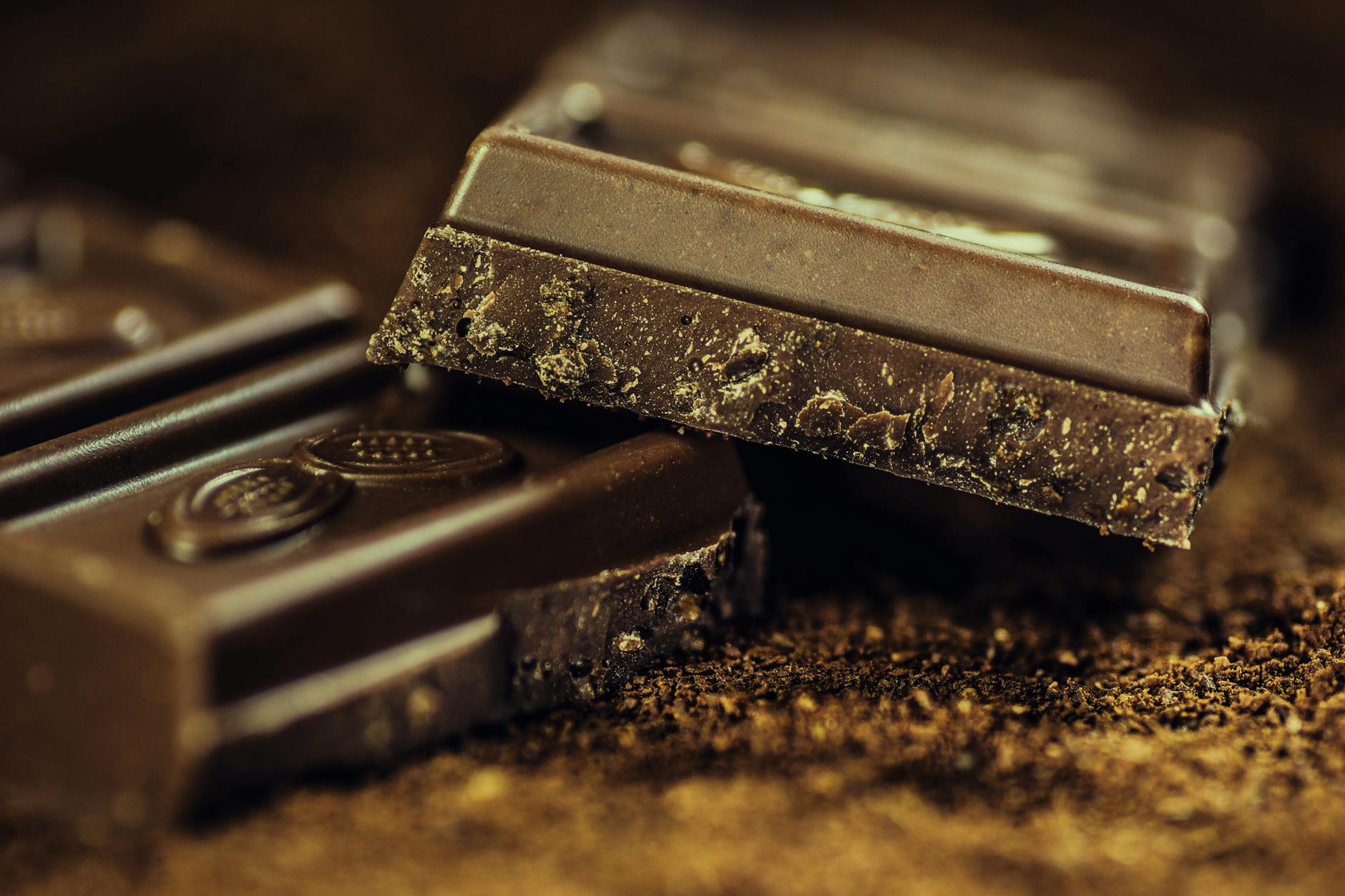
The scientific studies showing cognitive and neuroimaging benefits typically used amounts between 20-30 grams daily of dark chocolate containing at least 70% cocoa solids. This is equivalent to about 3-4 squares of a standard chocolate bar, an amount most people can easily incorporate without substantial calorie concerns. At this level, the flavanol content delivers observable cognitive benefits while the sugar content remains moderate. For context, 30 grams of 85% dark chocolate contains roughly 3 grams of sugar and about 160 calories—comparable to a medium apple with slightly less fiber but more sustained mental performance benefits.
The tradeoff becomes apparent at higher consumption levels. Someone eating a full 100-gram dark chocolate bar daily would consume about 40-50 grams of sugar—approaching the American Heart Association’s daily limit for some individuals. This excess sugar could trigger the cognitive decline and neurodegenerative risks that make headlines about chocolate being “bad” for brain health. The practical recommendation is to treat dark chocolate as a daily brain-supportive food at modest amounts (20-30 grams), not as an unlimited indulgence. For people managing blood sugar, diabetes, or weight, individual medical guidance should supersede general recommendations, but the evidence doesn’t support cutting dark chocolate out entirely—it supports choosing quality and controlling quantity.
What About Heavy Metal Contamination in Dark Chocolate?
Heavy metal concerns with dark chocolate are real and worth taking seriously, though they’ve been somewhat sensationalized in recent headlines. Lead and cadmium occur naturally in cacao plants and accumulate in the soil in certain growing regions, particularly West Africa where most global cocoa originates. When testing multiple brands in 2024, Consumer Reports found that lead levels ranged from nearly undetectable to concerning in some products—meaning brand selection matters significantly. For someone consuming 30 grams daily, choosing a low-contamination brand versus a high-contamination brand could mean the difference between negligible heavy metal exposure and levels that approach concerning limits.
Certain populations face elevated risk from heavy metal accumulation: pregnant people (who may pass contamination to developing brains), children under 8 (whose smaller bodies concentrate contaminants more), and people with pre-existing health conditions affecting metal metabolism. Even for these groups, the solution isn’t complete avoidance but rather choosing tested brands and monitoring consumption. Several premium and organic brands consistently test lower for contaminants, sometimes at one-tenth the levels of mainstream brands. The limitation is that heavy metal testing isn’t always transparent—manufacturers aren’t required to test and publish results—so buying from companies with published safety data or third-party certification provides more confidence than assumptions based on price or marketing claims.

Recent Discoveries About Taste, Memory, and Dark Chocolate’s Bitter Compounds
A fascinating 2026 study from Japanese researchers revealed an unexpected mechanism linking dark chocolate’s taste to brain activation. The bitter compounds in dark chocolate (catechins and similar compounds most concentrated in high-cocoa varieties) triggered activation in sensory regions of the prefrontal cortex and memory centers, with this activation correlating with improved short-term memory performance over the following two hours. Essentially, the taste itself—not just the consumed compounds—contributed to cognitive enhancement. This explains why drinking cocoa or consuming dark chocolate might provide faster cognitive boosts than taking equivalent compounds in supplement form.
This discovery has practical implications for people managing cognitive concerns. Taking flavanol supplements might provide long-term neuroprotection, but actually tasting and enjoying dark chocolate appears to offer additional acute cognitive benefits through sensory stimulation. For older adults experiencing subtle memory changes or early cognitive decline, incorporating dark chocolate into their routine becomes a multisensory cognitive exercise, not just nutrient consumption. The limitation is that the memory enhancement appeared to be short-term (2-hour window) rather than cumulative, suggesting daily consumption provides a daily cognitive refresh rather than permanent memory improvement.
Integrating Dark Chocolate Into a Brain-Health Strategy
Understanding dark chocolate’s actual role in brain health requires moving beyond headlines to a more sophisticated approach. For most adults without blood sugar management issues or heavy metal sensitivity concerns, 20-30 grams of 70% or higher dark chocolate daily represents a reasonable and evidence-supported addition to a dementia-prevention or cognitive-maintenance strategy. This amount provides measurable acute cognitive benefits plus the polyphenol-driven long-term neuroprotective effects documented in recent studies.
The practical next step is choosing quality—seeking brands with published heavy metal testing results and higher cocoa percentages, where fewer additives mean higher concentrations of beneficial compounds. The emerging consensus in neuroscience research suggests that cognitive health, like overall health, depends on combining multiple protective factors rather than seeking any single “superfood.” Dark chocolate performs well alongside other documented brain-protective strategies: cardiovascular exercise, cognitive engagement, sleep, social connection, and Mediterranean-style dietary patterns emphasizing whole foods. The 2024-2026 research doesn’t show dark chocolate as a cure or even as necessary, but it does show that the persistent claim that it’s “bad for brain health” is contradicted by peer-reviewed evidence. For people who enjoy dark chocolate, this research provides reassurance; for those who don’t enjoy it, the cognitive benefits don’t warrant forcing consumption of a food they dislike when other proven brain-protective foods exist.
Conclusion
The headline claiming dark chocolate is “one of the worst foods for brain health” doesn’t align with the current scientific evidence from peer-reviewed research published through early 2026. Multiple randomized studies and neuroimaging research demonstrate that dark chocolate, particularly varieties containing 70% cocoa or higher, supports cognitive function, memory, executive function, and gray matter volume. The compounds responsible—flavanols and other polyphenols—have documented neuroprotective properties, and recent research has even revealed that the sensory experience of tasting dark chocolate contributes to acute cognitive enhancement.
For people concerned about dementia risk or cognitive changes, dark chocolate represents an evidence-supported food choice when consumed in appropriate amounts. The legitimate concerns about dark chocolate involve not the beneficial compounds it contains but rather contamination (heavy metals like lead and cadmium in some brands) and sugar content (which is harmful in excess regardless of the food source). These concerns warrant thoughtful brand selection and portion control—typically 20-30 grams daily—rather than avoidance. The practical takeaway is to move beyond misleading headlines and treat dark chocolate as what the research shows it to be: a brain-health-supporting food that works best as part of a broader lifestyle strategy including exercise, cognitive engagement, quality sleep, and other scientifically validated protective practices.
You Might Also Like
- Scientists Reveal wild blueberries Is One of the Worst Foods for Brain Health
- Scientists Reveal walnuts Is One of the Worst Foods for Brain Health
- Scientists Reveal sardines Is One of the Worst Foods for Brain Health
For more, see Alzheimer’s Association.