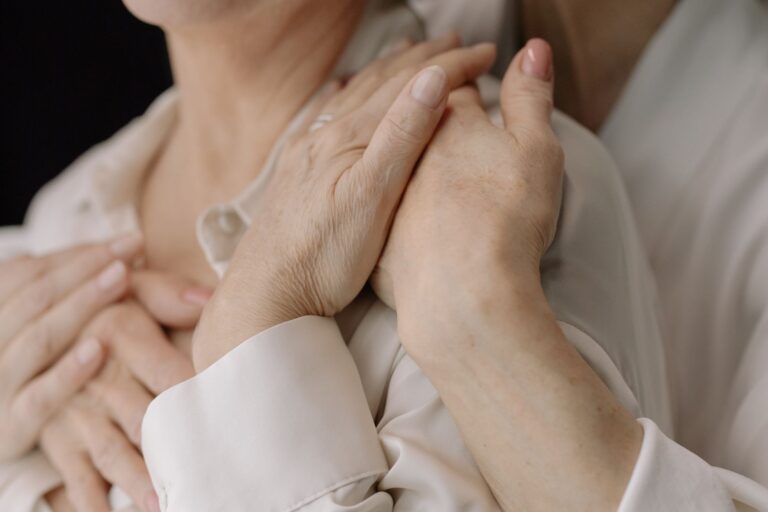
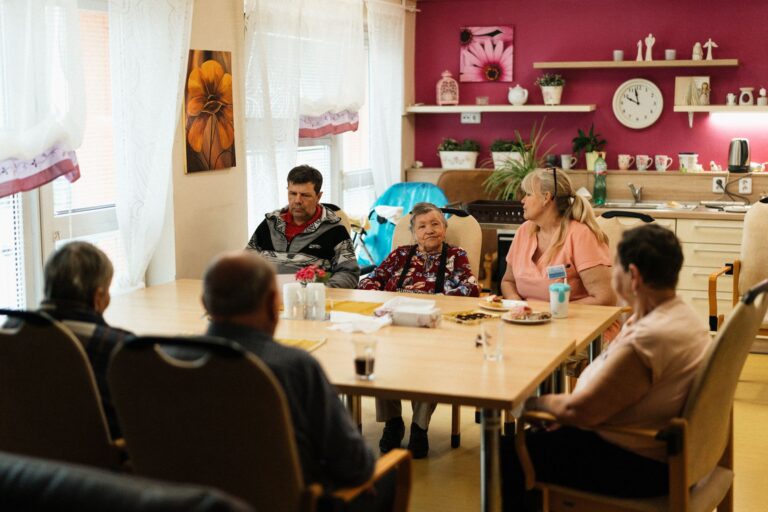
Repeating a family blessing or familiar prayer is a practical way to create meaningful connection with someone who has dementia, even when language and memory are fading. Research shows that deeply learned prayers and family sayings are among the last things a person loses—stored in a part of memory called procedural memory that outlasts verbal and cognitive decline.
This means a blessing recited together can remain accessible and soothing when conversation feels impossible. Family blessings work through multiple pathways: they calm anxiety, reduce behavioral symptoms, and reinforce a sense of continuity and belonging. For caregivers, repeating a blessing creates a shared ritual that feels less demanding than trying to make conversation work and can reduce stress on both sides.
Medical information disclaimer: This article is for general educational purposes only and does not provide medical advice, diagnosis, or treatment. Always consult a physician or other qualified health professional about symptoms, medications, tests, or treatment decisions.
Table of Contents
- How Memory for Familiar Blessings Survives Dementia
- The Calming and Behavioral Benefits
- How to Build and Use a Family Blessing Practice
- What to Expect and Limitations
- Adjusting the Practice Over Time
- Frequently Asked Questions
How Memory for Familiar Blessings Survives Dementia
The brain stores routines and deeply practiced behaviors separately from facts and names. Individuals with severe dementia retain procedural memories for prayers and familiar sayings—even those with minimal cognitive awareness can continue to recite or participate in a blessing that has been repeated for years or decades. This capacity persists because procedural memory uses different neural pathways than semantic memory (facts) or episodic memory (specific events), which are damaged early in dementia.
A family blessing—a prayer, phrase, or saying repeated at key moments like meals or bedtime—becomes overlearned: embedded through repetition over years or a lifetime. When cognitive systems falter, this procedural anchor often holds. The person may not remember your name or what they ate this morning, but the familiar rhythm of "God bless us all" or "May we be well" can surface and be spoken aloud.
The Calming and Behavioral Benefits
Regular spiritual practices reduce anxiety and activate neurological pathways associated with relaxation and emotional regulation. For people with dementia, this means a repeated blessing can provide immediate calming effect—lower agitation, steadier breathing, and a shift toward emotional safety during moments of confusion or distress. The research is specific: private prayer was associated with 46% fewer behavioral and psychological symptoms in older adults with mild cognitive impairment—including reduced aggression, improved sleep, and better cognitive performance. Familiar routines and rituals create what researchers call "islands of coherence," moments of emotional clarity and continuity despite fluctuating cognition.
A blessing recited at the same time each day becomes a reliable marker—something predictable in an increasingly confusing world. These benefits extend beyond the person with dementia. Positive emotional connection between caregiver and person with dementia correlates with fewer behavioral incidents and reduced caregiver stress. A shared blessing is an act of presence that does not depend on new information or flawless memory—it works even when conversation breaks down.
How to Build and Use a Family Blessing Practice
Start by identifying a blessing or prayer that resonates with your family's values or history. This might be a religious prayer, a secular affirmation, a short family phrase, or a blessing you create together. The content matters less than familiarity and repetition. Practice it at consistent moments: before meals, at bedtime, during a transition that is often difficult, or when anxiety or agitation rises. Keep the blessing short—one to three sentences—so it is easy to remember and repeat. Speak it slowly and calmly, making eye contact or gentle physical contact if the person is receptive.
If the person with dementia knows the blessing, invite them to say it with you or to complete key words. If it is new to them, repetition over weeks can build familiarity. Consistency matters more than length; a 30-second ritual practiced daily is more effective than an elaborate once-monthly ceremony. Watch for signs that the blessing is working: calmer breathing, reduced restlessness, increased eye contact, or a softening of facial tension. Some people will gradually learn to anticipate it or ask for it. Others will simply respond with quietness. Document what works—the timing, the wording, the setting—so all caregivers can offer the same experience.
What to Expect and Limitations
Early dementia often brings stronger responses: the person may recite the blessing with you, remember it between practices, or express comfort. In moderate to advanced dementia, the response may be quieter—a pause, a slight nod, or simply a calming of agitation. This does not mean the practice is failing; the neurological effect persists even when outward signs are subtle. The blessing does not reverse cognitive decline or restore lost memories. It is not a treatment for dementia itself.
Instead, it is a palliative tool—one that reduces suffering, creates moments of connection, and gives caregivers a structured way to offer comfort when other communication fails. Its power lies in repetition and consistency, not in magic or exceptional content. Some people have no religious or spiritual tradition to draw from. In this case, a family motto, a poem, a meaningful song lyric, or a custom phrase (e.g., "We are together, we are safe") works equally well. What matters is the ritual itself—the predictable, shared practice—not doctrinal authenticity.
Adjusting the Practice Over Time
As dementia deepens, you may need to shorten or simplify the blessing. A person who initially recited a full prayer might eventually respond to only the first line, then a single word. This is normal progression, not failure. Adapt by repeating just the part that still engages them.
A simple "Be well" or a single meaningful phrase can carry the same calming weight as a longer text. Caregivers sometimes struggle with repeating the blessing when they feel emotionally raw or skeptical. Allowing yourself to feel the ritual—to slow down and genuinely offer the words—deepens its effect. Many family caregivers report that the blessing practice becomes as grounding for them as for the person with dementia, creating a moment of shared humanity in caregiving that can otherwise feel depleting and one-directional.
Frequently Asked Questions
What if my family has no religious tradition or formal blessing?
Create a simple family phrase or affirmation: "We love you," "You are safe," or "May we be well together." Consistency and calm delivery matter more than religious content.
Will the person with dementia eventually forget the blessing?
Procedurally learned practices persist longer than new information, but some simplification may occur in late dementia. Adapt by shortening to the part that still resonates.
How often should we repeat it?
Daily practice is most effective. Choose a consistent time—meals, bedtime, or before a typically difficult transition—so it becomes an anchor the person can anticipate.
Can a blessing reduce medication needs?
No. It is a palliative complement to medical care, not a replacement. Discuss all care decisions with the person's healthcare team.