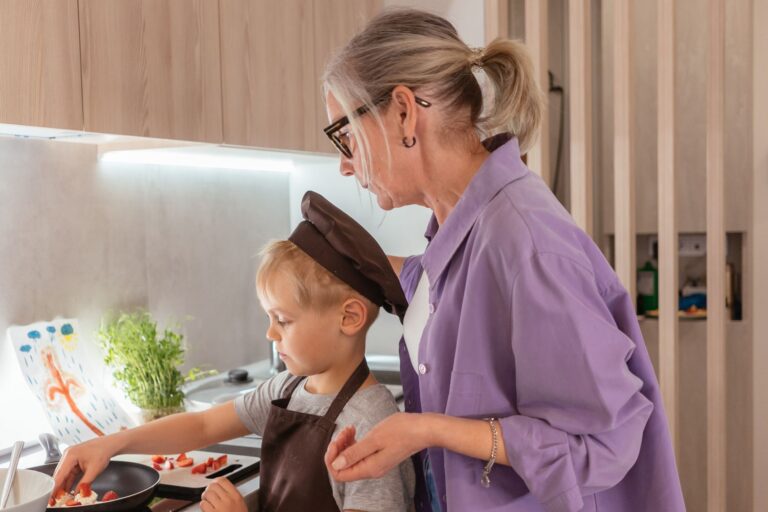
No-cook food preparation for dementia home care means setting up soft, bite-sized foods that need no stove or oven. It centers on small portions, finger foods, and strict cold-food safety. Finger foods are small pieces eaten by hand without cutlery. This approach helps when appetite drops, chewing is hard, or the person wanders or feels restless at meals.
Medical information disclaimer: This article is for general educational purposes only and does not provide medical advice, diagnosis, or treatment. Always consult a physician or other qualified health professional about symptoms, medications, tests, or treatment decisions.
Table of Contents
- What setup helps eating go better?
- Which no-cook supplies should you stock?
- How should you serve through the day?
- What safety limits need attention?
What setup helps eating go better?
Use plain, high-contrast plates that make food easy to see. Keep portions pre-cut and pre-portioned so serving is quick and calm. Offer a small amount at a time rather than a full plate.
Clear the table of extra items that can distract or confuse. Keep an appliance thermometer in the refrigerator to check cold storage. Replace worn plates or containers that make food hard to pick up.
Which no-cook supplies should you stock?
Stock soft foods that are easy to pick up and chew. Good choices include small tuna sandwiches, small sandwiches, crackers with soft cheese, cheese cubes, yogurt, cottage cheese, applesauce, orange segments, and cut fruit. According to Carers UK, these finger foods help people who struggle with cutlery or feel restless at mealtimes Carers UK guidance on dementia and nutrition.
The Alzheimer's Association also advises bite-sized finger foods that are easy to pick up, such as tuna sandwiches and orange segments. The same Association advises soft options such as applesauce, cottage cheese, and foods cut into bite-size pieces. Avoid hard-to-chew foods such as raw carrots. The Alzheimer's Association warns that middle- and late-stage Alzheimer's often brings swallowing problems that can cause choking and weight loss.
How should you serve through the day?
Offer several smaller meals through the day instead of three large ones. Give small amounts at a time, cut food small, and make sure it is soft enough to eat.
The National Institute on Aging advises this pattern for late-stage care National Institute on Aging guidance on late-stage Alzheimer's care. Stay nearby during meals without rushing. Stop and seek advice if coughing, choking, or new weight loss occurs.
- Serve one small plate or bowl at a time
- Cut sandwiches, fruit, and cheese into bite-size pieces
- Choose soft textures over hard or crunchy foods
- Pause between bites and watch for pocketing food or coughing
What safety limits need attention?
Swallowing difficulty is more than slow eating. The National Institute on Deafness and Other Communication Disorders defines dysphagia as a swallowing disorder that can let food or liquid enter the airway, causing choking, aspiration pneumonia, malnutrition, and dehydration. Do not rely on finger foods alone for swallowing difficulty.
Texture changes and thickened liquids need clinician and dietitian guidance. Cold-food safety matters because many no-cook foods are perishable. According to FoodSafety.gov, refrigerate meat, dairy, cut produce, and deli salads within 2 hours FoodSafety.gov steps for food safety. Keep the refrigerator at 40°F or below and the freezer at 0°F or below, because bacteria multiply fastest between 40°F and 140°F.