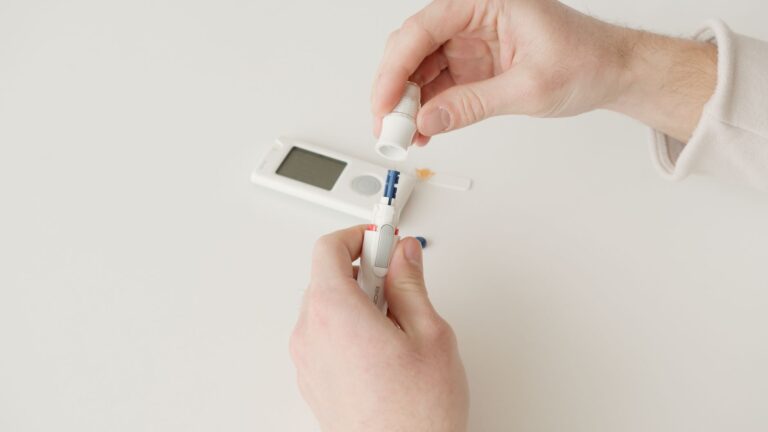
Next-generation assays sits at the center of this dementia and brain health question.
Next-generation assays are fundamentally changing how clinicians can detect neurodegenerative diseases, moving detection from late-stage symptoms to measurable biomarkers years before cognitive decline becomes apparent. Recent product launches demonstrate just how far this technology has advanced. Spear Bio’s new SPEAR UltraDetect immunoassays, introduced at the 2026 Alzheimer’s and Parkinson’s Disease Conference, achieved 100% quantifiability of brain-derived phosphorylated tau-217 (BD-pTau 217) across both healthy and diseased plasma samples.
Meanwhile, Bio-Techne launched Simple Plex Ultra-Sensitive Assays in January 2026 capable of detecting key biomarkers at femtogram levels—that’s one millionth of a billionth of a gram—in under three hours. These advances are not merely incremental improvements; they represent a shift in what’s possible for early disease detection and monitoring across Alzheimer’s disease, Parkinson’s disease, frontotemporal dementia, and ALS. This article explores how these assays work, what biomarkers they measure, the infrastructure supporting their development, and what these advances mean for patients seeking early diagnosis.
Table of Contents
- What Technologies Enable Ultra-Sensitive Detection of Disease Biomarkers?
- The Latest Immunoassay Products Changing Clinical Practice
- Key Biomarkers Identified as Critical for Disease Detection
- Large-Scale Data and the Foundation for Assay Development
- Multi-Biofluid Detection and Sampling Flexibility
- Artificial Intelligence in Predicting Future Disease Progression
- Clinical Translation and the Path Forward
- Conclusion
What Technologies Enable Ultra-Sensitive Detection of Disease Biomarkers?
The leap in assay sensitivity comes from fundamentally different detection technologies compared to conventional blood tests. Advanced platforms like Simoa (Single Molecule Array), mass spectrometry, and NULISA (Nucleic Acid Linked Immunosorbent Assay) now enable detection of biomarkers at concentrations so low that standard laboratory equipment would miss them entirely. These ultra-sensitive methods work by isolating and measuring individual molecules or small clusters of molecules, rather than averaging across bulk solutions. This distinction matters because neurodegenerative disease biomarkers often circulate in blood at concentrations measured in picograms or femtograms—amounts that older immunoassays couldn’t reliably capture.
The practical advantage is specificity and earlier detection. Where a conventional assay might detect phosphorylated tau only in advanced disease stages, an ultra-sensitive assay can identify the same biomarker when pathology is just beginning. Bio-Techne’s platform detects NFL (neurofilament light chain), GFAP (glial fibrillary acidic protein), phosphorylated tau-217, and amyloid-beta 1-42 at femtogram levels, with results in under three hours—fast enough for clinical decision-making. However, there is a limitation: these assays are expensive, require specialized equipment, and are not yet widely available in routine clinical laboratories, meaning access remains concentrated in research centers and specialized clinics.

The Latest Immunoassay Products Changing Clinical Practice
Spear Bio’s introduction of three distinct SPEAR UltraDetect assays represents a significant expansion of available biomarker testing. The BD-pTau 217 assay measures brain-derived phosphorylated tau, which has emerged as one of the most specific markers of Alzheimer’s pathology. The α-synuclein and phospho-Ser129-α-synuclein assays target Parkinson’s disease and Lewy body disease biomarkers. The achievement of 100% quantifiability—meaning the assay successfully quantified the biomarker in every single tested sample—in both healthy controls and diseased patients is crucial because it eliminates the “below detection limit” results that plague less sensitive assays. Bio-Techne’s Simple Plex Ultra-Sensitive Assays on the Ella automated platform offer a different advantage: multiplexing.
Instead of running separate tests for each biomarker, clinicians can measure four or more biomarkers simultaneously from a single blood sample. This reduces both the blood volume needed from patients (important for elderly or frail patients) and turnaround time. The three-hour runtime is notably faster than many existing assays, reducing the clinical window between sample collection and results. One important caveat, however: ultra-sensitive assays require meticulous pre-analytical handling. Minor variations in sample collection, storage temperature, or processing time can introduce measurement artifacts, so these assays demand highly trained personnel and rigorous standardization protocols.
Key Biomarkers Identified as Critical for Disease Detection
Research has now identified which biomarkers most reliably indicate neurodegenerative disease. The Global Neurodegeneration Proteomics Consortium, a collaborative effort analyzing approximately 250 million unique protein measurements from over 35,000 biofluid samples, provides unprecedented clarity on which molecules matter most. Their findings underscore that phosphorylated tau-217 and neurofilament light chain (NFL) are the most consistently dysregulated markers across the Alzheimer’s continuum—from cognitively normal individuals with amyloid pathology through mild cognitive impairment to dementia. The α-synuclein seed amplification assay (αSyn-SAA) represents a different detection strategy entirely.
Rather than simply measuring the amount of α-synuclein protein, this assay seeds the sample with the normal form of α-synuclein and detects whether patient-derived pathological α-synuclein “corrupts” it into the disease form. This approach is more specific to Lewy body disease than measuring total α-synuclein alone. The NULISA platform identified phosphorylated tau-217 and NFL as the most deregulated biomarkers in the Alzheimer’s continuum, meaning their levels change most dramatically between healthy and diseased states. This makes them more useful for diagnosis and monitoring than biomarkers that shift only modestly.

Large-Scale Data and the Foundation for Assay Development
The Global Neurodegeneration Proteomics Consortium’s dataset of 250 million protein measurements from over 35,000 biofluid samples provides researchers with unprecedented statistical power to identify which biomarkers best distinguish disease states. These samples span plasma, serum, and cerebrospinal fluid from patients with Alzheimer’s disease, Parkinson’s disease, frontotemporal dementia, and ALS. This breadth is critical because it allows scientists to determine whether a biomarker is specific to one disease or whether it appears across multiple neurodegenerative conditions. The practical outcome is more rational assay development.
Rather than guessing which biomarkers matter, researchers can analyze massive datasets to identify the most deregulated proteins and develop assays targeting those molecules. This data-driven approach has already influenced product development at companies like Spear Bio and Bio-Techne. For clinicians, it means the new assays hitting the market are based on robust evidence rather than hypothesis. However, large population studies can obscure important variation in individual patients. A biomarker that’s “most deregulated” on average might still show weak results in a subgroup of patients, meaning single-biomarker testing may not be sufficient for all diagnostic scenarios.
Multi-Biofluid Detection and Sampling Flexibility
One frontier in next-generation assays is moving beyond blood-based testing. Modern biosensors now enable ultrasensitive detection of Alzheimer’s biomarkers across multiple biofluids including blood, saliva, and tears. This capability, powered by advances in nanotechnology and artificial intelligence integration, offers enormous practical value. Patients who find venipuncture difficult, frail elderly individuals, and those requiring frequent monitoring could benefit from non-invasive saliva or tear collection instead of repeated blood draws. The advantage extends to real-world feasibility.
Saliva can be collected in primary care offices or even at home, reducing barriers to early testing. Some of these biosensors use nanoparticles conjugated to biomarker-specific antibodies, which concentrate biomarkers and amplify detection signals. AI algorithms then analyze the resulting data, learning patterns that distinguish early disease from normal aging. However, a significant limitation exists: saliva and tears have lower biomarker concentrations than plasma or serum, requiring even more sensitive detection methods. Contamination from food particles, oral bacteria, or environmental factors can also introduce noise in saliva-based assays. These challenges mean that while multi-biofluid approaches are promising, blood-based testing remains the gold standard for clinical decision-making until these alternative matrices achieve equivalent validation.

Artificial Intelligence in Predicting Future Disease Progression
Beyond biomarker detection, AI is now being applied to predict which patients will progress to disease years before symptoms appear. An emerging AI model can generate future brain MRI images from a single baseline scan, enabling detection of neurodegenerative changes before cognitive symptoms manifest. The model essentially learns the typical trajectory of brain atrophy in different disease states, then forecasts what an individual patient’s brain will likely look like in 2, 5, or 10 years based on their current anatomy and microstructure. This predictive approach complements ultra-sensitive biomarkers beautifully.
A patient with elevated pTau-217 and NFL but subtle MRI findings could learn from AI forecasting that their brain is on a trajectory toward significant atrophy within a specific timeframe. This information allows earlier intervention with disease-modifying therapies and better life planning. The limitation, of course, is that these models require validation in large independent cohorts before clinical use. Prediction is probabilistic, not certain—an AI model might correctly forecast disease progression in 80% of cases but miss or mispredict in the remaining 20%.
Clinical Translation and the Path Forward
These technological advances are moving from research settings into clinical practice, though unevenly. Spear Bio’s direct-access testing program, announced at AD/PD 2026, aims to make their ultra-sensitive assays available to patients without requiring physician orders through traditional channels. This democratization could accelerate diagnosis.
Similarly, as Bio-Techne’s Simple Plex platform becomes more widely distributed, more laboratories will gain capacity to run ultra-sensitive multiplex assays. The path forward will likely involve integration of multiple technologies: ultra-sensitive blood-based biomarkers for detection, AI-driven MRI forecasting for risk stratification, and perhaps emerging saliva-based biosensors for convenient monitoring. The infrastructure is being built—the Proteomics Consortium dataset, the new assay platforms, the AI models—and the clinical evidence supporting biomarker-based diagnosis is strengthening. Over the next 2-3 years, we should see significantly broader adoption of these assays in neurology clinics and memory centers, shifting the diagnostic paradigm from symptom-based to biomarker-based.
Conclusion
Next-generation assays are pushing the boundaries of neurodegenerative disease detection by achieving unprecedented sensitivity at femtogram levels, identifying specific biomarkers like phosphorylated tau-217 and neurofilament light chain, and building on massive datasets of 250 million protein measurements. Recent product launches from Spear Bio and Bio-Techne demonstrate that this technology is moving from research into clinical practice, with faster turnaround times, higher quantifiability, and new applications from AI-driven disease forecasting to multi-biofluid detection.
For patients and families concerned about cognitive decline or dementia risk, these advances offer genuine hope for earlier detection when interventions are more likely to be effective. The next step is to advocate for equitable access to these assays, ensure clinicians receive training in interpreting ultra-sensitive biomarker results, and continue validating AI-based predictions in real-world populations. If you have a family history of dementia or early cognitive concerns, ask your neurologist or primary care physician whether ultra-sensitive biomarker testing is appropriate for you.
You Might Also Like
- Congressional Action Aims to Improve Dementia Detection Access
- Plant-Derived Molecules Target Alzheimer’s Disease Pathways
- Fundraising Walks Unite Families Affected by Alzheimer’s Disease
For more, see CDC — Alzheimer’s and Dementia.