New research reveals an unexpected way to identify people at risk for memory decline: tracking the rate at which their brain tissue shrinks over time. Rather than relying on current memory test scores alone, scientists have discovered that measuring how quickly someone’s brain is changing—captured through repeated MRI scans a few years apart—is a powerful predictor of who will experience memory problems. A massive analysis of over 10,000 MRI scans and 13,000 memory assessments from 3,700 cognitively healthy adults across 13 different studies, published in January 2026 in Nature Communications, revealed this counterintuitive finding: it’s not just the size of your brain that matters, but the speed at which it’s shrinking.
For example, two 70-year-old adults might have similar-sized hippocampi today, but if one person’s hippocampus is shrinking twice as fast as the other’s, that faster rate of change is a much better indicator of who will develop memory problems in the coming years. This discovery upends decades of thinking about how memory loss unfolds. Instead of declining at a steady, predictable rate, memory actually deteriorates in a nonlinear pattern—meaning the acceleration increases as brain tissue loss continues. This article explores what this groundbreaking research means for understanding memory decline, how doctors and researchers can use this finding to identify at-risk individuals before symptoms appear, and what it tells us about the complex relationship between brain structure and cognitive function.
Table of Contents
- How Does Brain Atrophy Drive Memory Loss More Than Previously Understood?
- Why Is Memory Loss Not Caused by a Single Brain Region’s Decline?
- What Does This Mega-Analysis Reveal About the True Scale of Memory Research?
- How Can Repeated Brain Imaging Help Predict Memory Decline Before It Happens?
- Why Does the Brain’s Shrinkage Impact Memory Differently Than Doctors Once Thought?
- What Else Does This Research Tell Us About Healthy Aging and Brain Protection?
- How Might This Discovery Change Dementia Prevention and Detection?
- Conclusion
- Frequently Asked Questions
How Does Brain Atrophy Drive Memory Loss More Than Previously Understood?
For years, scientists assumed that memory loss followed a relatively linear trajectory with aging—a steady, predictable decline year after year. The new research fundamentally challenges this assumption by showing that the relationship between brain tissue loss and memory decline is far more dramatic and accelerating than we thought. When researchers analyzed the data from thousands of participants, they discovered that people experiencing faster brain shrinkage showed steeper memory declines, not proportional ones. This means that as brain tissue loss accelerates, its impact on memory compounds, rather than accumulating in a simple one-to-one relationship.
The nonlinear nature of this relationship has profound implications for how we think about cognitive aging. Consider two hypothetical individuals: one loses brain tissue at a steady, slow rate throughout aging, while another maintains stable brain volume for years, then suddenly begins losing tissue more rapidly. The second person might experience a sharper, more dramatic memory decline once that tipping point is reached. This suggests that there’s a threshold effect—once brain shrinkage accelerates past a certain point, its damage to memory function increases more rapidly. In practical terms, this means early detection of accelerated brain loss could catch people at a critical window when intervention might still be most effective.
Why Is Memory Loss Not Caused by a Single Brain Region’s Decline?
One of the most important findings from this mega-analysis is that memory decline is not the result of a single brain region failing. Instead, it emerges from widespread structural changes across multiple brain areas. While the hippocampus—the brain region most critical for forming and consolidating new memories—shows the largest effects, researchers also found smaller but still significant associations across other brain regions including the prefrontal cortex, temporal lobe, and other areas involved in memory processing and executive function. This distributed vulnerability means that memory loss results from cumulative structural changes across the entire brain, not from a isolated problem in one location.
However, this finding comes with an important caveat: the widespread nature of brain changes doesn’t mean all regions are equally important for memory. The hippocampus clearly carries more weight than other areas, which is why hippocampal shrinkage is the strongest single predictor of memory decline. But if you focus only on the hippocampus and ignore changes in surrounding regions, you’ll miss part of the story. A person might have a relatively stable hippocampus but still experience memory problems if the prefrontal cortex or other support regions are deteriorating significantly. This underscores why repeated imaging of the whole brain, rather than focusing on a single region, is necessary for accurately predicting who’s at risk.
What Does This Mega-Analysis Reveal About the True Scale of Memory Research?
The research underlying this discovery represents an unprecedented effort to understand memory decline. Scientists combined data from 13 different studies involving 3,700 cognitively healthy adults—all of whom had multiple MRI scans and memory assessments collected over several years. This means researchers weren’t looking at snapshots of people’s brains, but rather at how those brains changed over time. By pooling data from thousands of participants across multiple studies, researchers could identify patterns that might be missed in smaller, single-center studies.
The result is the most comprehensive analysis to date of how brain structure and memory function are linked across a large, diverse population. The scale of this analysis matters because it reveals consistent patterns across different populations, study designs, and assessment methods. Individual studies might show noise or unusual patterns, but when you combine thousands of scans and thousands of assessments, the true relationship between brain changes and memory decline becomes much clearer. The fact that this nonlinear, distributed vulnerability pattern held consistent across 13 different studies suggests this is a robust biological reality, not a quirk of a particular population or methodology. This level of evidence—far beyond what a single research team could produce—gives us confidence that these findings reflect genuine aspects of how aging affects our brains and memories.

How Can Repeated Brain Imaging Help Predict Memory Decline Before It Happens?
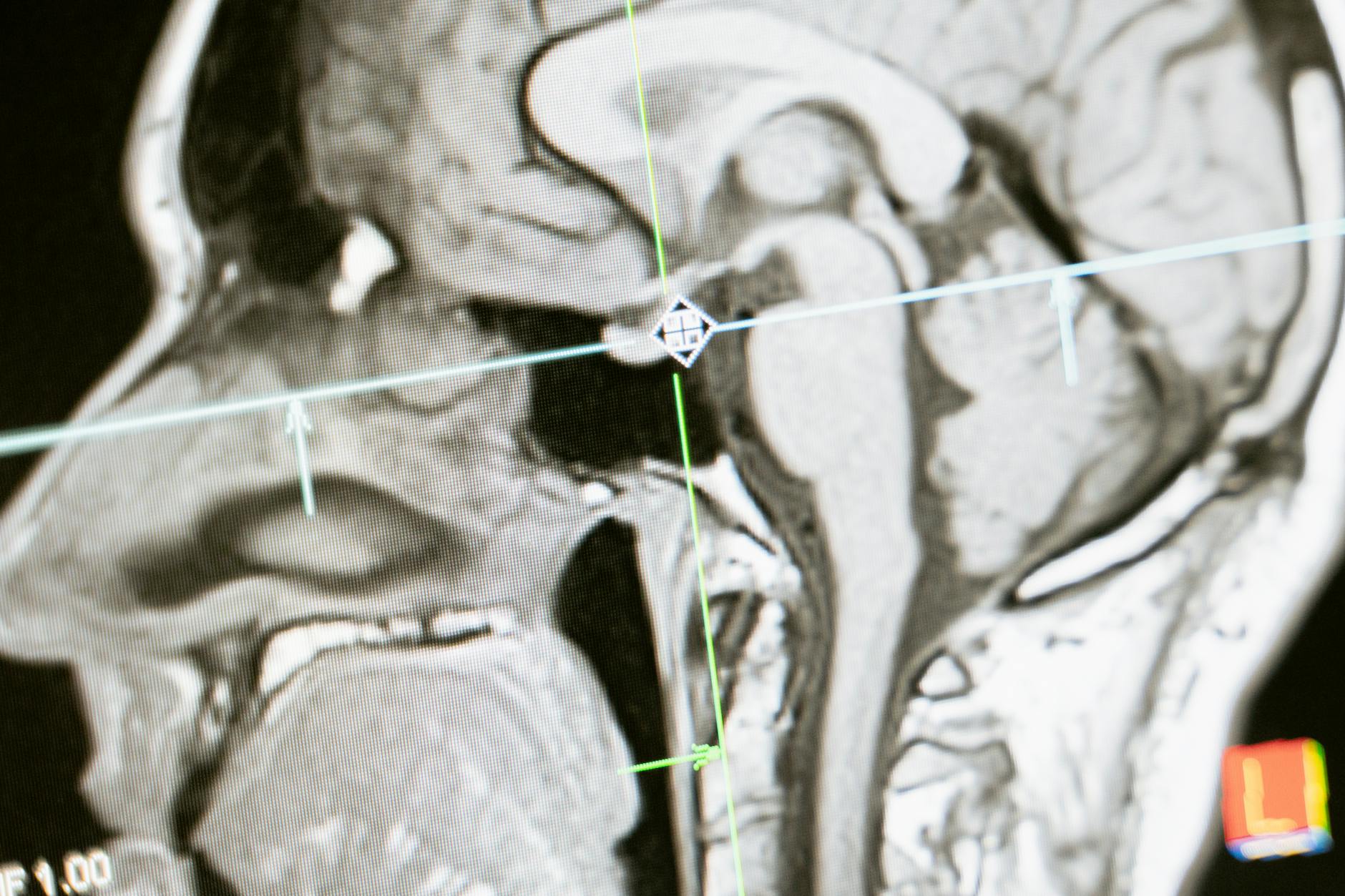
The unexpected practical tool that emerges from this research is using the rate of brain change, rather than static brain measurements, to predict who is at risk for memory problems. By comparing two or more MRI scans obtained several years apart, clinicians can measure whether someone’s brain is shrinking unusually fast. Those who show accelerated brain tissue loss can be identified as higher risk for cognitive decline before they’ve actually experienced noticeable memory problems. This represents a fundamental shift from reactive assessment (testing memory after decline has begun) to predictive assessment (identifying who will decline based on brain changes).
Imagine a scenario with two adults, both currently performing normally on memory tests. Adult A has stable brain volume when compared to their scan from three years ago, while Adult B’s brain volume has decreased by 3% over the same period. While Adult A might be at typical risk for age-related cognitive decline, Adult B’s faster rate of change suggests they should be monitored more closely and might benefit from preventive interventions. This approach requires baseline MRI imaging and follow-up scans—not ideal for routine screening of healthy populations, but highly valuable for those with family history of dementia, genetic risk factors, or other reasons to suspect higher vulnerability. The trade-off is that repeated imaging is expensive and exposes people to additional radiation, but for high-risk individuals, the predictive information could be worth it.
Why Does the Brain’s Shrinkage Impact Memory Differently Than Doctors Once Thought?
The discovery of the nonlinear relationship between brain atrophy and memory loss reveals something critical about how brain aging works: the brain doesn’t degrade like a building gradually losing bricks at a constant rate. Instead, there appears to be a threshold effect, where once brain tissue loss passes a certain point, its impact on memory function accelerates. This might happen because the brain loses redundancy—when volume loss is mild, other brain regions can compensate, but once loss becomes severe, that compensation breaks down. Alternatively, there might be biological tipping points where certain neural systems become unable to maintain their function below a critical mass of tissue.
A crucial warning for anyone interpreting these findings: brain volume loss doesn’t tell the whole story of cognitive health. Some people maintain normal memory function despite significant brain shrinkage, possibly due to cognitive reserve—extra mental capacity built through education, complex work, or mental stimulation that allows the brain to tolerate more structural damage. Conversely, someone might have relatively modest brain volume loss but still experience memory problems if that loss is concentrated in critical areas or if other factors like poor sleep, cardiovascular disease, or depression are also affecting cognition. The nonlinear acceleration pattern holds true in aggregate, but individual variation is substantial, meaning predictions based on brain imaging are probabilities, not certainties.

What Else Does This Research Tell Us About Healthy Aging and Brain Protection?
One significant aspect of this research is that all 3,700 study participants were cognitively healthy when the study began—none had been diagnosed with dementia or mild cognitive impairment. This means the researchers were observing the natural variation in how healthy people age, not studying those already on the path to disease. Some of these healthy adults experienced normal rates of brain change and memory decline, while others experienced accelerated atrophy. Understanding which factors protect some people’s brains from rapid shrinkage is now a critical next step.
The research doesn’t yet tell us whether the accelerated brain loss comes from modifiable lifestyle factors, genetic predisposition, or some combination, but it identifies acceleration as the key marker to watch. This finding opens doors for preventive research. If we can identify people experiencing unusually fast brain tissue loss while they’re still cognitively healthy, we might be able to test whether interventions—such as cognitive training, cardiovascular exercise, Mediterranean diet, cognitive stimulation, or other approaches—can slow that deterioration. Some people showing warning signs might be ideal candidates for clinical trials of new preventive treatments that would be ineffective in people with already-progressed cognitive decline.
How Might This Discovery Change Dementia Prevention and Detection?
This research points toward a future where brain imaging becomes part of a preventive health strategy for middle-aged and older adults, especially those with family history of cognitive decline or genetic risk factors. Rather than waiting for someone to fail a memory test, doctors could potentially use serial MRI to identify those on a concerning trajectory and offer early interventions before symptoms emerge. This shift from symptom-based diagnosis to trajectory-based prediction could allow treatment or prevention strategies to work when the brain still has more capacity to adapt and recover. However, translating this research into clinical practice faces real barriers.
MRI is expensive and not appropriate for routine screening of the entire population. Repeated scans over years are necessary to detect acceleration, which limits feasibility for general populations. The research also doesn’t yet tell us what interventions can actually slow brain atrophy once acceleration is detected. Still, for individuals at high genetic or environmental risk, the ability to predict cognitive decline years before symptoms appear represents a meaningful advance in our power to combat dementia.
Conclusion
The discovery that rapid brain tissue shrinkage predicts memory decline has shifted our understanding of how cognitive aging unfolds. Rather than a steady decline at a predictable rate, memory loss follows a nonlinear pattern where accelerating brain atrophy triggers steeper memory problems. The fact that this pattern emerges from widespread structural changes across the brain—not a single failing region—reflects the complexity of how our brains support memory as we age.
This mega-analysis of over 10,000 MRI scans from nearly 3,700 people provides the strongest evidence yet that measuring the rate of brain change is more revealing than measuring brain size alone. If you’re concerned about memory decline, this research suggests the importance of monitoring brain health over time rather than relying on a single snapshot or test. While routine brain imaging isn’t appropriate for everyone, maintaining cardiovascular health, staying mentally and physically active, and seeking evaluation if you notice changes in your memory or thinking abilities remain among the best strategies we have for protecting cognitive function as we age. As research continues to clarify which interventions can slow brain atrophy in those showing warning signs, the potential for early detection of at-risk individuals could fundamentally change how we approach dementia prevention.
Frequently Asked Questions
Does brain shrinkage always mean I’ll develop memory loss?
No. While the research shows a strong relationship between accelerated brain tissue loss and memory decline, there is substantial individual variation. Some people maintain normal cognitive function despite significant brain shrinkage, possibly due to cognitive reserve—extra mental capacity built through education and mental stimulation. Conversely, some people develop memory problems without dramatic brain shrinkage. Brain imaging provides probabilities, not certainties.
How often do I need MRI scans to detect accelerated brain loss?
The research used scans collected years apart, typically 2-5 years based on the study designs. A single MRI isn’t useful for detecting acceleration; you need at least two scans to measure change over time. More frequent scanning provides better data but at increased cost and radiation exposure, so clinical practice will need to balance these factors.
Can I prevent rapid brain atrophy from happening?
The research identifies accelerated brain loss as a warning sign but doesn’t yet establish which interventions can prevent or slow it. Factors that support general brain health—cardiovascular exercise, cognitive stimulation, Mediterranean diet patterns, adequate sleep, and treating conditions like high blood pressure and diabetes—are associated with better cognitive aging, but specific evidence that these prevent the nonlinear acceleration pattern described in this research is still emerging.
Is this research relevant if I have no family history of dementia?
This research describes normal variation in healthy aging—some people experience faster brain tissue loss than others even without genetic dementia risk. While family history increases dementia risk, the acceleration pattern applies to the general aging population. However, for someone without specific risk factors, routine MRI screening isn’t currently recommended.
What’s the difference between mild cognitive impairment and the patterns this research describes?
This research studied cognitively healthy people with no diagnosis of cognitive impairment. Mild cognitive impairment is a diagnosis made when someone shows actual memory problems on testing. This research is about identifying who might develop those problems in the future based on brain changes occurring before symptoms appear—earlier detection than MCI diagnosis allows.
You Might Also Like
- Tooth decay and urinary infections may be tied to future memory disorders
- New research links anti-aging compounds to brain protection
- New research suggests infections could accelerate cognitive decline in aging adults
For more, see Alzheimer’s Association — caregiving.