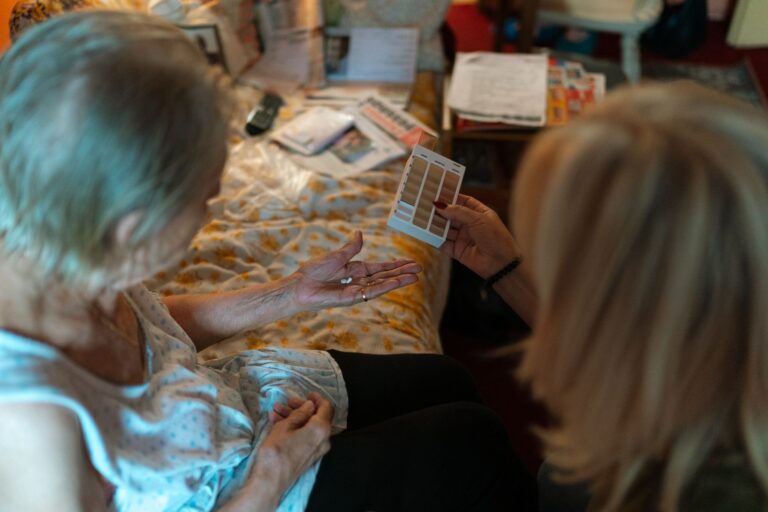
A person with advanced dementia becomes eligible for hospice when they meet specific clinical criteria that indicate they are in the final stages of the disease and life expectancy is approximately six months or less if the disease follows its normal course. These criteria focus on measurable functional decline rather than diagnosis alone, since dementia progression varies widely between individuals. For example, an 82-year-old woman with moderate Alzheimer’s disease who has lost the ability to speak intelligibly, can no longer walk without assistance, is incontinent, requires total dependence for personal care, and has documented weight loss and repeated infections would meet hospice eligibility criteria, even if her vital signs remain stable.
The eligibility determination isn’t automatic and requires careful clinical documentation. A physician must certify that the patient has a terminal illness with a prognosis of six months or less, and for dementia specifically, Medicare and most insurers use the NHPCO (National Hospice and Palliative Care Organization) guidelines as a framework. These guidelines move away from purely clinical markers and instead emphasize a holistic assessment of the patient’s overall condition, functional status, and the trajectory of decline.
Table of Contents
- What Are the Primary Clinical Criteria for Dementia Hospice Eligibility?
- Functional Decline and Dementia-Specific Eligibility Standards
- Cognitive and Communication Decline as Hospice Indicators
- Navigating the Physician Assessment and Certification Process
- Common Misconceptions and Documentation Challenges
- The Role of Comorbid Conditions in Eligibility Assessment
- The Six-Month Prognostication Challenge and Clinical Uncertainty
What Are the Primary Clinical Criteria for Dementia Hospice Eligibility?
Hospice eligibility for dementia centers on documented progression through specific stages of functional decline rather than cognitive test scores alone. The key clinical markers include inability to ambulate without assistance, inability to dress or bathe without total help, inability to communicate meaningfully, and incontinence of bowel and bladder. Additionally, the patient must have one or more co-occurring conditions such as aspiration pneumonia, urinary tract infections, sepsis, decubitus ulcers, fever despite antibiotics, or significant unintentional weight loss. A critical distinction exists between early-stage dementia (where patients may still manage daily tasks with reminders) and late-stage dementia (where total dependence is present).
A 75-year-old man with moderate dementia who still feeds himself, communicates clearly, and participates in activities would not meet hospice criteria, even if his memory loss is severe. However, the same patient six months later, after progression to inability to recognize family members, loss of speech, and complete dependence on caregivers for all activities, would likely meet the threshold. The documentation must show this decline is attributable to the dementia process itself, not solely to another treatable condition. This distinction matters because a reversible infection or medication side effect shouldn’t automatically qualify someone for hospice—though infections in late-stage dementia patients are often treated with comfort measures rather than aggressive antibiotics.
- —
Functional Decline and Dementia-Specific Eligibility Standards
The dementia-specific pathway established by the National Hospice and Palliative care Organization defines six functional decline indicators, and patients must meet most of them to qualify. These include inability to ambulate without assistance (bed-to-chair transfer or worse), inability to dress without total assistance, inability to bathe without total assistance, urinary and fecal incontinence (total, not occasional), ability to speak only in six words or fewer per day, and loss of interest in surroundings. A major limitation of these criteria is that they assume a linear progression, which doesn’t always match reality in dementia. Some patients plateau for months at a particular functional level, then decline rapidly. Others experience fluctuations based on infections or other acute illnesses.
A woman with vascular dementia might maintain better communication skills than a patient with Alzheimer’s at a similar stage of overall decline, creating confusion about whether she meets the communication criterion. Physicians sometimes disagree on whether a patient meets criteria, particularly around the “six words or fewer” marker—does this count only spontaneous speech, or does it include echoing words? Weight loss is another significant criterion but requires careful interpretation. Dementia patients often eat less due to swallowing difficulties, loss of appetite cues, or difficulty using utensils. Unintentional weight loss of 10% over six months or 7.5% over three months suggests serious decline, but some patients with dementia simply maintain stable weight despite reduced caloric intake because of reduced activity. The presence of continued infections despite treatment—particularly aspiration pneumonia recurring multiple times within a year—strongly indicates the patient’s body is no longer fighting off illness effectively.
- —
Cognitive and Communication Decline as Hospice Indicators
Communication ability serves as a key marker in hospice eligibility assessments for dementia. The inability to communicate meaningfully goes beyond difficulty remembering names or events; it means the patient cannot express needs, preferences, or understanding in any consistent way. This might manifest as complete mutism, stereotyped speech (repeating the same phrase over and over), or responses that bear no logical connection to questions asked. A 68-year-old woman with frontotemporal dementia who previously worked as a lawyer but now responds to all conversation with the phrase “that’s okay” or remains completely silent would meet this criterion, whereas a man with Alzheimer’s who struggles to find words but can still express discomfort or basic preferences would not.
The distinction matters because communicative ability directly affects quality of life, the ability to participate in care decisions, and the patient’s experience of their environment. Cognitive decline alone—even severe cognitive decline measured by formal testing—is not sufficient for hospice eligibility. A patient with very low scores on the Montreal Cognitive Assessment or Mini-Cog may still not qualify if they ambulate independently, dress themselves, and maintain continence. Conversely, a patient with less severe cognitive test scores but significant functional decline meets criteria. This mismatch sometimes frustrates families who see severe memory loss but don’t understand why hospice hasn’t been recommended yet.
- —
Navigating the Physician Assessment and Certification Process
The eligibility determination process begins with a physician’s assessment, typically the patient’s primary care doctor or a neurologist familiar with the patient’s decline over time. The physician reviews medical records for documentation of progressive functional loss, examines the patient, and completes a face-to-face evaluation required for hospice certification. The physician must state, in writing, that they believe the patient’s life expectancy is six months or less if the disease follows its natural course. This assessment carries real weight because it commits to a trajectory. A physician who certifies someone for hospice is essentially saying they believe the patient will not recover and will likely die within six months.
Some physicians are reluctant to make this declaration, either because they believe it signals giving up or because they remain uncertain about the timeline. A family might request a second opinion from a hospice medical director, and different physicians sometimes reach different conclusions about the same patient’s eligibility, particularly in the gray zone between moderate and advanced dementia. The practical step after physician assessment is contacting hospice agencies for evaluation. Most hospice organizations conduct their own assessment before accepting a patient, and they can decline admission if they believe the patient doesn’t meet criteria or if they cannot adequately serve the patient’s needs. Once accepted, the hospice team (physician, nurse, social worker, chaplain, aide) creates a care plan addressing comfort, symptom management, and family support.
- —
Common Misconceptions and Documentation Challenges
A widespread misunderstanding is that hospice hastens death or that choosing hospice means certain death is imminent. The reality is that hospice is available to people with approximately six months or less to live, but some patients live longer than expected, and occasionally patients improve enough to be discharged from hospice. A family might request hospice for comfort care, the patient stabilizes on the hospice regimen, and months later the patient is still alive—at which point hospice remains in place as long as the patient continues to meet criteria. Another misconception is that dementia alone qualifies someone for hospice. Dementia is devastating and progressive, but many people with moderate dementia live for years. The eligibility criteria require evidence of advanced decline with one or more indicators of imminent decline (infections, weight loss, swallowing difficulties).
A 70-year-old with memory loss and some confusion may have years ahead, not months, regardless of the dementia severity. Documentation challenges frequently arise because historical medical records may not contain detailed functional assessments. A patient might have seen a primary care doctor annually without formal documentation of when they lost the ability to ambulate independently or when incontinence began. Family members recall the timeline differently than medical records reflect. A nursing home might record “assist with ADLs” without specifying “total assist” versus “minimal assist,” creating ambiguity about the degree of dependence. The hospice medical director must make eligibility decisions based on available documentation, sometimes requesting additional clarification from the physician or previous providers.
- —
The Role of Comorbid Conditions in Eligibility Assessment
Comorbid illnesses significantly influence hospice eligibility decisions for dementia patients because late-stage dementia patients are vulnerable to multiple acute and chronic conditions simultaneously. A patient with dementia plus end-stage heart disease, advanced COPD, or cancer approaches hospice eligibility through multiple pathways, and the combination of conditions often makes the prognosis clearer. An 80-year-old with dementia and metastatic cancer might meet hospice criteria on either condition alone, whereas the same person with dementia and well-controlled diabetes would meet hospice criteria based on dementia stage only.
Recurrent infections—aspiration pneumonia, urinary tract infections, sepsis—are particularly important because they indicate the body is unable to defend itself against common pathogens. When a dementia patient contracts pneumonia multiple times per year, it suggests swallowing function is deteriorating and the immune system is failing, both hallmarks of advanced dementia. The question of whether to treat infections aggressively or with comfort measures alone often becomes clearer when the patient is already on hospice.
- —
The Six-Month Prognostication Challenge and Clinical Uncertainty
The hospice eligibility requirement of “six months or less” creates genuine clinical challenge because predicting when someone with dementia will die is notoriously difficult. Dementia progression is individual and non-linear; some people decline rapidly over months, others linger for years in late-stage dementia. A physician certifying someone for hospice must document the specific clinical reasons they believe death is likely within six months, not mere speculation.
Medicare regulations state that if a patient survives longer than the initial certification period (typically three months), the hospice must recertify the patient, and if they no longer meet criteria, the patient may be discharged. In practice, some patients remain on hospice for over a year because they continue to meet eligibility criteria and continue to decline, even if the decline is slower than initially expected. The key is that the patient must genuinely have advanced disease with clear indicators of end-stage status, and they cannot appear to be “recovering” or returning to baseline function.