Yes, researchers at Duke Health have developed a nasal swab test that can detect biological signs of Alzheimer’s disease years before memory loss or cognitive decline appears. The test, published in Nature Communications in March 2026, achieved an 81% accuracy rate in distinguishing early and clinical Alzheimer’s from healthy controls by analyzing nerve and immune cells collected from the upper nasal cavity. This breakthrough matters because Alzheimer’s develops silently in the brain for years—sometimes decades—before symptoms emerge.
A person can have significant biological changes associated with the disease while still performing normally on memory tests. A test that reveals these hidden changes early could eventually allow doctors to intervene long before damage becomes irreversible. This article explores how the nasal test works, why it’s significant compared to existing detection methods, what the current research shows, and what needs to happen before this tool becomes available in clinical practice.
Table of Contents
- How Does a Nasal Swab Test Detect Alzheimer’s Disease?
- Why Early Detection Matters: Comparing the Nasal Test to Other Methods
- What the Duke Health Research Actually Shows
- The 81% Accuracy Rate: What It Means and What It Doesn’t
- What Still Needs to Happen Before Clinical Availability
- The Advantage Over Blood Biomarker Tests
- What Comes Next: The Path Toward Clinical Use
- Conclusion
How Does a Nasal Swab Test Detect Alzheimer’s Disease?
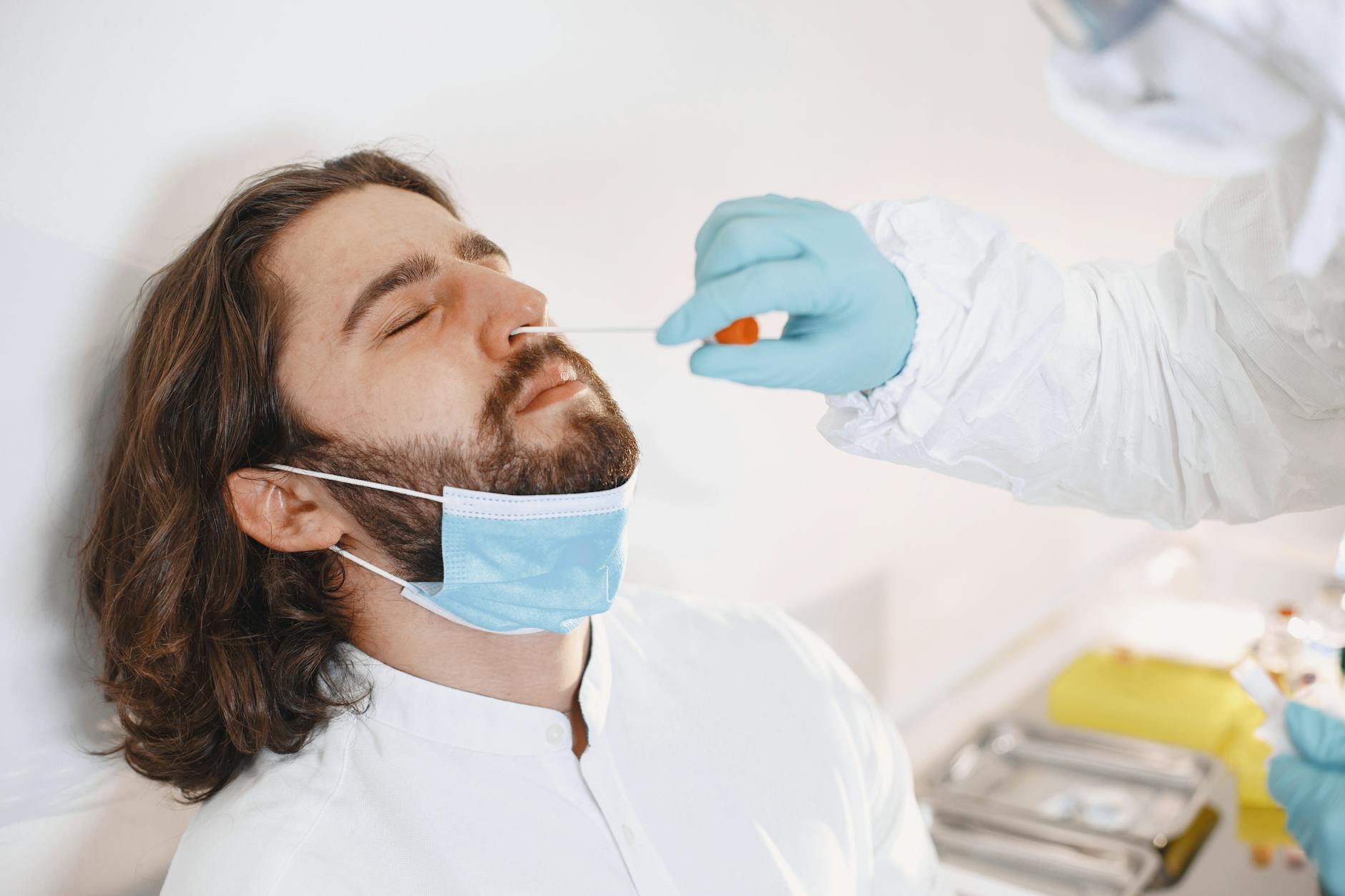
The test itself is remarkably simple and non-invasive. A clinician applies a numbing spray inside the nasal cavity, then guides a tiny brush to the upper nasal area where the olfactory nerve—the nerve responsible for smell—connects to the brain. Using this gentle swab, they collect nerve and immune cells from this location. Researchers then analyze cellular patterns and markers in these samples to identify signatures associated with early or clinical Alzheimer’s disease.
The reason this works is that the nose provides direct access to nerve tissue connected to the brain. Unlike a blood test, which measures proteins that leak into circulation late in disease progression, the nasal swab captures living nerve cells and immune activity at the site where Alzheimer’s pathology first manifests. Dr. Bradley Goldstein, Professor of Head and Neck Surgery at Duke University School of Medicine, led the research team in developing and testing this approach. The procedure takes only minutes and causes minimal discomfort, making it far more practical than invasive procedures like spinal taps or PET imaging.
Why Early Detection Matters: Comparing the Nasal Test to Other Methods
Current Alzheimer’s detection relies on three main approaches: cognitive testing, blood biomarkers, and brain imaging. Cognitive tests like memory and thinking assessments can only detect the disease after significant brain damage has occurred—by definition, they test for existing symptoms. Brain imaging is expensive, requires specialized equipment, and isn’t practical for screening large populations. Blood tests have improved recently and can detect Alzheimer’s biomarkers earlier than symptoms appear, but they still identify proteins that have already begun circulating in significant amounts.
The nasal test potentially captures changes even earlier because it directly accesses nerve tissue where pathology begins. However, there’s an important caveat: the nasal test is still in research phase. The Duke study involved only 22 participants—a small sample that included healthy individuals, people with biological markers but no cognitive symptoms, and those with advanced disease. While the 81% accuracy is encouraging, the test needs validation in much larger, more diverse populations before it can be offered clinically. Researchers are currently expanding to larger study groups to confirm these results hold across different demographics and geographic regions.
What the Duke Health Research Actually Shows
The Duke Health study published in March 2026 represents the first systematic evidence that a nasal swab can distinguish Alzheimer’s disease states. The research team collected samples from participants representing three groups: cognitively healthy controls, people with biological Alzheimer’s changes but no memory loss, and those with clinical Alzheimer’s disease. By analyzing cellular patterns from the nasal samples, they achieved 81% accuracy in separating the diseased groups from healthy individuals.
This distinction between people with biological changes but no symptoms—sometimes called preclinical Alzheimer’s—is particularly important. These individuals may have amyloid and tau accumulation in their brains, visible on PET imaging or detectable in blood tests, but they perform normally on cognitive tests and don’t experience memory problems. The nasal swab appears capable of identifying these preclinical cases, which is exactly when intervention might prevent or slow symptom development. The research team is now exploring whether the test can track changes over time and potentially measure whether treatments are working—a capability that would be invaluable if disease-modifying drugs become available.
The 81% Accuracy Rate: What It Means and What It Doesn’t
An 81% accuracy rate means the test correctly identified Alzheimer’s cases and healthy controls in approximately 4 out of 5 cases. This is substantially better than chance (50%) and better than many existing screening tools, but it’s not perfect. In practical terms, an 81% accuracy test would have false positives—healthy people flagged as at-risk—and false negatives—people with early disease who test negative. Neither outcome is ideal.
False positives could cause unnecessary anxiety and follow-up testing; false negatives could create false reassurance. For this reason, experts emphasize that the nasal test would likely function as a screening tool, not a diagnostic. Someone with a positive result would need confirmation through other methods like blood biomarkers or brain imaging. Additionally, the accuracy achieved in this small research study may not perfectly predict performance in a real-world screening setting, where populations are more diverse and samples are collected in routine clinical conditions. The test’s accuracy might vary by age, sex, genetics, and other factors—variations that the small 22-person study couldn’t fully explore.
What Still Needs to Happen Before Clinical Availability
The gap between a promising research study and a clinically available test is substantial. The nasal swab must be validated in larger populations—hundreds or thousands of participants, not 22—across different ages, ethnic backgrounds, and geographic regions. Researchers need to determine whether the test performs equally well regardless of someone’s education level, overall health status, or whether they carry genetic risk factors like the APOE4 gene. The procedure needs standardization: clinicians must use identical techniques, the nasal samples must be processed the same way everywhere, and analysis methods must be reproducible in different laboratories. The test also needs a clear clinical purpose.
Will it be used for general population screening? For people with family history of Alzheimer’s? For those already showing subtle cognitive changes? Different applications have different accuracy requirements. A screening test offered to millions needs higher accuracy than a test used only in people already suspected of having disease. Finally, cost matters. If the nasal test is more expensive than blood biomarkers, insurance coverage becomes uncertain. These practical questions determine whether the technology moves from research to real-world use.
The Advantage Over Blood Biomarker Tests
Recent blood tests can detect Alzheimer’s-related proteins—amyloid and phosphorylated tau—years before symptoms appear, and they’ve become more sensitive and specific in recent years. The key distinction is timing: the nasal swab appears to capture disease changes at the cellular level in nerve tissue itself, potentially earlier than proteins leak into the bloodstream. Blood tests rely on biomarkers that become detectable in circulation at a certain threshold of brain pathology; the nasal test samples directly from nerve cells in the brain’s sensory gateway.
This doesn’t mean the nasal test will necessarily replace blood biomarkers. They might complement each other—a blood test for initial screening due to convenience and low cost, followed by a nasal swab if results are uncertain. Or they might target different populations: blood tests for large-scale screening, nasal tests for people in whom blood results are ambiguous. The field of Alzheimer’s detection is rapidly evolving, and multiple approaches will likely coexist rather than one replacing another entirely.
What Comes Next: The Path Toward Clinical Use
Duke researchers are already moving forward. They’re expanding to larger study populations to confirm that 81% accuracy holds beyond the initial small cohort. They’re also exploring whether repeated nasal swabs over time can track disease progression and potentially measure whether new treatments slow or stop Alzheimer’s advance. If the test can serve both as a detection tool and a way to monitor treatment response, its value increases dramatically.
The realistic timeline suggests several years before this becomes available clinically—probably not before 2027 or 2028 at the earliest. In the meantime, existing blood biomarker tests continue to improve and become more widely available. For someone concerned about Alzheimer’s risk today, blood tests and cognitive screening remain the current options. The nasal swab represents hope for a simpler, more accessible detection method in the future, but researchers rightly emphasize that more work is needed before it’s ready for routine clinical use.
Conclusion
A nasal swab test developed by Duke Health researchers offers an exciting possibility: detecting Alzheimer’s disease biological changes years before memory loss or confusion appears. The test works by analyzing nerve and immune cells from the upper nasal cavity, achieving 81% accuracy in distinguishing Alzheimer’s disease from healthy controls in an initial study. This approach matters because Alzheimer’s develops silently, and early detection before brain damage becomes severe might eventually allow preventive treatment. However, the research is still preliminary.
The study included only 22 participants, and the test requires validation in much larger, more representative populations before becoming clinically available. The researchers are expanding their work and exploring whether the nasal swab can track treatment effectiveness. For people concerned about Alzheimer’s risk today, current blood biomarker tests and cognitive assessments remain the available options. The nasal test represents an important step forward in early detection, but several years of additional research and validation will likely pass before it becomes part of routine medical care.
You Might Also Like
- Your speech could reveal Alzheimer’s years before diagnosis
- Scientists say this molecule could slow aging and Alzheimer’s at the same time
- Doctors say these new blood tests could detect Alzheimer’s much earlier
For more, see Alzheimer’s Association — medical tests.