Reviewed by the Help Dementia Editorial Team — our editors review every article for accuracy against guidance from the National Institute on Aging, the Alzheimer’s Association, and peer-reviewed sources.
New findings sits at the center of this dementia and brain health question.
New research and epidemiological data from 2025-2026 reveal a sobering picture of disease impact across multiple health categories. The most striking finding involves Alzheimer’s disease: an estimated 7.4 million Americans age 65 and older currently live with clinical Alzheimer’s dementia, with projections suggesting this number could nearly double to 13.8 million by 2060 without significant medical breakthroughs. This expansion in disease prevalence underscores how profoundly neurodegenerative conditions are reshaping American healthcare and family life.
But Alzheimer’s is not the only disease where new findings are reshaping our understanding of the broader health landscape. These recent findings span rare genetic diseases, infectious disease resurgence, and preventable conditions—each revealing critical gaps in our current approach to disease management and prevention. The data tells us that disease impact extends far beyond individual diagnosis rates; it encompasses the speed at which conditions spread, our ability to detect them early, and the infrastructure gaps that prevent people from accessing life-saving treatments and vaccines.
Table of Contents
- What Do Recent Disease Impact Findings Show About Neurodegenerative Disease?
- How Emerging Disease Threats Are Expanding Global Health Challenges
- Gene Editing and Rare Disease Breakthroughs: Early Victories in Disease Management
- Early Detection and Prevention: Reducing Disease Burden Through Newborn Screening
- The Vaccination Coverage Crisis and Its Disease Impact
- Emerging Viral Threats and What We Must Know
- What These Findings Mean for the Future of Disease Management
- Conclusion
What Do Recent Disease Impact Findings Show About Neurodegenerative Disease?
The Alzheimer’s Association’s 2026 report provides perhaps the clearest picture of disease impact in the aging brain. With 7.4 million people currently living with Alzheimer’s dementia, the disease now affects roughly one in nine Americans age 65 and older. More striking than the current numbers is the trajectory: without intervention, we will see a near-doubling of cases by 2060. This isn’t simply a statistical projection—it represents millions of families facing cognitive decline, loss of independence, and the emotional and financial toll of caregiving. The disease impact extends across generations, with adult children becoming primary caregivers and financial planners facing the reality of potential long-term care costs.
What makes this finding particularly significant is the regional and demographic variation in disease burden. Certain communities experience higher prevalence rates due to differences in life expectancy, healthcare access, and management of cardiovascular risk factors that contribute to cognitive decline. This variation reveals that disease impact is not evenly distributed, which has implications for how we should allocate resources and tailor prevention strategies. The gap between current prevalence and projected numbers also illustrates why early detection and intervention have become central to disease management. Every year of delay in identifying cognitive decline or vascular risk factors represents thousands of people progressing further along the disease continuum. This finding has shifted the medical conversation away from waiting for symptoms toward proactive screening and risk modification in mid-life.

How Emerging Disease Threats Are Expanding Global Health Challenges
While Alzheimer’s represents the long-term disease burden in aging populations, emerging infectious diseases demonstrate how quickly disease impact can escalate globally. The 2024 dengue season revealed this starkly: the world experienced 14.4 million dengue cases—more than double the previous peak of 6.7 million cases in 2023. This explosion occurred in what was the warmest year on record, indicating that climate change is directly amplifying the reach of vector-borne diseases. For context, this represents a disease impact that expanded by over 110% in a single year, illustrating how rapidly conditions can destabilize when environmental factors shift. The dengue surge also exposed a critical limitation in our current global health infrastructure: we lack sufficient surveillance and rapid response capacity to contain disease transmission at scale.
Countries in tropical and subtropical regions bore the heaviest burden, but the disease’s expansion demonstrates how global connectivity means that regionally explosive outbreaks have worldwide implications. The disease impact of dengue extends beyond the case count to include overwhelmed healthcare systems, economic disruption, and psychological burden in affected communities. scientists have also identified two emerging viral threats that warrant enhanced surveillance: Influenza D virus and canine coronavirus. These pathogens, which originated in animal populations, demonstrate the ongoing challenge of zoonotic disease spillover. The disease impact potential of these emerging threats is not yet fully realized, but the fact that they are being highlighted by public health officials signals concern about their pandemic potential if they acquire greater human transmissibility.
Gene Editing and Rare Disease Breakthroughs: Early Victories in Disease Management
In February 2026, the National Institutes of Health celebrated Rare Disease Day with a striking announcement: the first patient of a gene editing therapy—known publicly as “Baby KJ”—has become a symbol of hope in rare disease management. This breakthrough demonstrates that gene editing can deliver measurable disease impact in the most severe genetic conditions. For families facing rare diseases, this finding represents a paradigm shift from acceptance of inevitable decline toward the possibility of therapeutic intervention. The disease impact of rare genetic conditions has traditionally been underappreciated because individual rare diseases affect small patient populations. However, collectively, rare diseases affect roughly 10% of the population at some point in their lives, making disease burden far greater than individual prevalence rates suggest.
The gene editing breakthrough matters not just for the single patient who received it, but because it validates a therapeutic approach that can be applied to dozens of other severe genetic diseases. This finding reshapes disease prognosis for families who previously had no treatment options. Alongside gene editing advances, the expansion of newborn screening has added Duchenne muscular dystrophy and metachromatic leukodystrophy to the Recommended Uniform Screening Panel as of December 2025. These additions mean that thousands of newborns per year can now be identified with these devastating conditions before symptoms emerge, allowing early intervention to slow disease progression. Early detection of these diseases has profound disease impact: children identified through newborn screening have better long-term outcomes than those diagnosed symptomatically years later.

Early Detection and Prevention: Reducing Disease Burden Through Newborn Screening
The expansion of newborn screening reveals an important principle about disease impact: prevention and early detection are more effective than treating established disease. By identifying Duchenne muscular dystrophy and metachromatic leukodystrophy in newborns, medical teams can initiate therapies, arrange genetic counseling, and plan supportive care before significant neurological damage occurs. The disease impact comparison is striking: a child identified through screening might experience years of maintained function, while one diagnosed symptomatically may have experienced irreversible decline.
However, there is a significant limitation to this approach: newborn screening expansion still only identifies a small fraction of rare diseases. Parents and genetic counselors must remember that a normal newborn screening result does not rule out all genetic diseases. Additionally, even when newborn screening identifies a condition early, not all affected families have access to specialized care centers equipped to manage these diseases optimally. The disease impact of early detection depends entirely on the availability of expert follow-up care and access to emerging therapies.
The Vaccination Coverage Crisis and Its Disease Impact
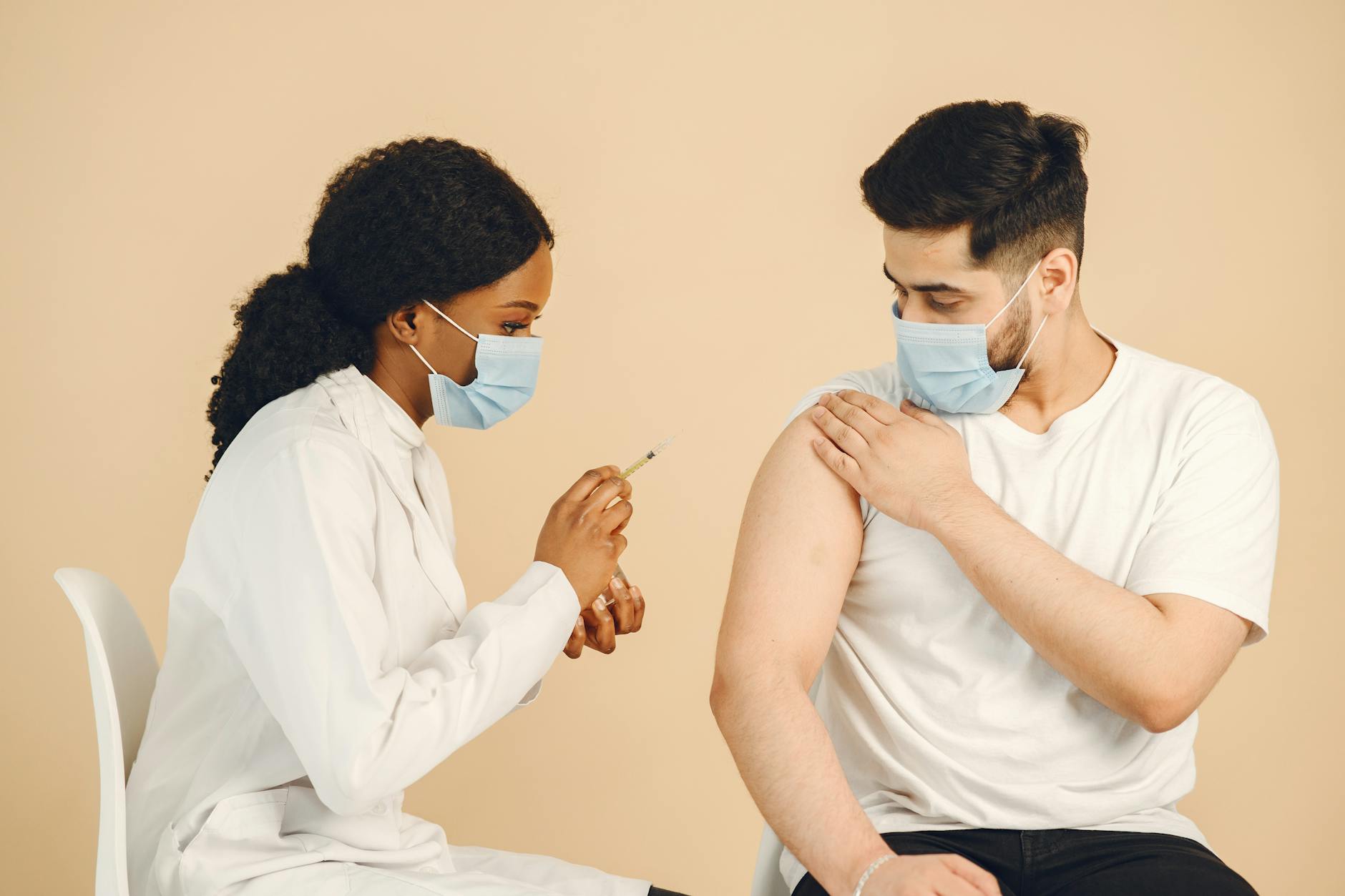
Amid progress in gene editing and disease prevention, a troubling finding has emerged: in 2024, 14.3 million children worldwide missed routine vaccinations. This represents a disease impact risk that extends far into the future, as unvaccinated children remain vulnerable to preventable diseases like measles, polio, and pertussis. Most alarming is the distribution: over half of these children live in fragile or conflict-affected contexts, meaning that disease impact will be concentrated in regions least equipped to handle outbreaks. This vaccination coverage gap directly increases the disease burden of childhood infections. Measles, for instance, can cause serious complications including encephalitis and subacute sclerosing panencephalitis—a progressive neurological disease that is almost uniformly fatal.
When children miss vaccination, the disease impact extends across entire populations because vaccine-preventable diseases spread through unimmunized communities. Even in developed countries with high vaccination rates, pockets of under-vaccination create opportunities for disease resurgence. The lesson from this finding is that disease impact prevention requires sustained infrastructure, equitable access, and public health commitment. A single missed vaccination opportunity represents not just one child at risk, but a chain reaction of potential transmission and disease burden extending through the community. This is particularly relevant for dementia and brain health advocates, because preventable infections in childhood and adulthood—such as herpes zoster and influenza—can increase long-term neurological disease risk.
Emerging Viral Threats and What We Must Know
The identification of Influenza D virus and canine coronavirus as potential emerging threats signals that public health agencies are monitoring animal reservoirs for pathogens that could amplify disease impact in human populations. Influenza D has circulated in animal populations for years without significant human infection, but the disease impact concern is that genetic drift could facilitate human adaptation. Similarly, canine coronavirus demonstrates how animal pathogens can jump species and establish in human populations with unpredictable consequences.
These emerging threats underscore an important truth about disease impact prediction: many of the most devastating pandemic pathogens were not predicted in advance. The Spanish flu, COVID-19, and Ebola all emerged from zoonotic spillover events. By enhancing surveillance now, public health officials are attempting to shift from reactive disease management to proactive threat detection—potentially reducing the disease impact of the next major outbreak through earlier intervention.
What These Findings Mean for the Future of Disease Management
The collective findings from 2025-2026 reveal that disease impact is no longer primarily determined by our ability to treat disease, but by our ability to detect it early, prevent it through vaccination and lifestyle intervention, and access emerging therapies like gene editing. This shift represents the most significant change in disease management philosophy in decades. The 13.8 million projected Alzheimer’s cases by 2060 can be reduced if we identify at-risk individuals today and implement aggressive interventions against vascular disease, cognitive training, and emerging pharmaceutical options.
These findings also suggest that disease impact in the coming decades will increasingly depend on global health equity. The dengue surge, vaccination gap, and concentration of rare disease treatment in high-income countries all point toward a future where disease burden is partially determined by where people live and their access to resources. Addressing disease impact at scale requires not just better therapeutics, but more equitable distribution of prevention, screening, and treatment infrastructure.
Conclusion
The new findings about disease impact in 2025-2026 paint a complex picture: while Alzheimer’s prevalence continues its upward trajectory and emerging infectious diseases demonstrate our vulnerability to global health threats, breakthroughs in gene editing and expanded newborn screening offer genuine hope for disease prevention and early intervention. The disease impact of these conditions is measurable and substantial, affecting millions of families and economies globally. Moving forward, the priority for anyone concerned with disease burden—whether facing a personal diagnosis of dementia or contributing to public health policy—should be understanding these findings and acting on them.
For individuals, this means engagement in cognitive health, vaccination status, and regular health screenings. For healthcare systems and researchers, it means accelerating the translation of findings like gene editing into clinical practice and addressing the vaccination gaps that perpetuate preventable disease. The disease impact of the next decade will be shaped by how effectively we implement what we’ve learned today.
You Might Also Like
- Scientists Test New Methods for Slowing Disease
- New Tools Aim to Catch Disease Earlier
- New Protein Identified as Key Player in Alzheimer’s Disease
For more, see National Institute on Aging.