Reviewed by the Help Dementia Editorial Team — our editors review every article for accuracy against guidance from the National Institute on Aging, the Alzheimer’s Association, and peer-reviewed sources.
New tools sits at the center of this dementia and brain health question.
Yes, new tools are emerging that can detect serious diseases years before symptoms appear—a fundamental shift in how we approach health care. Researchers have developed blood tests, AI-powered analysis systems, and online assessment tools that identify early disease signatures when intervention is most effective. A blood marker called pTau217, discovered by researchers at Mass General Brigham, can now detect Alzheimer’s disease years earlier than brain imaging, appearing before any symptoms or visible changes on brain scans. This represents a watershed moment in early detection: diseases that once announced themselves through noticeable decline can now be caught during their silent, treatable phases.
The convergence of biotechnology, artificial intelligence, and medical device innovation is making early detection accessible rather than aspirational. We’re no longer waiting for symptoms to guide diagnosis. Instead, precision tools measure biological changes happening at the cellular level, giving patients and doctors the information they need to act proactively rather than reactively. For families managing dementia risk or brain health concerns, this shift carries profound implications.
Table of Contents
- What Makes Blood Tests and AI Better at Catching Disease Early?
- How Do These Tools Work in Practice, and What Are Their Limitations?
- Alzheimer’s Detection: Why This Matters for Dementia Care and Brain Health
- Who Should Use These Tools, and How Do You Know If Early Detection Is Right for You?
- The Risks of Over-Testing and Over-Treatment in Early Detection
- The Role of AI-Connected Medical Devices in Ongoing Monitoring
- Looking Forward—What’s Next in Early Detection
- Conclusion
What Makes Blood Tests and AI Better at Catching Disease Early?
Traditional disease detection has relied on imaging and clinical symptoms—the visible problems. But disease doesn’t start there. It begins with molecular changes invisible to the naked eye and even to standard imaging tools. High-throughput proteomics combined with artificial intelligence can now detect conditions like Alzheimer’s disease and heart failure decades before any noticeable decline, capturing biological changes in real-time with better predictive power than traditional genetic testing alone.
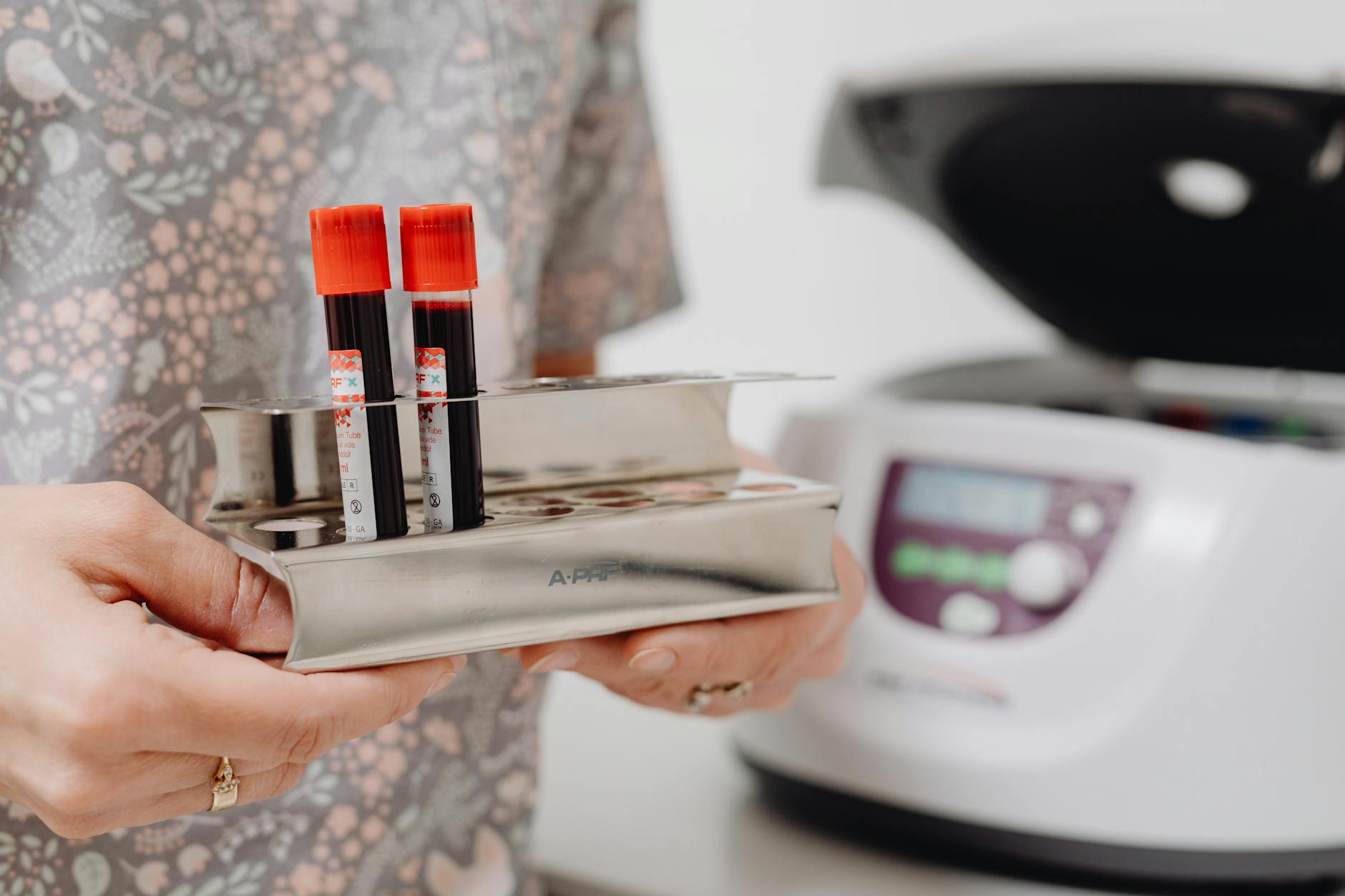
The pTau217 blood marker works similarly: it reflects tangles and plaques accumulating in the brain long before cognitive symptoms emerge, giving clinicians a window into processes that would otherwise remain hidden until irreversible damage occurs. The advantage is both practical and profound. A person with no memory problems and normal brain imaging can learn from a blood test that Alzheimer’s pathology is already present—information that changes everything about treatment planning, lifestyle intervention, and family preparation. This early knowledge allows doctors to discuss prevention strategies, introduce medications at their most effective stage, and help families make informed decisions about future care. Unlike imaging, which requires expensive equipment and specialized centers, blood tests are scalable and can be run in any lab, potentially democratizing early detection across different healthcare settings and populations.
How Do These Tools Work in Practice, and What Are Their Limitations?
The AI and proteomics approach works by analyzing hundreds of proteins in a blood sample and identifying patterns invisible to human review. Machine learning algorithms trained on thousands of patient records can recognize which protein combinations signal early disease. It’s similar to how a radiologist spots subtle changes on an X-ray, except the “image” is biological data, and the analysis happens at microscopic resolution. The result is stunning: researchers can identify Alzheimer’s, cardiovascular disease, or kidney dysfunction before symptoms arrive—sometimes decades before.
But there’s a critical limitation: early detection requires early action, and not every detected abnormality demands treatment. Discovering asymptomatic Alzheimer’s pathology, for instance, creates a new category of patients—those with biological disease but no functional decline. This raises legitimate questions: Should everyone with abnormal biomarkers begin preventive treatment? What are the psychological effects of learning you have disease-level changes without symptoms? Are we creating unnecessary anxiety, or are we seizing a genuine opportunity? The answers vary by individual, and clinicians are still developing guidelines for how to counsel and treat people identified through these tools. Additionally, blood tests are only as good as the biomarkers we’ve discovered; future research may reveal additional markers that change current predictions, meaning today’s “early detection” isn’t necessarily complete detection.
Alzheimer’s Detection: Why This Matters for Dementia Care and Brain Health
For families navigating dementia risk, the pTau217 blood marker represents a turning point. Alzheimer’s disease has historically been diagnosed either through cognitive decline or definitively through autopsy—neither option gives families the chance to intervene when the disease is incipient. Now, a simple blood test can reveal that pathology is accumulating, prompting discussions about cognitive training, cardiovascular health, sleep quality, diet, and medications that may slow progression. The marker doesn’t predict with absolute certainty who will develop dementia symptoms; not everyone with Alzheimer’s pathology progresses at the same rate, and some people harbor significant pathology without noticeable cognitive effects. But it dramatically improves the odds of catching intervention earlier.
The pTau217 test has particular significance because it appears in blood years before symptoms or brain imaging shows changes. Someone might have normal cognition and normal MRI while already carrying biological evidence of Alzheimer’s. For families with a history of dementia—a genetic or environmental risk factor—this test offers the clarity that previous generations never had: concrete information about disease trajectory rather than guesswork based on family patterns. Early intervention studies suggest that addressing modifiable risk factors (exercise, cognitive engagement, sleep, blood pressure control) may slow or even stall progression when started at this asymptomatic stage. The implications for quality of life and independence are substantial.

Who Should Use These Tools, and How Do You Know If Early Detection Is Right for You?
Not everyone needs early detection screening, and not every positive result demands immediate treatment. Someone with a strong family history of Alzheimer’s, cardiovascular disease, or kidney problems has a compelling reason to explore these tools—early knowledge translates into actionable steps. Someone with no symptoms and no risk factors may derive less benefit, and may instead experience unnecessary worry. The choice often depends on your age, your health history, your family’s medical trajectory, and your personality. Some people want to know every detail about their biological future; others prefer a wait-and-see approach. Both are rational.
Several practical tools now exist to guide this decision. Northwestern University researchers developed the PREVENT cardiovascular risk assessment tool, which helps clinicians more accurately identify patients at higher cardiovascular disease risk and recommend preventive interventions before heart problems develop. For kidney disease, an online tool compares individual kidney function against age and sex-matched reference groups, helping doctors identify decline years earlier and initiate prevention strategies. If you’re concerned about disease risk—whether for dementia, heart disease, or kidney function—these tools provide a starting point for conversation with your doctor. The key is not to use them to obsess over risk, but to use them to drive concrete, evidence-based action. A positive test is a decision point, not a death sentence.
The Risks of Over-Testing and Over-Treatment in Early Detection
The success of early detection tools brings a genuine danger: the temptation to test everyone and treat based on any abnormality. This can lead to unnecessary treatment, medicalization of asymptomatic conditions, and the cascade of side effects that accompanies medication. A person with asymptomatic Alzheimer’s pathology might live for decades without cognitive decline; beginning preventive treatment on everyone with biomarker evidence could mean exposing millions of people to medication risks they’ll never benefit from. This is why careful discussion between patient and doctor matters more than ever. Early detection should lead to informed choice, not automatic escalation to treatment.
Another risk is inequality in access. These tests and tools are newer, expensive, and not yet universally covered by insurance. That means early detection benefits may initially flow to wealthier populations, creating a gap in preventive care. Additionally, most AI and proteomics algorithms are trained on research populations that don’t reflect the full diversity of human biology. Someone from a population underrepresented in medical research might receive less accurate predictions. As these tools become mainstream, the critical work is ensuring they’re validated across different populations and made accessible across different economic circumstances.

The Role of AI-Connected Medical Devices in Ongoing Monitoring
Beyond blood tests and risk algorithms, AI-enabled medical devices represent another frontier in early detection. Smartwatches, implanted monitors, and home-based diagnostics equipped with artificial intelligence can track heart rhythms, sleep patterns, blood pressure, and other markers in real-time. If abnormalities emerge, these devices can flag them before patients develop noticeable symptoms. The advantage is continuous, passive monitoring that doesn’t require office visits or scheduled testing.
A person with a heart condition or dementia risk can be monitored throughout their daily life, with concerning patterns captured and communicated to their doctor. This real-time data enables sharper disease detection and personalized treatment protocols calibrated to each person’s specific physiology rather than population averages. However, real-time monitoring also means constant data flow, constant notifications, and the psychological burden of knowing your body in precise detail. Not everyone experiences this as empowering; some find it anxiety-inducing. The devices also require reliable technology, clear communication channels to healthcare providers, and systems to handle alerts thoughtfully—someone shouldn’t be alarmed by a benign rhythm variation that happens to trigger their device’s algorithm.
Looking Forward—What’s Next in Early Detection
The trajectory is clear: detection will continue moving earlier, testing will become more specific, and the timeline between discovering disease and managing it will compress. Research is currently underway to identify additional biomarkers for dementia, cancer, autoimmune disease, and other conditions. Within the next decade, routine blood work may include a comprehensive panel revealing asymptomatic disease across multiple systems. The challenge will be interpretation and response—having information doesn’t automatically tell us what to do with it. Medicine will need to develop clearer guidelines about which detected abnormalities warrant treatment, which warrant surveillance, and which warrant reassurance and continued health optimization.
The other frontier is preventive care infrastructure. Early detection only matters if it leads to effective prevention. That requires accessible exercise programs, nutritional guidance, cognitive training, sleep support, stress management, and when needed, medications. For dementia specifically, it means helping people maintain cardiovascular health, manage blood sugar, protect brain blood flow, and stay cognitively and socially engaged. The best blood test in the world means nothing if the person who receives results can’t access the interventions that actually prevent disease.
Conclusion
New tools for early disease detection have arrived, and they work—blood markers, AI-driven proteomics analysis, and risk assessment algorithms can identify serious conditions years before symptoms appear. For people concerned about dementia, cardiovascular disease, kidney function, or other chronic conditions, these tools offer something previous generations never had: the chance to act proactively based on concrete biological information rather than guesswork and waiting. A simple blood test can now reveal Alzheimer’s pathology years before cognition declines, giving patients and families time to optimize health and plan for the future.
The question isn’t whether these tools work, but whether they’re right for you, how to interpret results without anxiety or over-treatment, and whether you have access to the interventions that prevention requires. If you have risk factors for disease—family history, age, or existing health conditions—a conversation with your doctor about early detection screening is worth having. The goal isn’t to live in fear of detected pathology, but to use early knowledge as motivation for the evidence-based, healthy behaviors that truly matter: exercise, quality sleep, cognitive engagement, cardiovascular health, and meaningful social connection. Early detection is the opening; your choices after that are what determine the outcome.
You Might Also Like
- Scientists Test New Methods for Slowing Disease
- New Study Reveals Structural Impact of Disease
- New Protein Identified as Key Player in Alzheimer’s Disease
For more, see NIH MedlinePlus — cognitive testing.