After age 65, a realistic dementia prevention routine combines brief daily listening with regular instrument practice and social music, alongside exercise, sleep, social contact, and hearing and vascular care. Dementia prevention here means lowering risk through daily habits, not guaranteeing protection. Mild impairment means early memory or thinking changes that do not yet block daily life. Music fits best as steady cognitive challenge plus connection, not as a quick fix.
Medical information disclaimer: This article is for general educational purposes only and does not provide medical advice, diagnosis, or treatment. Always consult a physician or other qualified health professional about symptoms, medications, tests, or treatment decisions.
Table of Contents
- What does the strongest recent evidence show?
- Why think in years, not weeks?
- What does a realistic week look like?
- How does music fit a broader brain-health plan?
What does the strongest recent evidence show?
In 10,893 initially healthy Australian adults age 70 and older, those who always listened to music had 39% lower dementia risk and 17% lower mild-impairment risk than never, rarely, or sometimes listeners over follow-up, according to Monash University research record. In the same cohort, often or always playing an instrument was linked to 35% lower dementia risk. Doing both listening and playing was linked to 33% lower dementia risk and 22% lower mild-impairment risk.
The pattern favors people who keep music frequent and active, rather than occasional background listening. The link is observational and does not prove causation. Music engagement also did not improve participants' subjective sense of cognitive wellbeing despite objective test differences, as reported by the Fisher Center summary.
Why think in years, not weeks?
Lifetime instrument playing is tied to better thinking across several domains and to brain structure in older adults. That pattern supports complex musical activity as cognitive reserve, a buffer built over time, rather than a short-term boost, according to the Frontiers in Psychology study. A separate large cohort points the same way.
Among 52,601 Japanese adults age 65 and older, playing an instrument or practicing karaoke versus no musical activity was tied to lower dementia incidence, clearly in women and weakly in men, according to the Japan Gerontological Evaluation Study paper. The message is practical. Start simple, stay consistent, and choose a form you can repeat for months.
What does a realistic week look like?
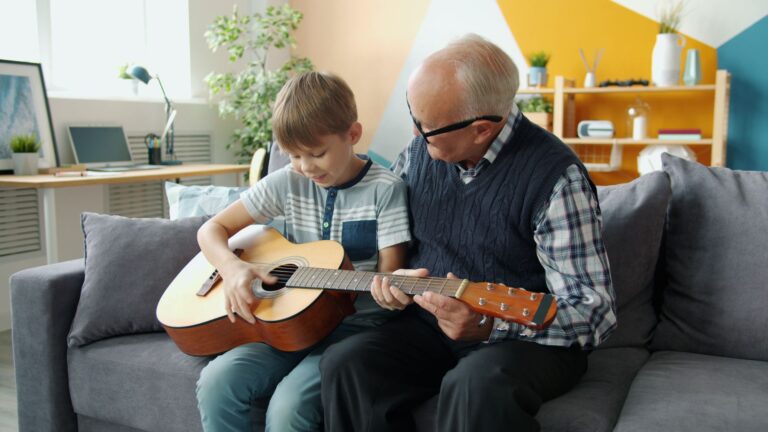
A workable after-65 pattern is brief daily listening plus regular instrument practice and social music such as choir or group lessons. That mix joins mental effort with companionship and attention to hearing, as described by Harvard Health Publishing.
Pick an easy entry point. A rental keyboard, ukulele, recorder, or voice lessons can carry the whole routine.
- Listen daily for 15 to 30 minutes without multitasking, and follow the melody, rhythm, or lyrics.
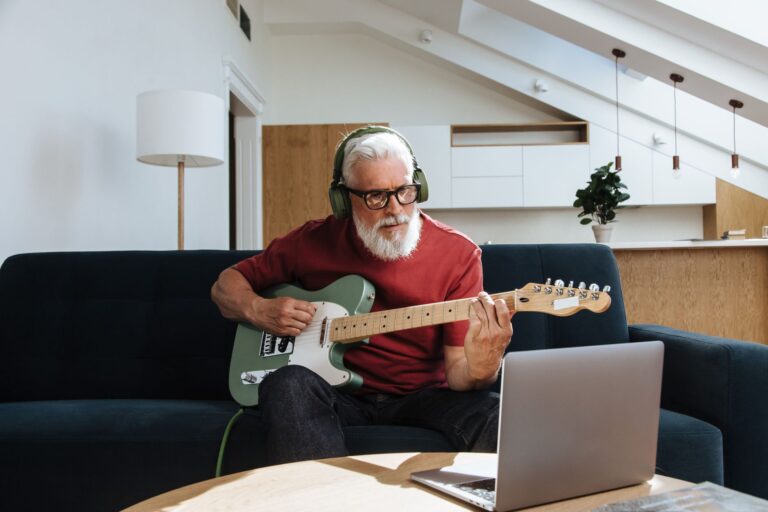
- Practice one instrument three to five times weekly in short sessions, and review one small passage each time.
- Join one social music slot weekly, such as choir, group guitar, group piano, or karaoke.
- Protect hearing by lowering volume, taking quiet breaks, and treating ear pain or ringing promptly.
- Track sessions on a calendar, and keep missed days brief instead of quitting.
How does music fit a broader brain-health plan?
The Alzheimer's Association advises challenging the mind with activities such as learning an instrument, plus regular aerobic exercise, social engagement, hearing-loss management, sleep, and vascular-risk control, described in its 10 Healthy Habits guide. Music practice covers challenge and social contact, while walks, blood-pressure care, and steady sleep cover the rest. That broader frame matters because about 45% of dementia cases worldwide are linked to 14 modifiable factors including hearing loss, high LDL, inactivity, depression, diabetes, smoking, isolation, and vision loss, according to the BrightFocus summary.
So music helps most inside a full routine, not alone. Use medical care for hearing, mood, sleep apnea, diabetes, blood pressure, cholesterol, and vision. Then let music make the routine enjoyable enough to keep.