Yes, couples can stay together when memory care needs differ, but it requires careful planning, honest assessment of care requirements, and often creative facility arrangements. When one partner develops dementia while the other remains cognitively intact—or when they progress at different rates—staying together is possible through options ranging from shared assisted living apartments to specialized memory care wings within the same community. However, the reality is more complex than simply choosing to remain together; it depends on the severity of cognitive decline, the financial resources available, the emotional capacity of the well spouse, and the willingness of care facilities to accommodate couples with different care levels.
Consider Margaret and Tom, who moved to a continuing care retirement community when Margaret’s cognitive decline became pronounced. Tom remained independent in their shared apartment while Margaret attended day programs. This worked for two years, but as Margaret required 24-hour supervision, they faced a critical choice: move Margaret to memory care full-time while Tom remained in independent living, or have Tom move with her to the memory care unit, where he had no medical need to be but could still share a room and maintain their relationship.
Table of Contents
- What Happens When One Partner Needs Memory Care and the Other Doesn’t?
- The Reality of Shared Living in Memory Care Units
- Separate Care Settings—When Couples Live Apart
- The Role of Spousal Caregivers in Mixed-Care Arrangements
- The Hidden Burden of Cognitive Asymmetry
- Financial and Insurance Considerations
- Recognizing When Separation Becomes the Healthier Choice
What Happens When One Partner Needs Memory Care and the Other Doesn’t?
When one spouse develops dementia or significant memory loss while the other remains cognitively intact, the dynamics shift radically. The well spouse often becomes the primary decision-maker, manager of finances, and guardian of the partnership itself. This role reversal creates emotional strain that is rarely discussed openly before the crisis arrives. Research from the Caregiver Action Network and gerontology studies consistently shows that spousal caregivers experience depression rates 30-40% higher than the general population, and this risk increases when the caregiver remains socially isolated or when the couple separates into different care settings.
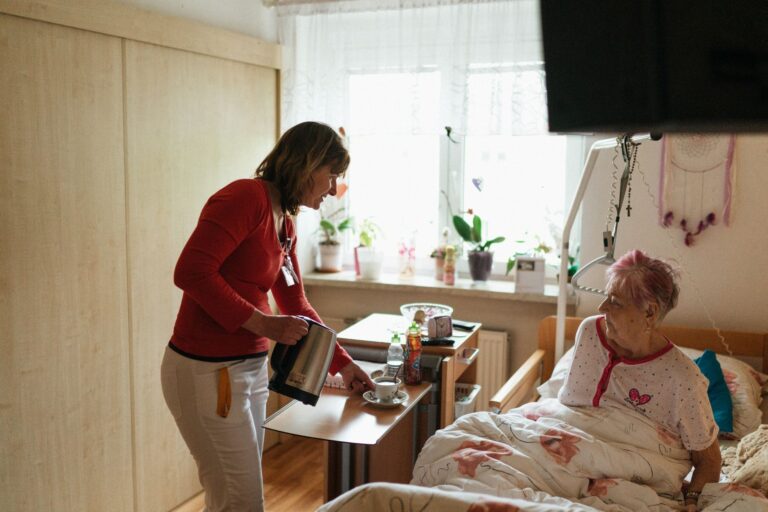
The well spouse faces a specific dilemma: advocating for their own needs while ensuring their partner receives appropriate care. A spouse in good health may want to remain in independent living, enjoy social activities, or manage their own schedule. Meanwhile, their partner in memory care may experience sundowning episodes (behavioral disturbances in late afternoon or evening) that require staff attention. Some facilities allow couples to maintain a shared bedroom in the memory care unit, which means the well spouse either gives up independence to stay with their partner or stays elsewhere and manages guilt about that separation. This is not a problem with an emotionally comfortable solution.
The Reality of Shared Living in Memory Care Units
Many memory care facilities and assisted living communities now offer options for couples to room together even when care levels differ significantly. However, this option comes with real limitations and potential downsides. A shared room in a memory care unit means the well spouse is living in an environment designed for people with cognitive impairment: locked units, simplified décor, lower noise tolerance, and programming focused on cognitive engagement rather than independent recreation.
The well spouse living in memory care often experiences unexpected consequences. They may lose access to independent activities they previously enjoyed, become socially invisible to facility staff who focus on the cognitively impaired resident, or find themselves taking on informal caregiving when staff are unavailable—essentially working unpaid overnight shifts. One documented limitation is that some facilities charge two full memory-care rates even though the well spouse requires no skilled nursing or cognitive intervention. Insurance (Medicare, Medicaid, long-term care policies) may not cover this arrangement for the cognitively intact person, leaving the family to pay out-of-pocket. Costs can reach $8,000 to $15,000 per month or more, depending on location and facility level.
Separate Care Settings—When Couples Live Apart
Many couples do separate into different care environments—the person with dementia moves to memory care while the well spouse remains in independent or assisted living within the same community, or sometimes in entirely different facilities. This arrangement is often born from practical necessity: memory care costs are already substantial, doubling that expense may be financially impossible. Research on long-term outcomes shows that couples who separate into different care levels often report lower stress levels initially, particularly if the well spouse regains autonomy and social engagement. For example, Robert moved his wife Diane to a memory care unit 90 minutes away because it was the only facility with availability and appropriate care in their price range.
He visits three times a week and lives in their home, where he maintains his medical practice and social life. After the initial shock, Robert reports his depression symptoms improved because he regained professional purpose and could sleep without anxiety about nighttime wandering. Diane’s agitation decreased because the memory care unit provides structured activities tailored to her cognitive level. This separation is not ideal in romantic terms, but it has been medically and emotionally optimal for both. The limitation: Robert carries guilt, and family research shows that distant couples tend to lose intimacy over time, though they often maintain a sense of commitment.
The Role of Spousal Caregivers in Mixed-Care Arrangements
When couples choose to stay together in any arrangement—whether shared housing or regular visitation—the well spouse’s role as an informal caregiver becomes critical. The spouse is often the only person who truly knows the cognitive decline trajectory, recognizes subtle changes in behavior, and advocates for adjustments to care plans. This can be tremendously valuable; spouses often catch medication side effects, recognize pain signals that nonverbal residents cannot express verbally, and maintain the person’s identity and dignity in institutional settings. However, this role comes with a significant tradeoff.
The well spouse becomes responsible, even without formal authority, for decisions about diet, medications, activities, and end-of-life care. They are expected to be emotionally available while their own emotional needs—grief, loss, identity shift—go largely unaddressed. Care partners of people with dementia report that staff meetings about the resident’s care often exclude or marginalize the spouse’s observations. Some facilities actively discourage spouses from being present during certain care tasks, framing the spouse’s presence as interference rather than support. The comparison is stark: institutions prioritize institutional efficiency, while spouses prioritize relational continuity.
The Hidden Burden of Cognitive Asymmetry
One of the most difficult aspects of memory care for couples is cognitive asymmetry—when one person can no longer understand their own situation. A person in early dementia may have enough awareness to know something is wrong but not enough insight to consent to moving to a care facility or accepting a diagnosis. Meanwhile, the well spouse must make decisions the ill spouse might actively resist or refuse. This creates an inversion of power within the marriage that many couples never imagined.
A critical warning: Some well spouses report experiencing behavioral accusations from their partner with dementia. If the spouse with cognitive loss becomes suspicious, they may accuse the well partner of infidelity, theft, or abandonment—accusations the well spouse must bear without the cognitive tools to discuss reality. This is not a moral or character flaw; it is a symptom of brain disease. Still, it erodes the emotional foundation of the marriage. Support groups and counseling specifically for spouses in this situation are rare, leaving many caregivers isolated with shame and confusion about their own emotional reactions.
Financial and Insurance Considerations
The cost structure of memory care creates a forcing function for many couples’ decisions. Memory care costs range from $6,000 to $15,000+ monthly in most U.S. markets; shared care in the same facility often means both residents are charged at the memory care rate, doubling the family’s burden immediately. Medicare does not cover custodial care in assisted living or memory care facilities. Medicaid covers some costs if assets fall below state thresholds, but waiting periods and look-back rules apply.
Long-term care insurance, if purchased years before cognitive decline, may cover 50-75% of costs for a limited period (typically 3-5 years). Many families are unable to afford shared housing in memory care and are forced to choose separation. Some purchase a second home or rent an apartment near a memory care facility so the well spouse can maintain some independence while remaining geographically close. Others accept that the couple will be in separate facilities 30-100 miles apart, with the well spouse managing logistics of split visitation. These are not bad decisions—they are survival adaptations to a system that does not design for couple-centered care.
Recognizing When Separation Becomes the Healthier Choice
Despite the romantic ideal of couples staying together, gerontological research increasingly suggests that separation into appropriate care settings can be the healthier choice. A person with advanced dementia in a memory care unit benefits from specialized staffing, cognitive engagement programming, and 24-hour supervision by trained workers. That same environment places an undue burden on a cognitively intact spouse. Conversely, the well spouse in independent living can re-engage with their own life, pursue relationships, manage their own health, and make decisions about their future without the constant weight of the caregiving partnership.
The limitation of this research is that it measures health outcomes, not relational outcomes. Couples who live apart may have better depression scores and sleep quality but report greater loneliness and identity loss. One partner is grieving the person their spouse was while managing the logistics of their spouse’s care; the other is living as though their marriage is on indefinite pause. These are not measurable outcomes in standard health metrics, but they are real.
- —