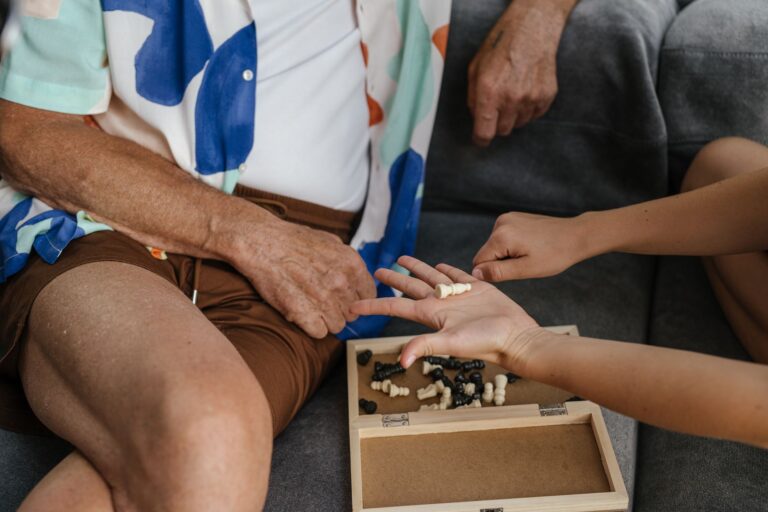
Low-cost game supplies for family caregivers on a budget mean borrowed games, free online play, and inexpensive puzzles matched to the person's abilities. Family caregivers can keep play going without buying new supplies every month. Respite care means short-term relief breaks for caregivers. These breaks, plus borrowed and free games, help families protect both engagement and household spending.
Medical information disclaimer: This article is for general educational purposes only and does not provide medical advice, diagnosis, or treatment. Always consult a physician or other qualified health professional about symptoms, medications, tests, or treatment decisions.
Table of Contents
- Where can you borrow games for free?
- What can you play online without buying anything?
- How do you fit games into daily dementia care?
- When should you simplify or stop a game?
Where can you borrow games for free?
Many public libraries lend more than books. The Fond du Lac Public Library lends board games, video games, and card games free for up to 7 days, according to the library's special-collections page in a seven-day free game loan. A one-week loan lets caregivers test what holds attention before spending money.
Borrowing also solves storage and changing needs. Return games that feel too hard, too easy, or uninteresting. Keep a short list of favorites and borrow similar titles next time.
What can you play online without buying anything?
A large online games portal can cover card, arcade, word, trivia, puzzle, and brain-game choices. AARP hosts that kind of portal with multiple game categories, giving families a zero-purchase option in a free online games portal. This works well when going out is hard or shelves are full.
Pick one or two familiar game types first. Short sessions often work better than long ones. Stop when focus fades and try again another day.
How do you fit games into daily dementia care?
Build play into a simple daily care plan. The Alzheimer's Association advises caregivers to keep familiar activities but modify them to current abilities, preserving engagement as dementia progresses in a daily care plan guide. Familiar rules lower confusion and raise participation.
Choose supplies that are easy to change. Inexpensive word searches, crosswords, and matching or card games can come as low-cost booklets, home printouts, or free apps. Larger print, fewer choices, shorter rounds, and team play can keep success within reach.
- Start with a familiar activity at the easiest level
- Offer one clear choice at a time
- Shorten the round before tiredness sets in
- Save harder puzzles for stronger moments of the day
When should you simplify or stop a game?
Watch for stress during word games and puzzles. People with late-stage dementia may show stress or agitation with these activities, so caregivers should simplify, switch, or stop when distress appears.
Distress can look like restlessness, refusal, raised voice, or withdrawal. Do not argue about rules or correct every mistake. Offer music, sorting, looking at pictures, a short walk, or quiet company instead.