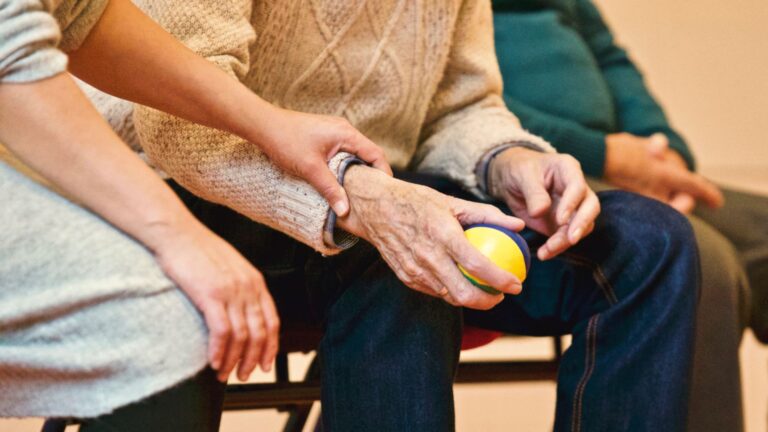
Adapt a life story book for dementia by changing its purpose: co-create it early, simplify sessions in the middle stage, and use it for comfort later. A life story book is a personal record of important people, places, and experiences, created as a book, album, or digital collection. These adaptations are practical guidance, not a validated stage-by-stage protocol. A systematic review found promising results from life-story work, but the studies were generally small and varied widely in their methods, according to International Psychogeriatrics.
Medical information disclaimer: This article is for general educational purposes only and does not provide medical advice, diagnosis, or treatment. Always consult a physician or other qualified health professional about symptoms, medications, tests, or treatment decisions.
Table of Contents
- Early stage—build the book together
- Middle stage—reduce demands and add cues
- Late stage—make comfort the goal
- What if a memory causes distress?
- How to judge whether the activity is working
Early stage—build the book together
Treat the person as the book's author, not its subject. People with early-stage Alzheimer's may still participate in meaningful conversations and decisions, so ask which stories, names, captions, and format they prefer, as advised by the Alzheimer's Association.
Start with a manageable part of the person's life rather than attempting a complete biography. For example: Record key information while the person can help shape it. The material may later help caregivers understand the person's routines, relationships, values, and sources of comfort.
- Choose several favorite photographs together.
- Ask which names and relationships belong in each caption.
- Record preferred words for important places, jobs, traditions, and interests.
- Let the person exclude stories or images they do not want included.
Middle stage—reduce demands and add cues
Shift from gathering long stories to sharing short, supported moments. Use a quiet setting, speak slowly, allow ample response time, and present one question at a time—communication practices recommended by the Alzheimer's Association. Keep each page visually simple.
Show one photograph and use a brief prompt such as, "This is your sister, Anna," or a yes-or-no question such as, "Was this taken at home?" A caregiver can supply context without demanding that the person retrieve every detail. A session might cover only one page. Stop when attention fades, answers become strained, or the activity no longer feels enjoyable; finishing the book is less important than preserving connection.
Late stage—make comfort the goal
In late-stage Alzheimer's, communication may be largely nonverbal. The book should therefore stop functioning as an interview tool and become a source of familiar sights, sounds, and gentle companionship. Choose a few clear photographs, meaningful mementos, or familiar music. Read captions in a calm voice, notice facial expressions or body movements, and allow silence.
The Alzheimer's Association's late-stage care guidance supports using familiar photos, music, voice, and touch to foster comfort and connection. Do not ask, "Who is this?" as a test. Try, "Here is your friend James at the lake," then pause. A smile, relaxed posture, or willingness to remain engaged can matter more than a spoken answer.
What if a memory causes distress?
Life-story work can bring up grief, conflict, fear, or other painful memories. Follow the person's emotional response instead of pressing for a fuller account.
If a photograph or topic causes distress: The same image may invite conversation on one occasion and feel overwhelming on another. Treat comfort as the stopping rule, even when the story remains unfinished.
- Acknowledge the feeling without correcting the person.
- Put the item aside or move to a safer subject.
- Offer quiet reassurance and time.
- Remove that page from future sessions if it repeatedly causes upset.
How to judge whether the activity is working
Judge the book by the interaction it supports, not by its completeness or historical precision. Useful outcomes may include participation in choosing a page, sustained attention, emotional expression, relaxation, or a shared moment with another person.
Reminiscence should encourage connection rather than test memory, and familiar photographs or music may still provide comfort later, according to the Alzheimer's Association. If the person appears pressured, confused, or distressed, shorten the session, simplify the prompt, change the material, or stop.