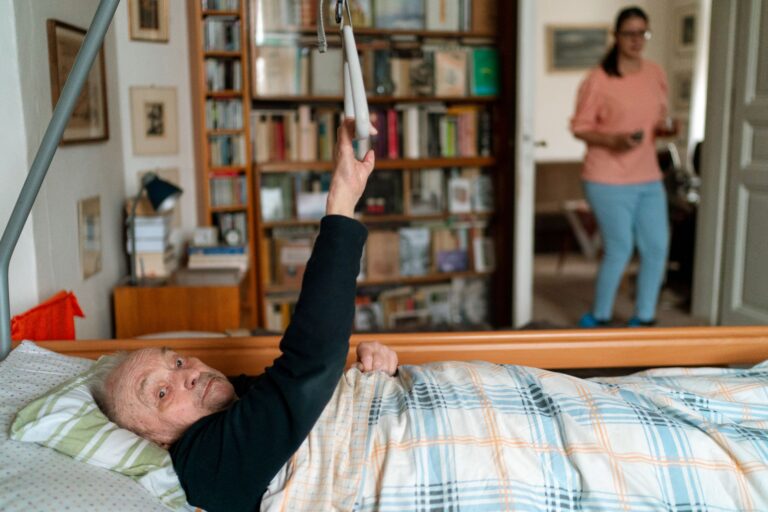
Before choosing live-in dementia care, ask what help is needed, who will provide it, how absences and nights are covered, and what it will cost. Verify dementia training, safety planning, practical fit, and decision-making authority before signing an agreement. Here, live-in dementia care means in-home support that includes a caregiver staying in the home. It is not one standardized service: the Alzheimer's Association distinguishes personal care and companionship from skilled care, such as therapy or wound treatment by licensed professionals.
Medical information disclaimer: This article is for general educational purposes only and does not provide medical advice, diagnosis, or treatment. Always consult a physician or other qualified health professional about symptoms, medications, tests, or treatment decisions.
Table of Contents
- What care is needed now?
- Is the caregiver qualified and a good fit?
- Who is responsible at every hour?
- Is the home prepared for dementia care?
- What will insurance cover, and what must the family pay?
What care is needed now?
Start with a detailed account of the person's current abilities. Consider walking, eating, toileting, bathing, medication needs, safety, and social engagement. Note what the person can do independently, what requires reminders, and what requires hands-on help. Ask the provider to explain how it would cover a typical day.
Include waking, meals, medication routines, personal care, activities, appointments, and bedtime. Discuss difficult situations, such as refusing a bath, trying to leave home, or becoming distressed. Needs can intensify as dementia progresses. The Alzheimer's Association advises matching providers to present abilities and anticipated needs, noting that middle-stage dementia may require continuous supervision and late-stage care is generally more intensive. Ask how the plan will be reviewed when abilities change.
Is the caregiver qualified and a good fit?
Ask for evidence of dementia-specific experience and training rather than accepting general caregiving experience as equivalent. Confirm first-aid and CPR training, background-check status, references, and bonding. Ask who has verified each item and whether documents are available.
Use scenario questions to test judgment: Hold the final interview in the home when possible. Describe an ordinary day, introduce the caregiver to the person with dementia, and observe whether the caregiver speaks respectfully, listens, allows time for answers, and adapts without taking over. A strong résumé cannot establish interpersonal fit.
- How would you respond if the person refused medication or personal care?
- What would you do if the person tried to leave the house?
- How do you calm distress without arguing?
- Which changes in health or behavior would you report, and to whom?
- What tasks would require a nurse or another licensed professional?
Who is responsible at every hour?
"Live-in" does not by itself explain whether one caregiver is available continuously, whether that person sleeps overnight, or when another worker takes over. Ask for a written schedule showing working hours, rest periods, overnight responsibilities, handoffs, and the person to contact when a problem occurs. Require a specific backup plan.
Ask who arrives if the regular caregiver becomes sick, takes vacation, or quits; how quickly replacement care begins; and whether substitutes meet the same screening and training requirements. Keep the agency's emergency and after-hours numbers where family members can find them. The written care plan should also assign responsibility for medications, meals, bathing, appointments, household tasks, documentation, and communication with relatives. Vague phrases such as "help as needed" make it difficult to identify gaps or resolve disagreements.
Is the home prepared for dementia care?
Arrange a home-safety review before care begins. The National Institute on Aging recommends addressing immediate hazards, securing dangerous items, maintaining detectors, and reassessing safety as abilities change. Dementia may affect both hazard recognition and the ability to use a phone during an emergency.
Walk through practical situations with the provider: Also decide who can communicate with clinicians and make treatment decisions if the person cannot. When possible, settle advance-care preferences and select a health-care proxy early. Give caregivers the relevant directives, proxy contact details, medication information, and emergency instructions.
- How will exits, keys, medicines, tools, and cleaning products be managed?
- What happens during a fire alarm, power failure, fall, or medical emergency?
- How will the caregiver summon help if the person cannot give reliable information?
- Which safety changes can be made now without unnecessarily restricting movement?
- Who will repeat the assessment after a change in mobility, judgment, or behavior?
What will insurance cover, and what must the family pay?
Request a written price that separates caregiver time, agency fees, skilled services, overnight coverage, replacement care, transportation, and other charges. Ask what can trigger a rate change and how either party may end the arrangement. Compare proposals using the same schedule and task list. Do not assume Medicare pays for a live-in arrangement.
Medicare states that it does not cover 24-hour home care or stand-alone custodial help with activities such as bathing, dressing, and toileting. Covered home-health services generally require homebound status, intermittent skilled care, a provider's order, and a Medicare-certified agency. If Medicare-certified home health is part of the plan, families can consult Care Compare's quarterly updated one-to-five-star quality rating. Treat that score as one comparison point, since it reflects selected agency performance measures rather than every feature of dementia care. Confirm exactly which services are covered and obtain the family's expected costs in writing before care starts.