The LiBBY trial found that a supervised purified THC and CBD oil reduced agitation in hospice-eligible people with late-stage dementia. The 12-week Phase 2 study showed early and sustained benefit, but safety signals and its small, preliminary scope limit what families can conclude.
LiBBY stands for Life's End Benefits of cannaBidiol and tetrahYdrocannabinol. Agitation here means restlessness, aggression, or distress that often burdens both patients and adult children. The trial tested whether a precise prescription formula could ease those symptoms during end-of-life care.
Medical information disclaimer: This article is for general educational purposes only and does not provide medical advice, diagnosis, or treatment. Always consult a physician or other qualified health professional about symptoms, medications, tests, or treatment decisions.
Table of Contents
- How was the study designed?
- How much did agitation improve?
- Who took part in the trial?
- What are the main evidence limits?
- What should adult children do with these findings?
How was the study designed?
The study was a 12-week multicenter, randomized, double-blind, placebo-controlled trial in 120 hospice-eligible patients with Alzheimer's or another dementia and agitation. Research teams worked across 10 U.S.
sites and made home visits, according to the Alzheimer's Association release. Participants took purified oral T2:C100, or 2 mg THC plus 100 mg CBD in digestible oil twice daily after a lower week-one starting dose. Everyone continued usual physician-directed routine care during the study, according to the Urban Health Today report.
How much did agitation improve?
On the 29-item Cohen-Mansfield Agitation Inventory, a standard behavior rating scale, the THC/CBD group improved by 6.27 points more than placebo by week two. That rapid onset persisted through week 12.
The overall 12-week benefit was large, with an area-under-curve contrast of minus 8.23. Clinicians rated 87.2% of treated patients as improved at week 12, compared with 23.6% on placebo, according to the NeurologyLive report.
Who took part in the trial?
The trial enrolled people often left out of dementia research: patients averaged about 80 years old and were eligible for hospice. About 55% were women, 58% were from underrepresented ethnoracial groups, and 75% lived in the community rather than nursing facilities.
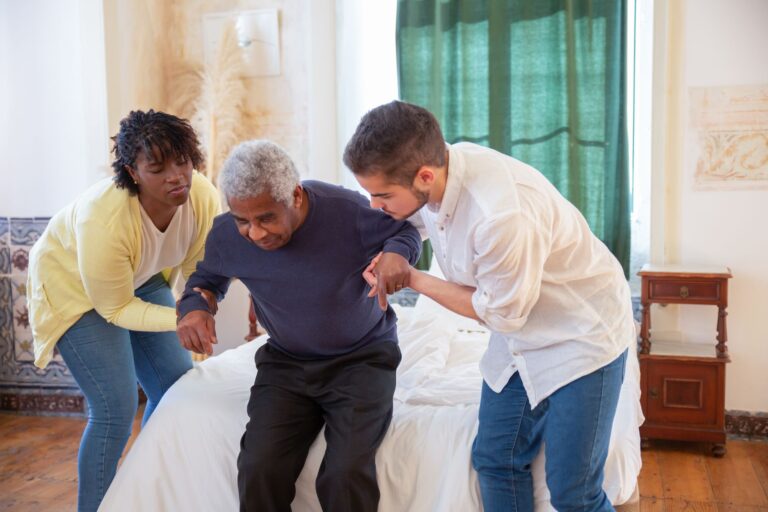
That makeup matters for adult children caring for a parent at home. Home visits, older age, advanced illness, and community living make the setting closer to real family caregiving than a hospital ward.
What are the main evidence limits?
Overall adverse events were similar, at 46.7% with treatment and 42.4% with placebo. Yet serious events were higher with THC/CBD: serious adverse events 23.3% versus 11.9%, serious infections 11.7% versus 1.7%, and deaths 13.1% versus 5.1%.
Investigators judged those serious events unrelated and expected in hospice patients. Families should still weigh them carefully because a small Phase 2 trial cannot prove safety.
What should adult children do with these findings?
These are topline Phase 2 conference results first presented July 14, 2026, at AAIC London. They apply only to the supervised purified oil and dosing system studied, not to dispensary or over-the-counter cannabis.
- Keep non-drug approaches first for agitation: calm routines, pain checks, sleep support, and reduced noise.
- Bring the study details to the hospice or dementia clinician before considering any cannabis product.
- Ask about interactions, infection risk, sedation, falls, and goals of comfort care.
- Do not change prescribed medicines or try a store product on the basis of trial headlines.
You Might Also Like
- Implementation-Ready Dementia Interventions in the 2026 NIA Report: What the Findings Mean for Adult Children
- Dementia With Multiple Etiologies in the 2026 NIA Report: What the Findings Mean for Adult Children
- The $781 Billion Dementia Economic Estimate in the 2026 NIA Report: What the Report Means for Long-Distance Caregivers