Yes, brief mobile games can support a caregiver's brain health. They offer fast stress relief and mental stimulation, but they do not prevent memory decline or dementia.
Brain health here means clear thinking, steady memory, and stable mood under strain. That balance is hard to protect during dementia care, when breaks are short and often interrupted. About 1 in 8 unpaid caregivers age 45 and older report worsening confusion or memory loss in the past year, according to the CDC in its CDC caregiver cognition report.
Medical information disclaimer: This article is for general educational purposes only and does not provide medical advice, diagnosis, or treatment. Always consult a physician or other qualified health professional about symptoms, medications, tests, or treatment decisions.
Table of Contents
- Why do caregivers need brain-health breaks?
- Can a short game ease stress and low mood?
- Do mobile games sharpen thinking?
- What are the limits?
- How can caregivers use games well?
Why do caregivers need brain-health breaks?
Caregiving combines interrupted sleep, constant vigilance, and emotional strain. The Alzheimer's Association reports that about 59% of dementia caregivers nationally feel high to very high emotional stress, with depression more common than among other caregivers.
That load makes mood relief a brain-health need, not a luxury. A calmer ten minutes can improve patience, attention, and decision-making for the next care task.
Can a short game ease stress and low mood?
A short puzzle, word, or matching game can work as a reset between duties. In a 6-month randomized study, casual games including Bejeweled 2, Peggle, and Bookworm Adventures reduced stress by heart-rate, brain-wave, and mood measures, according to East Carolina University in its ECU casual-games study. The benefit is practical because the games are brief and easy to stop.
A separate ECU trial of about 60 clinically depressed adults found the casual-game group averaged 57% lower depression symptoms, plus less anxiety and better mood. Tense shooters or long, demanding games are a different choice. For a caregiver break, pick something calming, short, and easy to pause.
Do mobile games sharpen thinking?
Some cognitive mobile games train attention, speed, memory, and decision-making. Among 12,000 adults ages 60 to over 80 across 100 sessions, cognitive mobile-game players improved game scores and processing speed at every age, according to Scientific Reports findings shared through the Cambridge memory-game record. A 2025 Frontiers in Psychology intervention also found that a mobile decision-making and memory game improved cognitive function, including executive function and memory, in older adults with mild cognitive impairment.
Executive function means planning, switching tasks, and managing steps. For caregivers, the useful gain is staying mentally active and alert. Faster processing and practiced recall can make medication lists, appointments, and daily plans feel less foggy.
What are the limits?
Games mainly improve the practiced skill. The National Institute on Aging cautions that players improve at the game itself, with limited proven transfer to everyday memory or dementia prevention. So treat games as enrichment, not protection.
They do not replace sleep, exercise, medical care, social support, or respite help. Watch for warning signs that play has turned unhelpful. Late-night scrolling, skipped meals, missed medication, rising irritability, or guilt after long sessions mean the break needs a new form.
How can caregivers use games well?
Keep sessions short, planned, and paired with other healthy habits. NIA-linked guidance says mentally stimulating, physical, social, and varied enjoyable activities may support memory, according to the NIA in its NIA guidance on enjoyable activities.
- Play 5-15 minutes while the care recipient naps, watches a show, or has company.
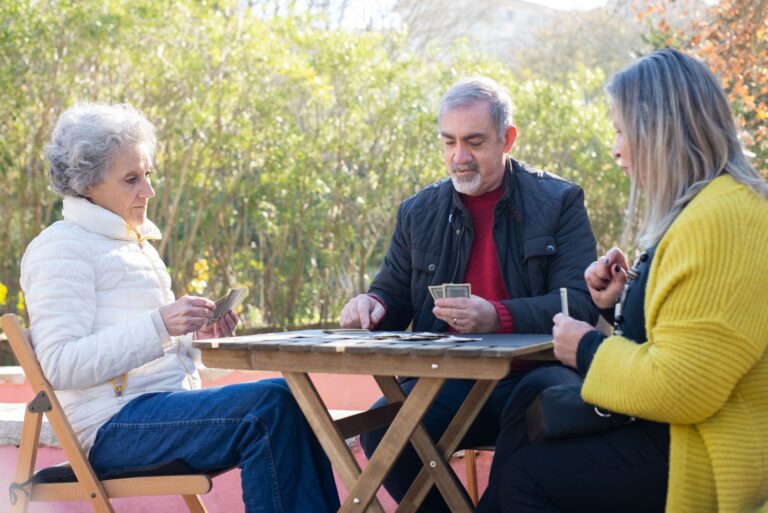
- Choose puzzle, word, card, or memory games with clear stopping points.
- Set a timer, silence notifications, and sit somewhere comfortable.
- Stop if you feel wired, numb, or more tired than before.
- Follow the game with water, a short walk, fresh air, or a friendly call.