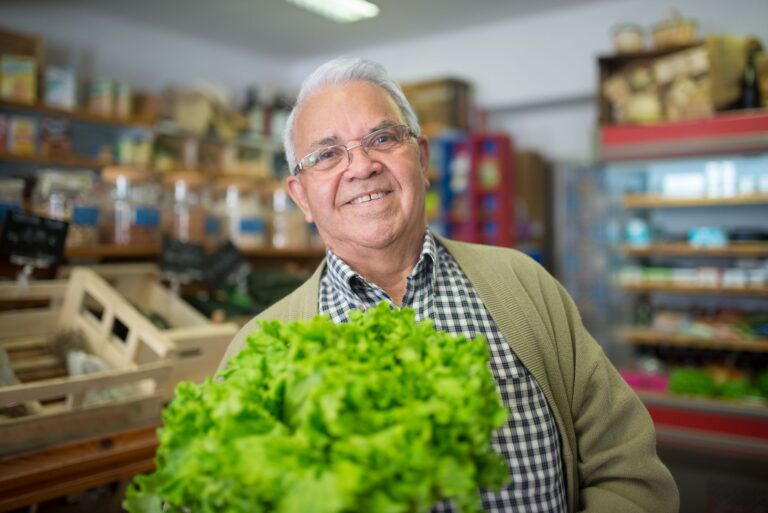
Older adults with mild cognitive impairment do best with simple MIND-style meals built on greens, vegetables, berries, beans, whole grains, nuts and olive oil. Mild cognitive impairment means early memory or thinking slips beyond normal aging, and routines plus planned protein and B12 keep this eating style safe. Caregivers can make the pattern work by repeating a few familiar meals, softening textures, and keeping shopping and cooking steps visible. The goal is steady nourishment for brain and muscle without complex recipes.
Medical information disclaimer: This article is for general educational purposes only and does not provide medical advice, diagnosis, or treatment. Always consult a physician or other qualified health professional about symptoms, medications, tests, or treatment decisions.
Table of Contents
- What does a brain-healthy plate look like?
- What links diet to dementia risk?
- Which nutrients need extra planning?
- What are the limits of the evidence?
- How can caregivers simplify plant-based meals?
What does a brain-healthy plate look like?
The Academy of Nutrition and Dietetics describes the MIND pattern as daily leafy greens plus two or more vegetable servings, berries two to five times weekly, and nuts or seeds five or more times weekly, in its MIND diet guidance. The same pattern favors whole grains, beans, fish, poultry and two tablespoons of extra-virgin olive oil daily.
It limits red meat, butter, cheese, sweets and fried foods. For mild cognitive impairment, that limit works best as a swap, not a strict ban.
- Serve olive oil instead of butter for cooking and bread.
- Serve beans, lentils, fish or poultry instead of red meat.
- Serve fruit, thawed berries or nuts instead of pastries and fried snacks.
What links diet to dementia risk?
In nearly 93,000 Multiethnic Cohort adults ages 45 to 75, those who improved MIND-diet adherence over ten years had 25 percent lower dementia risk than those whose adherence declined, according to the University of Hawaii Cancer Center in its University of Hawaii news release. An NIA-funded autopsy study also tied MIND and Mediterranean diets rich in vegetables, fruits, whole grains, olive oil, beans and fish to fewer Alzheimer signs such as amyloid plaques and tau tangles.
These findings show association, not proof that food alone prevents dementia. They support steady healthy eating alongside medical care, activity, sleep and social contact.
Which nutrients need extra planning?
Older adults eating mostly plants should deliberately plan for protein, calcium, vitamin D, enough calories and vitamin B12. University of Florida guidance notes adults 65 and older need about 1.0 to 1.2 grams of protein per kilogram daily to preserve muscle, above the 0.8 gram adult RDA. Vitamin B12 is absent from unfortified plant foods.
The adult RDA after age 51 is 2.4 mcg daily, and NIH advises most people over 50 get B12 from fortified cereals, fortified soy drinks or supplements because low stomach acid impairs food-B12 absorption, per its NIH vitamin B12 consumer fact sheet. Ask the clinician about B12 status, vitamin D, calcium and protein needs before adding a supplement. Bring a short list of usual meals, fortified foods and medicines to that visit.
What are the limits of the evidence?
A three-year DO-HEALTH study in generally healthy older adults found baseline MIND adherence was not linked to mild cognitive impairment odds by MoCA cutoffs, nor to hsCRP or IL-6 inflammation markers, according to the DO-HEALTH report. That result came from one relatively healthy group over a short period.
It does not erase longer cohort and brain-pathology findings. It means diet helps most as one part of a broader brain-health plan.
How can caregivers simplify plant-based meals?
Use soft cooked greens, fresh or thawed berries, ground nuts or nut butter, olive oil, and B12-fortified cereals or soy milk. Ohio State Extension guidance points to pre-cut foods, batch cooking, clear labels and supervised stove use for older adults. Keep the kitchen routine steady and safe.
- Batch-cook greens, grains and beans twice weekly and label containers by day.
- Keep cut vegetables, berries and nut butter at eye level.
- Use one burner, a timer and supervised stove time to reduce burn risk.
- Serve the same breakfast and lunch daily to lower choice stress.