Supporting independence in moderate dementia requires a combination of personalized cognitive rehabilitation, strategic environmental modifications, and caregiver training that focuses on what a person can still do rather than what they’ve lost. Recent evidence from the Lancet Commission and World Alzheimer Report 2025 shows that properly tailored interventions can meaningfully delay the loss of independence and extend the period during which someone can manage daily activities with minimal assistance. A person in moderate dementia might struggle to remember to take medication or follow a multi-step cooking process, but with structured cognitive rehabilitation and memory cues built into their environment, they can often continue to prepare simple meals, manage personal hygiene, and engage in meaningful activities—preserving both capability and dignity.
The goal isn’t to restore abilities lost to dementia, but to build scaffolding around remaining strengths. This means working with the person’s existing skills while removing obstacles that require memory to navigate. A woman with moderate dementia might not remember to shower, but if her bathroom has a prominent visual checklist, labeled drawers for her clean clothes, and grab bars positioned strategically, she can often complete the task independently. The difference between decline and stabilization at this stage often comes down to whether caregivers and clinicians approach independence as something worth preserving through active, intentional strategies—not as something inevitable to lose.
Table of Contents
- Why Personalized Cognitive Rehabilitation Works for Moderate Dementia
- Designing Interventions Around What Matters Most
- How Caregiver Training Shapes Independence Outcomes
- Environmental Design and Adaptive Equipment That Preserve Dignity
- Why “Use It or Lose It” Fails Without the Right Support
- Evidence-Based Programs and Support Resources
- Measuring Progress When Gains Are Subtle
Why Personalized Cognitive Rehabilitation Works for Moderate Dementia
Cognitive rehabilitation—also called cognitive training or cognitive stimulation therapy—involves structured, individualized activities designed to help someone practice and strengthen the cognitive functions they still retain. A Cochrane meta-analysis of 25 studies found clinically relevant improvements in everyday functioning when rehabilitation was personalized to each person’s goals and abilities. The key word is “clinically relevant,” meaning the improvements measurably affected how someone functioned at home or in their community, not just test scores in an office. The mechanism works because moderate dementia hasn’t completely erased cognitive reserves; it has degraded them. A person in this stage typically retains procedural memory (how to do things) better than episodic memory (facts and events), and maintains better abilities in areas they practiced frequently before the disease.
Cognitive rehabilitation targets these preserved pathways. If someone was an avid gardener, for instance, tending a small raised garden bed with labeled plants and picture guides can exercise planning, decision-making, and motor skills simultaneously—far more effective than a generic “memory exercise” workbook. Research from Nature Communications Medicine (2024) shows that activities aligned with a person’s lifelong interests produce measurable improvements in activities of daily living (ADL) performance. One critical limitation: cognitive rehabilitation requires consistency and structure. A once-weekly session with a therapist won’t produce lasting change without daily practice and environmental support at home. This is why caregiver training and home design are inseparable from the rehabilitation itself.
Designing Interventions Around What Matters Most
Effective independence support starts with identifying what activities matter most to the individual, then building strategies to maintain those specific skills. This person-centered approach—sometimes called “meaningful rehabilitation”—means the intervention is tailored to preserve the activities that give someone’s life purpose or autonomy, not generic functions. For one person, that might be preparing breakfast; for another, managing their own medication or tending to a pet. The GREAT program (Generalized Recommended Activity-based Targets) demonstrates this principle in practice. It’s a home-based personalized cognitive rehabilitation approach that uses SMART goal-setting (Specific, Measurable, Achievable, Relevant, Time-bound) to help each person identify and practice the daily activities they want to stay independent in.
Rather than assigning a predetermined exercise plan, clinicians work with the person and their caregiver to define realistic goals—”I want to be able to make my own lunch” or “I want to remember to water my plants”—then build cognitive and environmental supports to enable that goal. The approach recognizes that motivation and relevance drive engagement far more than obligation. A significant caveat: identifying what matters most requires honest assessment with the person and their caregiver, and it requires willingness to adjust goals as the disease progresses. A person who wants to continue driving may not be safe to do so, and caregivers sometimes face the painful task of redefining independence to mean “driving with supervision” or “making short trips” rather than independent, unlimited driving. The intervention must balance person-centered values with safety.
How Caregiver Training Shapes Independence Outcomes
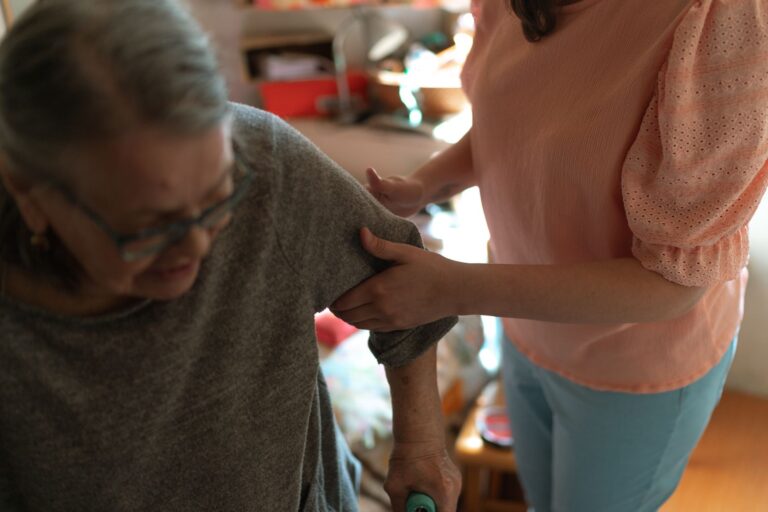
Caregiver behavior is one of the strongest predictors of whether someone with moderate dementia will maintain independence or decline more rapidly. A 2023 clinical guideline review of 348 studies found that caregivers trained in active behavioral management strategies—teaching, cueing, problem-solving—produced significantly better outcomes than caregivers who used reactive approaches (stepping in only when the person fails). The difference matters profoundly. A reactive caregiver might watch their partner struggle to dress and step in to complete the task, which is faster and avoids frustration. An actively trained caregiver offers a sequence of cues: “Your clothes are in the dresser.
Which one do you like today?” If the person is stuck, the caregiver breaks it further: “Try the blue shirt. Let me show you the armhole.” This takes longer and requires patience, but it preserves the person’s participation and cognitive engagement. Over months and years, the actively trained approach maintains higher levels of independence and often results in less behavioral distress, because the person retains a sense of agency. The training isn’t intuitive for most family caregivers, and it’s exhausting. A person struggling with their own anxiety about the disease progression may instinctively take over tasks to reduce visible decline—an understandable response that inadvertently accelerates loss of function. This is why structured caregiver education, often available through the Alzheimer’s Association or dementia care programs, is not optional add-on; it’s central to the intervention itself.
Environmental Design and Adaptive Equipment That Preserve Dignity
The physical environment—the layout of the home, the availability of cues, the removal of obstacles—is often as important as any formal therapy. Effective environmental modifications follow a simple principle: they should reduce the cognitive load required to complete a task, without requiring memory to use them correctly. A grab bar in a shower works because it’s immediately visible and its purpose is obvious; a shoebox of labeled keys doesn’t work because it requires remembering which key goes where. Practical modifications for moderate dementia include non-slip mats, strategically placed handrails, adequate lighting (poor lighting increases fall risk substantially), visual labels on drawers and cabinets, a simplified medication organizer that shows the time and dose, and prominent clocks and calendars. A bathroom mirror with a laminated checklist of grooming steps, a kitchen counter with a single cutting board and labeled ingredients for one meal at a time, or a bedroom dresser organized so everyday clothes are in the top drawer and special-occasion items are tucked away—these reduce decision-making and memory demands.
Research from NIH/PMC (2024) shows that people who live in such modified environments experience fewer falls and accidents while maintaining higher functional independence. One important trade-off: a highly modified environment looks and feels different from the person’s pre-illness home. Some people and families experience this as depressing or stigmatizing, like living in a “disabled” space. Effective design balances functional accommodation with aesthetic dignity. This might mean a decorative organizer with clear labels rather than a clinical-looking medication dispenser, or family photos on the walls to maintain the familiar character of the home while adding memory aids.
Why “Use It or Lose It” Fails Without the Right Support
A common misconception is that people with moderate dementia simply need to “keep active” or “stay mentally engaged,” and independence will be preserved. While activity and engagement are necessary, they’re not sufficient. Without proper structure and cuing, activity can devolve into frustration or failure, which then reinforces withdrawal and learned helplessness. A person who is encouraged to “figure out” how to use the TV remote without cues might fail repeatedly and then refuse to try again—the opposite of independence. The critical factor is whether the activity is designed so the person can succeed with appropriate support.
Unstructured activity—”Just go work on a hobby”—often fails because moderate dementia makes it hard to initiate complex tasks or problem-solve when stuck. Structured activity with cues and breaks—”Let’s do a puzzle together, I’ll help organize the edges first”—succeeds because it scaffolds the cognitive demands. This distinction is important because some caregivers interpret the “use it or lose it” principle as a mandate to push the person toward independence without support, which can backfire into learned helplessness and caregiver burnout when the person fails. Another limitation: cognitive rehabilitation and environmental support can slow the rate of decline in moderate dementia, but they don’t reverse it. The expectation shouldn’t be that a person will return to their prior level of function, but that they will maintain measurable independence in specific, meaningful areas longer than they would without intervention. Progress is measured in months of preserved ability, not in recovery.
Evidence-Based Programs and Support Resources
The Alzheimer’s Association’s 2025 clinical practice guidelines identify several evidence-based approaches for supporting independence in moderate dementia. These include educational workshops (for both the person and caregivers), structured peer support groups where caregivers can problem-solve with others facing similar challenges, respite care services so primary caregivers can rest without guilt, and cognitive stimulation therapy delivered by trained facilitators. Cognitive Stimulation Therapy (CST), studied in 25 rigorous trials, shows moderate-quality evidence for improvements in communication, social interaction, and day-to-day functioning when delivered consistently over weeks.
Access to these programs varies significantly by region and insurance coverage. Some regions have robust dementia care programs through health systems or nonprofit organizations; others leave families to navigate resources independently. The World Alzheimer Report 2025 emphasizes that early engagement with these programs—ideally at the mild-to-moderate transition, or as soon as moderate dementia is diagnosed—produces the best outcomes. Waiting until severe dementia to implement rehabilitation programs means losing the window when meaningful improvements are most achievable.
Measuring Progress When Gains Are Subtle
Progress in dementia support looks different than recovery in other conditions. Instead of “the person improved,” the question becomes “Did the person maintain this ability longer than expected?” or “Can they do this task more consistently than last month?” The Quality of Life—Alzheimer’s Disease Scale, used in research and some clinical settings, measures this by tracking whether a person can perform specific daily activities and how satisfied they report being with their life. Improvement in ADL scores and quality of life, even if absolute abilities remain modest, indicates that intervention is working.
Longitudinal data from recent studies shows that people receiving personalized cognitive rehabilitation maintain ADL independence significantly longer than matched controls. For moderate dementia specifically, the timeline varies, but the difference is measurable: studies tracking people over 12 to 24 months show that those with structured support and trained caregivers retained independence in instrumental ADLs (managing finances, medications, appointments) or personal care ADLs (bathing, dressing, grooming) for an average of 3-6 months longer than those without intervention. Three to six months of preserved independence—and preserved dignity and engagement during that time—is substantial when facing the course of a progressive disease. Concrete progress in dementia care is often incremental and defensive, not dramatic and curative; measuring it requires adjusted expectations but not diminished attention.
- —