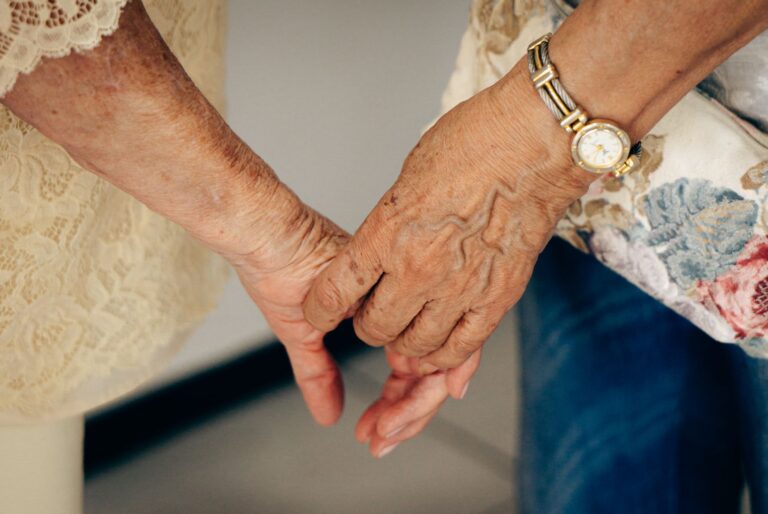
Familiar blankets reduce agitation and provide comfort in dementia care by engaging memory pathways that remain intact even when cognitive function declines. A blanket that has been part of someone’s life for years—one they’ve owned before diagnosis, handled regularly, or recognize by texture and smell—can lower anxiety, encourage rest, and create a sense of safety when verbal communication breaks down. The mechanism is straightforward: familiarity bypasses the need for new learning, so even someone in mid-stage dementia may not remember your name but will relax when wrapped in the same blanket they’ve used for decades. This is not a cure or a substitute for medical care, but it is one of the most effective non-pharmacological tools available.
An 84-year-old woman with moderate dementia who sundowns each evening—becoming agitated, wandering, and resistant to direction—may calm within minutes once her childhood quilt is placed across her lap. Her verbal abilities may not improve, and she may still not recognize family members, but the blanket interrupts the agitation cycle by providing tactile and olfactory cues that the brain recognizes as safe. Familiar blankets work best when used consistently, as part of a structured routine rather than as a one-time intervention. The blanket is most effective when introduced early in the dementia journey, before significant behavioral changes emerge, so that caregivers have already learned which blanket, texture, and placement work best for that person.
Table of Contents
- Why Familiar Objects Provide Comfort in Dementia
- Identifying and Selecting the Right Blanket for Your Person
- Sensory Properties That Matter Most in Dementia Care
- Practical Techniques for Using Blankets Effectively
- Common Pitfalls and Safety Considerations
- Integration with Other Comfort Strategies
- Tracking Response and Adjusting Use Over Time
- Frequently Asked Questions
Why Familiar Objects Provide Comfort in Dementia
Dementia progressively damages the ability to store new information and to orient to current surroundings, but it typically preserves certain long-term memories and the emotional response to familiar sensations. When someone with dementia sees a family member’s face, they may not consciously remember that person, but their nervous system may still recognize the voice or the feel of a familiar embrace—a response that happens at a deeper level than conscious recall. A blanket operates on this same principle. If it has been present in someone’s life for many years, the brain retains a kind of procedural or emotional memory of it, even when the person cannot name it or explain why it comforts them. Research on object familiarity in dementia care shows that familiar items reduce cortisol levels (the stress hormone) and lower agitation during high-risk periods like nightfall, bathing, or medical procedures.
The blanket does not work because it is inherently magical; it works because it is a consistent, non-verbal signal that the world is stable and that this person is not in immediate danger. A blanket that smells like a spouse’s laundry detergent, or one that matches the bedroom décor from a person’s home of thirty years, carries more weight than a generic hospital-issue blanket because it speaks a language the impaired brain still understands. The limitation of this approach is that it relies on the person already having a strong prior attachment to that blanket. If someone has lived in a nursing facility for five years before diagnosis, and the blanket is new to that facility, it will not carry the same weight. Successful blanket use requires either choosing a blanket that predates the dementia, or using it very consistently over time so that it eventually becomes familiar in the person’s revised experience.
Identifying and Selecting the Right Blanket for Your Person
The ideal blanket is one that your person has owned or regularly used before cognitive decline became severe. Scan their home or belongings for afghans made by family members, quilts inherited from relatives, childhood blankets still in the linen closet, or even old bedding from a meaningful period in their life. These items already carry the weight of familiarity. If you cannot locate such an object, prioritize blankets with textures and colors that match their past environment—if they grew up in a farmhouse with quilts, a handmade quilt will be more recognizable to them than a smooth polyester throw. Size matters practically.
A small quilt or lap blanket is easier to position, wash, and transport than a full-size comforter, and it can be used flexibly—draped over shoulders, placed on a lap during meals, or tucked beside the person in bed. Weight also plays a role. Some people respond to the pressure of a weighted blanket or a substantial wool blanket; others find heavy fabrics restrictive and prefer something lighter and fluffier. Without being able to ask directly, you will learn this through observation: does the person hunch their shoulders when a heavy blanket is placed on them, suggesting discomfort, or do they visibly relax? One common mistake is choosing a blanket based on what caregivers think is aesthetically appropriate rather than what the person recognizes. A pristine, modern throw blanket may not resonate with a 79-year-old woman whose sensory memories are tied to heavier, more textured fabrics from mid-century bedding. Thrift stores and online marketplaces often have vintage quilts and afghans from the exact decades when your person was young—these can be more effective than new items because they actually match the era of their formative memories.
Sensory Properties That Matter Most in Dementia Care
Texture is often more powerful than color or design. A blanket with a woven cotton surface, a fleece backing, or a hand-stitched quilted pattern engages the tactile sense in a way that smooth synthetic fabrics do not. When someone with dementia picks up and fingers a familiar blanket, the repetitive texture—the individual stitches, the slight roughness of old cotton, the ridges in a hand-knitted throw—becomes an anchoring point. Touch is one of the last senses to be affected in advanced dementia, so texture can communicate safety even when hearing and sight are severely impaired. Smell is equally important. A blanket that has been washed in the person’s preferred detergent, that carries the scent of their bedroom, or that holds the faint smell of a deceased spouse’s cologne can trigger powerful emotional responses that bypass verbal cognition entirely.
Some families deliberately preserve the smell of a loved one by wrapping blankets around their pillow or storing them unwashed for periods. This is not unhygienic if the blanket is still used and aerated; it is a deliberate sensory bridge to memory and safety. Weight distribution matters for physical comfort but also for emotional response. A blanket that is heavy enough to stay in place across the lap—not slipping and requiring constant readjustment—reduces the frustration that can emerge when someone with cognitive impairment cannot manage the mechanics of holding or positioning an object. Lightweight blankets that constantly slip can actually increase agitation because the person struggles to maintain them, grows confused about where the blanket went, and may experience a cycle of reaching for it, losing it, and reaching again. A weighted or slightly heavier blanket that stays put supports both physical comfort and emotional regulation.
Practical Techniques for Using Blankets Effectively
Timing is as important as the blanket itself. A familiar blanket is most effective when used proactively during predictable high-risk periods—late afternoon when sundowning typically begins, during medical procedures or bathing when the person is vulnerable, during transitions between environments, or at bedtime when anxiety about nighttime often emerges. Instead of waiting for agitation to spike and then deploying the blanket as a reaction, introduce it during calm periods so that the person associates it with safety rather than with crisis management. Positioning affects both comfort and efficacy. A blanket wrapped around the shoulders of someone who is pacing or agitated can provide gentle grounding without the sensation of being trapped.
A blanket placed across the lap during meals or television time allows the person to hold and touch it without it feeling restrictive. A blanket tucked alongside someone in bed should be loose enough that they can kick it off if they overheat, because overheating can paradoxically increase agitation. Observe whether your person prefers the blanket over their legs and lower body (which preserves mobility) or draped over their shoulders and arms (which can feel more embracing and calming). Consistency in texture and placement creates a ritual that the brain comes to anticipate. If the blanket is always available in the same location, always introduced at the same time of day, and always arranged in roughly the same way, the person’s nervous system begins to recognize this pattern and to associate it with calming. For example, if the blanket is always placed on the back of the recliner during the 3pm slowing period, the person may eventually sit in that chair and reach for the blanket without prompting—a sign that the ritual has become embedded in their behavior even as their explicit memory has failed.
Common Pitfalls and Safety Considerations
Overheating is a real risk, especially in people taking medications that affect thermoregulation or in those who spend time in heated facilities. A blanket that is warming and comforting during a cool evening may cause discomfort or agitation if the person becomes too warm and cannot communicate the problem clearly. Check frequently—place your hand under the blanket to feel skin temperature, and watch for signs of overheating such as sweating, red skin, or agitation that emerges after the blanket has been in place for an extended period. People with dementia often cannot tell you they are too hot or remove the blanket themselves. Hygiene is also non-trivial. A blanket that is washed too frequently may lose the familiar scent that makes it effective, while a blanket that is never washed accumulates sweat, spills, and odors that can become unpleasant.
Aim for washing every two to four weeks, using the same detergent and methods each time so that the familiar texture and a faint scent signature remain consistent. If the blanket is soiled during an episode of incontinence or illness, wash it promptly to prevent skin irritation, but expect that this may temporarily reduce its comforting effect until the familiar scent returns. Blanket loss or degradation is a practical concern in shared facilities. A blanket placed in a care home may be misplaced during laundry, accidentally thrown away, or damaged by cleaning staff unfamiliar with its importance. If a blanket is truly irreplaceable—for example, an antique quilt or a blanket made by a deceased family member—consider keeping it primarily at home and bringing it for visits, or storing a backup blanket that the person has also come to recognize. For blankets used full-time in facilities, have a conversation with staff about where the blanket is stored, how it is washed, and what happens if it is damaged.
Integration with Other Comfort Strategies
A familiar blanket should not be the only non-pharmacological tool in your toolkit. It works best as part of a broader approach that includes consistent routines, familiar music, photographs of family members, and familiar foods or beverages. A person who receives their blanket at 3pm, who then hears soft music they enjoyed in earlier life, and who sits near a window where they can see outdoor movement, will experience a cumulative calming effect that is stronger than the blanket alone. The blanket is one thread in a tapestry of familiarity.
Some families combine the blanket with gentle touch or massage. Placing the blanket and then lightly rubbing the person’s arms or hands through it creates a dual sensory experience—touch and texture together—that can deepen the calming effect. This technique is particularly useful for people with advanced dementia whose primary form of communication is physical rather than verbal. Be attentive to the person’s response; not everyone finds touch calming, and some people may experience touch as invasive or confusing if they do not recognize the person providing it.
Tracking Response and Adjusting Use Over Time
Dementia is progressive, and what worked during early stages may need adjustment as the disease advances. A person who once actively held and manipulated their blanket may eventually become more passive and respond better to the blanket being arranged on or around them. A person who thrived with a lightweight blanket may eventually benefit from slightly more weight as their sensory acuity declines.
Keep informal notes—or encourage facility staff to keep notes—about when the blanket is used, how the person responds, and whether the timing or positioning needs to change. Some families create a simple log: “3pm—blanket placed on lap during calming period—response: visible relaxation, stopped pacing within 5 minutes” or “bedtime—blanket placed on bed—response: restless, kicked it off twice.” Over months, patterns emerge that help you fine-tune the approach. If the blanket stops working, the most common reason is that it has become too unfamiliar due to inadequate or infrequent use, or that it has been washed so often that the scent has faded completely. Revival may be as simple as resuming consistent daily use, or restoring the familiar scent by storing it near the person’s pillow or a piece of the spouse’s clothing.
Frequently Asked Questions
How old should the blanket be to be considered “familiar”?
Ideally, the blanket should predate the cognitive decline by several years—the longer the person has lived with it, the deeper the neural pathways associated with it. A blanket from someone’s childhood or from the early decades of their marriage will typically be more effective than one from the last few years, but even a blanket used consistently over two or more years can develop enough familiarity to have a calming effect.
What if the original blanket is damaged or lost?
If the blanket is truly irreplaceable, focus on finding a blanket with similar texture, weight, and ideally similar color or pattern. You can also deliberately make a new blanket familiar by using it consistently over several weeks or months before expecting it to have the calming effect of the original. In the interim, other comfort objects—familiar clothing, photographs, or items from the person’s bedroom—can provide some of the same grounding effect.
Can a blanket be harmful?
Overly heavy blankets can contribute to overheating or to a feeling of being trapped, which can increase agitation in some people. Very long blankets or those with loose edges can be a tripping hazard if the person is still mobile. Always supervise blanket use in people at high risk for falls, and monitor for signs of overheating during warm months or in heated facilities.
How long does a blanket’s calming effect typically last?
The effect can last minutes to hours depending on the severity of agitation, the consistency of blanket use, and other environmental factors. A blanket is not a one-time fix; it works best when part of a daily or regular routine. The calming effect may diminish over time if the blanket becomes too familiar in a neutral way (no longer special) or if the scent fades, but can be restored by introducing the blanket more strategically or by occasionally re-introducing the familiar scent.
Should the blanket be washed before use?
If the blanket is new to you but was owned by the person before, it should be gently washed if visibly soiled, but ideally not over-washed before initial use because you want to preserve any existing scent or texture signature. If you are choosing a blanket from storage that has been unused for years, a gentle wash is appropriate, but use the same detergent and process you will use going forward so that the smell becomes consistently familiar.
Is a weighted blanket better than a regular blanket?
Weighted blankets work well for some people with dementia, particularly those who respond to deep pressure and proprioceptive input. However, they are not universally superior. Individual preference, the person’s physical health (weighted blankets can be problematic for people with certain respiratory or cardiac conditions), and the person’s heat tolerance all matter. Start with a blanket weight similar to what the person used before, and adjust only if you observe that they respond better to something heavier or lighter.