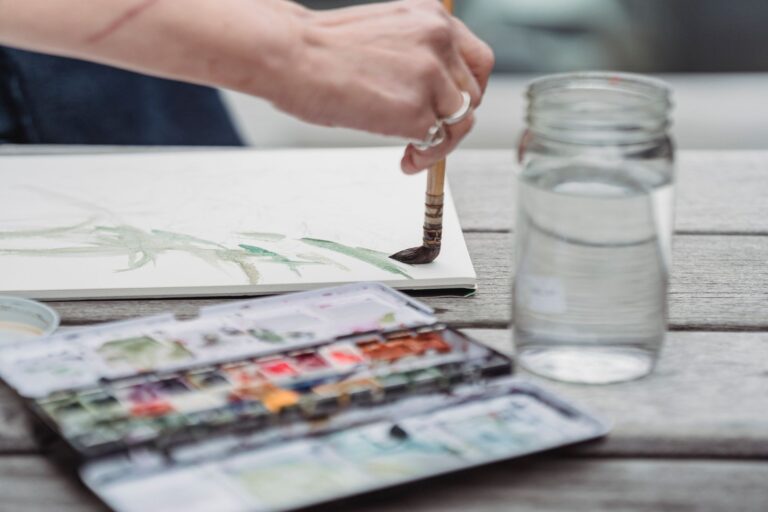
To simplify watercolor on a low-energy day, pre-wet large paper and offer only two or three colors with a large brush. You handle water, setup, and cleanup while the person simply drops in color and watches it spread. Wet-on-wet means damp paper lets paint bleed into soft blends without precise control. Match the session to what the person can do today and keep it short, quiet, and focused on pleasant company.
Medical information disclaimer: This article is for general educational purposes only and does not provide medical advice, diagnosis, or treatment. Always consult a physician or other qualified health professional about symptoms, medications, tests, or treatment decisions.
Table of Contents
- Set up for fewer choices and spills
- Let the water do the work
- Keep today quiet and unpressured
- What improvement is realistic?
Set up for fewer choices and spills
Enclave of Newell Creek recommends limiting the table to two to three paint colors, a large brush, and large paper for dementia-friendly crafts in its dementia craft guidance. Pre-filled water cups and washable paints further cut spills, decisions, and cleanup.
Unison Colour explains that the ACMI AP seal means a toxicologist certified the paint under ASTM D-4236 as containing no injurious toxin levels. Tape the paper down, keep a damp cloth nearby, and stay within arm's reach.
- Fill one water cup and lay out two colors
- Tape down large paper and offer a large brush
- Keep towels and washable paints within reach
Let the water do the work
Chalkola describes wet-on-wet as pre-wetting paper with a large brush or sponge, then dropping in paint that bleeds into soft blends in its watercolor techniques guide. No drawing skill is needed because the water moves the color.
Offer one choice at a time, such as blue or green next. The Alzheimer's Association advises keeping art adult-level rather than childlike and using safe non-toxic materials. It also encourages building conversation into the project and supporting self-expression in middle to late-stage dementia.
Keep today quiet and unpressured
The National Institute on Aging advises matching activities to what the person can do now and scheduling them at a similar enjoyable time daily in its guidance on adapting activities. It favors adapting the task rather than using one-size-fits-all activities.
BrightStar Care suggests keeping art quiet and simple on tired days and commenting on colors and textures. Avoid asking what are you making and let any marks count as finished.
What improvement is realistic?
Hattori and colleagues ran a 12-week controlled trial with 39 mild-Alzheimer's patients using pastels or water-based paint. Coloring abstract patterns and drawing familiar objects significantly improved apathy scores.
A Cochrane review found only a few small randomized trials of art therapy for dementia in the published Cochrane review. Mood and thinking benefits therefore remain uncertain despite encouraging single studies.