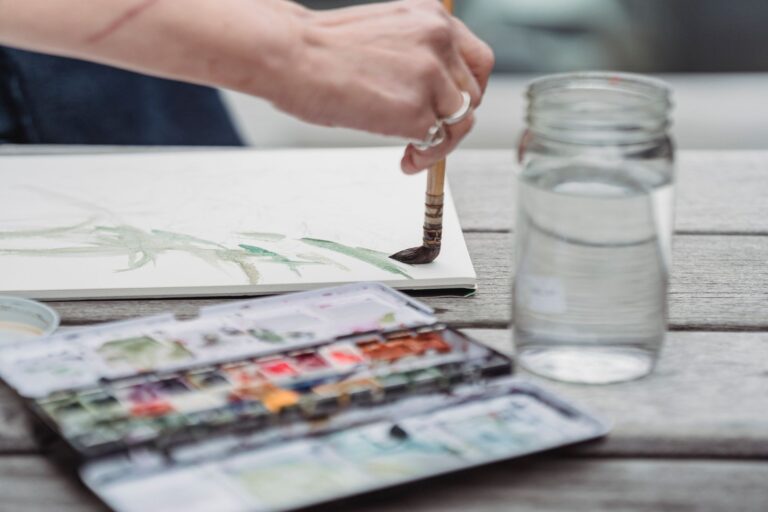
For a low-energy dementia day, watercolor painting means a short, seated session focused on moving color on wet paper, not finishing a picture. You offer two or three colors, paint beside the person, and stop at the first sign of fatigue. A low-energy day means fatigue, slow responses, and little interest in going out. The Alzheimer's Association states art can still support self-expression and engagement as dementia progresses, while shared projects create purpose for both of you Alzheimer's Association guidance on art and music.
Medical information disclaimer: This article is for general educational purposes only and does not provide medical advice, diagnosis, or treatment. Always consult a physician or other qualified health professional about symptoms, medications, tests, or treatment decisions.
Table of Contents
- What can this short session do?
- How do you prepare the space?
- What are the steps?
- How do you keep materials safe?
- Frequently Asked Questions
What can this short session do?
A PubMed-indexed systematic review and meta-analysis of 26 studies reported art-based interventions were associated with better global cognition, fewer overall neuropsychiatric symptoms, and less depression in older adults with dementia PubMed record of the 26-study analysis. The finding describes group trends, not a promise for one afternoon.
For a tired day, treat painting as comfort and contact. Focus on brush motion, color choice, and time together. Leave skill and memory out of it.
How do you prepare the space?
The National Institute on Aging advises caregivers to adapt activities to what the person can still do, help them get started, repeat favorites at a similar time daily, and avoid overly long outings so the person does not get too tired National Institute on Aging guidance on adapting activities. Use the same logic indoors for a low-energy day.
Choose a sturdy table, a straight chair with support, and bright, glare-free light. Clear clutter, cover the table, and keep water, paper, and brushes within easy reach. Sit beside the person, not across, so help feels natural.
What are the steps?
Start by wetting the paper together and naming one color. Your calm start shows the task without a long explanation. Keep your voice low and your movements slow.
Stay with one small sheet. If attention fades, hold the paper, steady the hand, or take over while the person watches. End while the mood is still pleasant.
- Wet half the paper with clean water.
- Touch one color to the wet area and watch it spread.
- Add a second color beside the first.
- Pause, breathe, and offer the brush.
- Trade turns or paint your own sheet alongside.
How do you keep materials safe?
The Art & Creative Materials Institute says products with the AP seal passed board-certified toxicologist review, contain no materials in injurious quantities, and meet ASTM D-4236 and LHAMA labeling, including for adults with disabilities who may not understand warnings Art & Creative Materials Institute materials safety information. Check for that seal before you buy.
Pick large-handled brushes, a no-spill cup, and thick paper that stays flat when wet. Avoid small caps, glass jars, and strong-smelling supplies. Rinse brushes together, date the back, and display one piece where the person can see it.
Frequently Asked Questions
What if the person says no to painting?
Leave the wet paper and one color visible, paint your own sheet quietly, and invite one small touch later.
What if water spills or hands get messy?
Keep a towel nearby, smile, blot the spill together, and continue or stop based on comfort.