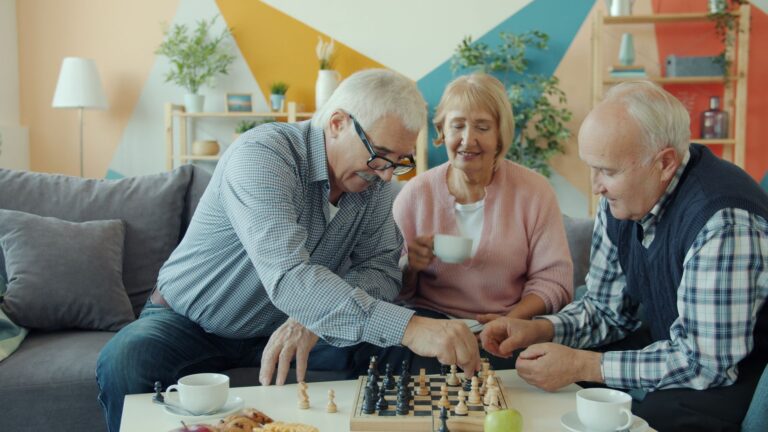
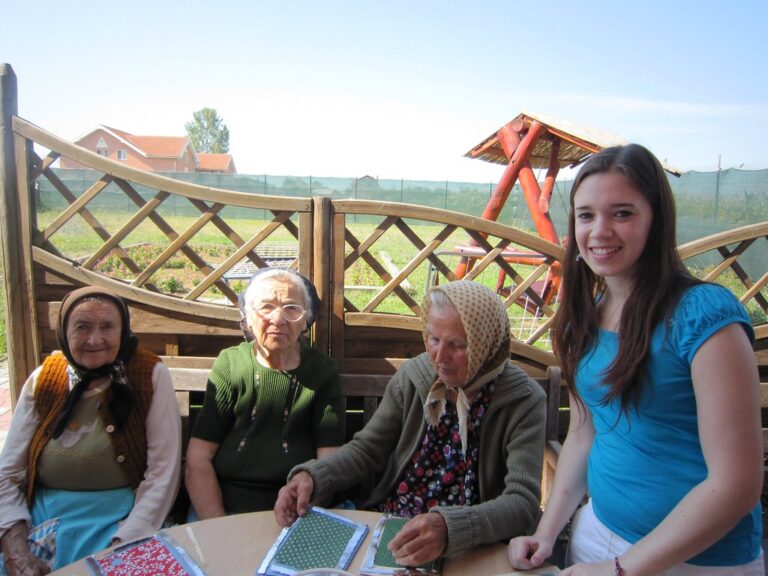
Reduce frustration by treating large print as an access aid, then matching the word game to the person's current abilities, interests, and enjoyment. Use high-contrast materials, bright even light, one instruction at a time, and stop or simplify when frustration rises. Large-print word games are not a proven dementia treatment. The Alzheimer's Association supports adapting enjoyable activities to a person's abilities, but no direct trial establishes that large-print word games themselves reduce frustration Alzheimer's Association activity guidance.
Medical information disclaimer: This article is for general educational purposes only and does not provide medical advice, diagnosis, or treatment. Always consult a physician or other qualified health professional about symptoms, medications, tests, or treatment decisions.
Table of Contents
- What large print can—and cannot—solve
- How should you choose the game?
- How can the setup reduce sensory strain?
- What should the caregiver do during the game?
- When should you stop or change the activity?
What large print can—and cannot—solve
Larger letters may make words easier to see, but size is only one part of accessibility. dementia can affect colour discrimination, so use clear words or pictures against a contrasting background. Avoid busy patterns that make letters harder to separate, as advised by the NHS NHS home-environment guidance.
Watch the person rather than assuming the format works. Squinting, leaning close, skipping lines, repeatedly asking what to do, or abandoning the page may signal that the material remains too difficult or visually confusing. Large print also cannot correct a poor match between the activity and the person's abilities. A familiar word game may feel satisfying one day and overwhelming another, especially when attention, vision, or language skills fluctuate.
How should you choose the game?
Start with the person's remaining skills, former interests, and present enjoyment. A person who once liked names, music, cooking, or local places may respond better to familiar words than to a generic crossword.
Choose the simplest format that still feels meaningful: If the person becomes anxious, distracted, irritable, or frustrated, the game may be mismatched to the moment. The Alzheimer's Association identifies these reactions as possible signs that an activity is not suitable or needs adjustment Alzheimer's Association activity guidance.
- Use matching, naming, or sorting before requiring written answers.
- Remove a time limit and avoid difficult clues.
- Offer a word search with fewer words or a puzzle with several answers already filled in.
- Try team play so the person can contribute without carrying the entire task.
How can the setup reduce sensory strain?
Use bright, even, natural light where possible. Position the page to reduce glare and reflections, and avoid shadows across the letters. A matte page may be easier to view than a glossy one if light reflects from its surface. Reduce competing television or radio noise.
The NHS notes that sensory problems can worsen dementia symptoms, so a quiet setting may help the person focus on the words NHS home-environment guidance. keep the page uncluttered. Present one sheet, one puzzle, or a small group of letters at a time. Too many choices can create the same overload as too many instructions.
What should the caregiver do during the game?
Demonstrate the first step instead of explaining the whole activity. For example, point to one target word, find the first letter together, and then invite the person to look for the next one. Give one simple instruction at a time.
The Alzheimer's Association warns that too many directions at once can overwhelm a person with dementia; offering help with difficult parts can reduce that burden Alzheimer's Association activity guidance. Use calm, neutral encouragement rather than correcting every mistake. If the person cannot find an answer, supply a choice, point to a likely area, or complete that part together. The goal is comfortable participation, not finishing the page independently.
When should you stop or change the activity?
Treat rising frustration as useful information, not as a reason to press harder. Pause, simplify the rules, remove scoring, shorten the session, or offer team play. The Alzheimer's Society recommends easier rules or no scoring and shorter sessions when concentration is limited Alzheimer's Society game guidance. End the activity when attention wanes or frustration rises, and try again later if the person seems interested.
Do not require completion; stopping comfortably can preserve the activity as a positive option. As dementia advances, word-solving may no longer be a good fit, even with large print. The NHS recommends simplifying activities and shifting toward familiar sensory engagement, such as music or touchable objects, when reading becomes uncomfortable NHS activities guidance. Research on broader cognitive-stimulation groups—not large-print word games alone—found statistically significant improvements in cognition and quality of life in a randomized trial of 201 people. That finding supports enjoyable, social mental activity, but it does not show that a crossword or word search produces the same result British Journal of Psychiatry trial record.