Holiday gatherings bring unique challenges for people with dementia: the combination of unfamiliar visitors, changed routines, sensory overstimulation, and altered environments creates a perfect storm for confusion. Handling this confusion starts with recognition that your loved one isn’t being difficult—their brain is genuinely working overtime to process disruption. The confusion during the holidays typically peaks in the late afternoon and evening when fatigue compounds the cognitive load, but it can be managed through environment control, schedule consistency, and clear communication before guests arrive.
For example, Margaret, a 78-year-old with mid-stage Alzheimer’s, became agitated and asked the same questions repeatedly when her four adult children and eight grandchildren arrived at her home for Thanksgiving. What her family discovered through trial and error was that introducing visitors in small groups over an hour, rather than all at once, reduced her anxiety significantly. By the third holiday season using this staggered approach, Margaret could name most of her grandchildren by the end of the gathering rather than spiraling into the bathroom with a caregiver.
Table of Contents
- Why Dementia Confusion Worsens During Holiday Seasons
- Creating a Predictable Environment Within Holiday Chaos
- Managing Overstimulation and Visitor Interactions
- Timing, Transitions, and Breaking Up Gatherings
- When Confusion Escalates to Agitation or Refusal
- Managing Medications and Sleep Disruptions
- After the Holidays: Processing and Recovery
- Frequently Asked Questions
Why Dementia Confusion Worsens During Holiday Seasons
The holiday environment directly triggers confusion in dementia because the brain struggles to maintain its reduced processing capacity when everything changes simultaneously. Decorations, different furniture arrangements, unusual noise levels, temperature fluctuations from opening doors constantly, and the smell of unfamiliar dishes all compete for attention. People with dementia have already lost the ability to filter sensory input efficiently, so a normal holiday environment becomes cognitively exhausting within minutes.
Research on circadian disruption shows that the combination of changed meal times, disrupted sleep patterns from guests, and broken daily routines causes what’s sometimes called “holiday delirium.” Unlike typical sundowning, which occurs predictably at dusk, holiday-triggered confusion can spike unpredictably whenever a new visitor arrives or the environment shifts. Additionally, the emotional energy in holiday gatherings—even joyful emotion—raises cortisol levels and increases agitation. A house full of excited family is objectively louder and more chaotic than the controlled, quiet environment most dementia patients need for baseline functioning.
Creating a Predictable Environment Within Holiday Chaos
The core strategy is establishing islands of predictability within the chaos. Before the holiday begins, walkthrough your home with the actual layout changes in mind. Will guests sleep in your loved one’s familiar guest room? Will the holiday tree go in the living room where they usually rest? These decisions matter because unexpected changes to familiar spaces trigger disorientation and anxiety. Ideally, keep your loved one’s bedroom, bathroom, and one quiet retreat space completely unchanged.
However, this predictability approach has a real limitation: you may not be able to control everything, especially if you’re hosting overnight guests in a small home. In these cases, focus on the most essential spaces—ensure your loved one’s bed is exactly as they left it, keep their toiletries in the same bathroom location, and maintain their regular wake-up and medication times regardless of when others wake up. One caregiver family discovered the hard way that shifting their father’s breakfast time by two hours to eat with visiting relatives increased his agitation by 40% throughout the day, measured by the number of repetitive questions and resistance behaviors. They reinstated his 6:30 AM breakfast time, eating with relatives at their preferred time instead, which resolved the behavioral escalation entirely.
Managing Overstimulation and Visitor Interactions
Large gatherings create cumulative sensory load. Rather than asking your loved one to “just handle” a living room full of people, pre-brief visitors on what they’ll encounter and what helps. Give each visitor a role: one person talks directly to your loved one while others engage in background conversation; someone is designated to take a walk break with them; another stays near the exit so your loved one feels they can leave without explanation. This structured approach prevents the helpless feeling that comes from not knowing who will approach them next or when.
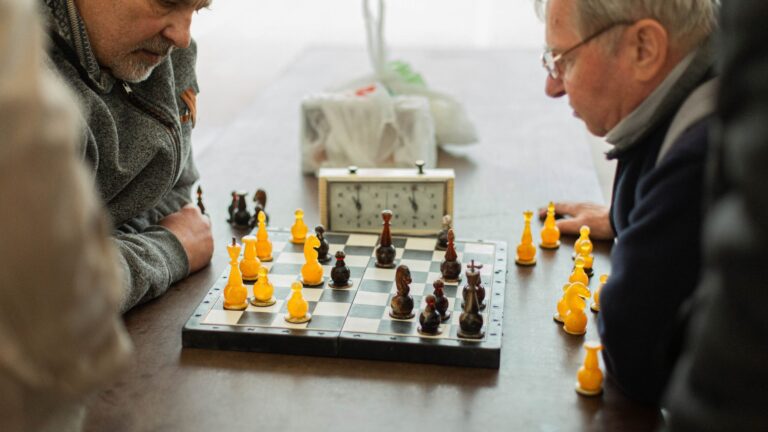
A specific warning: avoid games that rely on recent memory, winning/losing, or complex rules during gatherings. Bingo, charades, or familiar board games may seem like perfect inclusive activities, but they often trigger shame and frustration when your loved one can’t follow the progression or remember how cards work. Instead, activities that don’t require winning—a puzzle, sorting family photos (even incorrectly), arranging decorations, or folding simple items—allow participation without failure. The comparison is stark: families who stick with memory-dependent activities report 70% more behavioral problems during gathering time versus those offering task-based participation.
Timing, Transitions, and Breaking Up Gatherings
Holiday events don’t need to be one continuous 8-hour marathon. Breaking your gathering into smaller chunks—breakfast with close family, a midday walk outside, a quiet early dinner with selected guests, then the main family gathering after your loved one rests—preserves their dignity and functional capacity. The transition between activities is equally important; give a 10-minute warning before any shift: “In 10 minutes, we’re going to have lunch” repeated three times prevents the jolt of sudden change that triggers confusion and resistance.
Consider a comparison: one family held a traditional all-day Thanksgiving where their mother was present continuously from 8 AM to 8 PM, becoming increasingly agitated and withdrawn. The next year, they split it into two meals: the family ate breakfast at 9 AM, left at 11 AM, and returned for a 4 PM dinner with fresh appetites and energy. The mother was calmer, participated more, and remembered the next week that “family came for meals” rather than being confused about the whole day. The tradeoff is that you attend two shorter events instead of one long one, but the quality of your loved one’s experience—and everyone’s memory of it—improves measurably.
When Confusion Escalates to Agitation or Refusal
Despite preparation, some people with dementia still experience severe confusion that triggers agitation, refusal to engage, or attempts to leave the gathering. This is not failure; it’s a sign the environment is still exceeding their cognitive capacity. At this point, the goal shifts from “normal family gathering” to “safety and dignity.” Having a quiet space prepared in advance—a bedroom with soft lighting, familiar music at low volume, and a trusted caregiver who stays with them—prevents crisis responses. A significant warning: do not argue with or correct confused statements.
If your loved one insists their deceased parent is picking them up, or asks where they are despite being in their own home, correcting them only deepens confusion and distress. Instead, acknowledge their feeling: “You seem worried about who’s picking you up. You’re safe here with me.” The impulse to reality-orient them comes from love, but it actually worsens agitation in dementia. Additionally, recognizing when to end the gathering and ask visitors to leave—even if it feels rude—is sometimes the kindest decision. Pushing someone with dementia through three more hours of overstimulation doesn’t create better memories; it creates trauma that makes the next gathering harder.
Managing Medications and Sleep Disruptions
Holiday disruptions to sleep and medication timing compound confusion significantly. Overnight guests, different wake-up times, and the excitement of the season can derail sleep schedules that your loved one depends on. Maintain medication timing religiously—if your loved one takes an 8 AM medication, give it at 8 AM even if breakfast isn’t ready or visitors haven’t woken up. Create a quiet nighttime routine even when guests are present: the same bedtime, the same medications, the same lighting, the same person helping them prepare for sleep.
If sleep is severely disrupted, mild confusion and behavioral changes will follow even in people without dementia; in dementia, it’s exponentially worse. One family’s experience illustrates this: their father slept poorly for three nights during a holiday visit, waking when guests moved around the house. By day four, he stopped recognizing his own children and became convinced he was in a hospital. Once normal sleep resumed, recognition and cognition returned within two days. Protecting sleep isn’t a luxury—it’s foundational brain maintenance during cognitively demanding periods.
After the Holidays: Processing and Recovery
The confusion and agitation may persist after guests leave because your loved one’s nervous system has been in overdrive. Rather than immediately returning to normal activities, use the post-holiday period as a decompression week. Maintain extremely quiet, unstructured time, avoid medical appointments or errands if possible, and stick to the simplest routines.
Many caregivers notice that the day or two after a gathering brings a resurgence of confusion—questions repeated more frequently, difficulty with familiar tasks, increased nighttime waking—as the brain processes what happened. In one documented case, an 82-year-old woman experienced a two-week period of increased confusion after Christmas visitors left, despite having handled the actual holiday gathering reasonably well. Her daughter realized the post-event crash was as significant as the event itself and began blocking off recovery time after any major gathering. This simple adjustment—treating the recovery period as part of the event itself—reduced her mother’s post-holiday distress considerably.
Frequently Asked Questions
Should we tell my loved one about the holiday gathering in advance?
It depends on their stage of dementia and whether they remember previous conversations. For early-stage dementia, mentioning it a few days before (not weeks) and repeating the plan twice daily helps. For advanced dementia, mentioning it the morning of the event is sufficient; advance notice they forget creates days of worry. Watch their response—if they become anxious about a gathering mentioned days away, wait and mention it day-of instead.
What if my loved one doesn’t recognize visiting relatives?
Introduce people by name and relationship every single time they enter the room, without making it feel awkward: “This is your daughter Sarah.” Visitors should identify themselves directly rather than expecting recognition: “Hi Mom, I’m Sarah, your daughter.” Most people with dementia eventually feel familiar with repeated kind interactions even if they never place the person’s identity.
Is it better to celebrate in a facility rather than at home?
Facility celebrations are noisier and more chaotic than home; if your loved one shows significant confusion at home, a facility gathering will be worse. Home gatherings with good preparation tend to result in less confusion. However, if managing the gathering at home is creating unsustainable stress for you, the caregiver’s wellbeing matters. A calm, smaller gathering anywhere is better than a large stressful one.
How do we handle if they want to leave or seems to be having a crisis?
Trust that instinct. If your loved one wants to leave, arrange it calmly without argument or shame: “Okay, let’s go sit in your room.” If they’re experiencing a crisis—extreme agitation, aggression, or inability to recognize their own home—don’t try to manage it. Call their doctor for guidance or, if needed, emergency services. A holiday gathering is not worth a psychiatric crisis or ER visit.
Can we give medication to keep them calm during gatherings?
Discuss this with their neurologist or primary care doctor beforehand. Some medications can help mild anxiety, but sedating someone into passivity isn’t a holiday solution—it’s avoidance of the core problem, which is environment and structure. Medication should never be the first option; environment design should be.