Dementia patients often thrive in small gatherings because their brains have a reduced capacity to process the sensory demands of large, stimulating environments. When environmental stimulation exceeds their threshold—too many voices, excessive noise, bright lights, or too much activity—their stress levels spike, triggering behavioral changes like agitation, anxiety, or withdrawal. A person with dementia at a large family holiday party with 20 relatives talking over each other, music playing, and children running around may experience acute distress, while that same person in a quiet living room with one or two familiar people can remain calm and engaged.
The research is clear: daily social interactions are linked to better cognitive performance in people with dementia, and pleasant social interactions protect against decline regardless of education level or loneliness. The critical difference lies in the *type* of social engagement. Small, meaningful interactions—a one-on-one conversation, a quiet game of cards, or a three-person storytelling session—provide the cognitive and emotional benefits of socialization without the overwhelming sensory chaos that larger gatherings create. Understanding this distinction can transform how caregivers approach their loved one’s social life.
Table of Contents
- Why Dementia Patients Have Lower Stress Thresholds for Group Settings
- Environmental Triggers That Cause Agitation in Social Situations
- How Small Social Interactions Protect Cognitive Function
- Small Gatherings Versus Large Events: The Difference in Outcomes
- Managing Behavior When Dementia Patients Encounter Larger Gatherings
- Activities That Thrive in Small-Group Settings
- Modifying the Physical Environment for Small Gatherings
Why Dementia Patients Have Lower Stress Thresholds for Group Settings
Dementia progressively damages the brain’s ability to filter, process, and respond to sensory information. Individuals with dementia have significantly lower stress thresholds for handling environmental demands compared to cognitively intact older adults, meaning their brains tire more quickly and become dysregulated more easily. When a person receives too much sensory input at once—overlapping conversations, background music, ringing phones, overhead lighting, and movement in their peripheral vision—they cannot effectively filter out what matters and what doesn’t. Their brain becomes flooded, triggering a stress response. This sensory overload doesn’t produce a polite withdrawal; it produces behavioral symptoms. People with dementia experiencing sensory overstimulation often display sudden agitation, anxiety, restlessness, pacing, or the impulse to cover their ears or eyes.
Some withdraw entirely, becoming silent or appearing depressed. A caregiver might misinterpret this as the person “not feeling social” when in fact the problem is environmental: the gathering is simply too stimulating for their current processing capacity. Even someone with mild cognitive impairment can begin to show signs of distress in an environment that would feel normal to a younger person. The key limitation caregivers face is that this threshold varies by time of day, medication, fatigue level, and disease stage. A person who did well at a small coffee gathering at 10 a.m. may become agitated by a similar-sized group at 6 p.m., when “sundowning”—a phenomenon of increased confusion and agitation in late afternoon and evening—commonly occurs. Predicting the person’s tolerance requires observation and trial, not a one-size-fits-all rule.
Environmental Triggers That Cause Agitation in Social Situations
Recent 2025 research specifically examined how environmental factors trigger agitation in people with dementia and found striking results: elevated noise levels and abrupt light changes significantly increased the odds of agitation, with effects particularly notable in shared living spaces like bedrooms and kitchens. Crowds themselves are inherently over-stimulating. When a person cannot process the constant visual and auditory input—multiple faces, shifting conversations, unexpected movements—their brain struggles to construct a coherent understanding of what’s happening, which breeds confusion and distress. In a large gathering, common triggers pile up rapidly. Loud, overlapping conversations create a cacophony that a dementia patient cannot easily parse into individual voices or threads of meaning.
Sudden shifts—someone raising their voice, the doorbell ringing, someone turning up the television—can startle and disorient. The sheer *number* of people in a space may prevent the person from focusing on any single relationship or feeling secure. By contrast, in a small group of two to four people in a quiet setting, each voice and face remains distinct, changes happen gradually, and the social dynamic feels predictable. A practical warning: environments that feel fine to caregivers—a moderately busy restaurant, a lively kitchen during meal preparation, a crowded waiting room—may already exceed a dementia patient’s threshold without obvious distress signals. Behavioral symptoms may appear only 20 or 30 minutes into the outing, meaning the damage is already done by the time agitation appears. Caregivers often misjudge because they underestimate how much processing power their loved one has lost.
How Small Social Interactions Protect Cognitive Function
Social engagement is one of the most robust modifiable factors for maintaining cognitive performance in older adults with dementia. Research using daily mobile cognitive testing found that older adults who had daily social interactions performed better on cognitive tests the same day and on the subsequent two days compared to days when they had no social contact. This benefit appears regardless of the person’s gender, education level, or whether they report feeling lonely—social interaction itself drives the cognitive boost. The mechanism appears to involve mental stimulation, emotional reward, and what researchers call “cognitive reserve.” When a person engages in conversation, recalls shared memories, or participates in a familiar activity with someone else, multiple brain systems activate: memory retrieval, attention, emotional processing, and speech production. In small groups, this engagement feels natural and reciprocal.
The person can contribute, be heard, and feel valued. In large gatherings, by contrast, a dementia patient often becomes a passive observer, unable to track the rapid conversational shifts and unable to find an opening to participate. This leaves them feeling isolated *within* the gathering itself. The distinction matters clinically. A dementia patient at a raucous 20-person dinner party may sit silently, overwhelmed, receiving none of the cognitive or emotional benefits of social time. That same person in a quiet dinner for three, sharing a meal and stories with people they know well, engages their brain, strengthens emotional bonds, and leaves the interaction with measurable cognitive benefit hours later.
Small Gatherings Versus Large Events: The Difference in Outcomes
The comparison between small and large gatherings reveals why context is not a luxury detail but a core part of dementia care. A small gathering—four people in a living room—allows the dementia patient to track who is present, follow at least one conversation thread, and participate according to their ability. The pace is slower. There are comfortable silences. Attention can wander without social cost. A large gathering—a holiday party, a wedding, a community event—demands continuous rapid processing: keeping track of who’s who, following multiple simultaneous conversations, managing background noise, and tracking movement in the space. Even for a person with early-stage dementia, this is exhausting, and it’s often painful.
The outcome differences are measurable. Caregivers consistently report that their loved one is calmer, more engaged, and less likely to display agitation following small-group social time. After large gatherings, they often see the opposite: withdrawal, increased confusion, or behavioral symptoms that persist for hours or even days. Research on recreational activities in dementia care units found that when socialization was paired with manageable activity levels and appropriate stimulation, residents thrived and showed improved engagement. When those same residents participated in overstimulating group events, behavioral problems increased. The tradeoff caregivers face is real: large gatherings feel more “social” and festive to family members, but they are often counterproductive for the person with dementia. Choosing multiple small visits or shorter small gatherings requires more planning and coordination from family members, and it may feel less traditional or celebratory. However, the dementia patient’s wellbeing during and after the gathering is the actual measure of whether the social time was beneficial.
Managing Behavior When Dementia Patients Encounter Larger Gatherings
There will be times when a dementia patient must attend or participate in a larger gathering—a family holiday, a friend’s milestone event, or a community occasion. When this happens, behavioral symptoms often emerge, and caregivers need to recognize these as signs of environmental overstimulation, not character flaws or sudden personality changes. Common responses include sudden agitation, anxiety, covering the ears or eyes, pacing, or restlessness. These are adaptive responses to an intolerable environment, not misbehavior. The evidence-based first-line intervention is non-pharmacological environmental modification. This means reducing noise by moving the person to a quieter room, dimming bright lights or closing drapes to soften sudden light changes, decreasing the number of people present (stepping out with the person for a break), or relocating to a calmer space.
Importantly, this is more effective than medication as a first response. A 10-minute break in a quiet bedroom, sitting with a familiar caregiver, often resolves acute agitation completely. If the person cannot settle even in a quiet space, it is often a sign that the gathering environment is simply not tolerable for them that day, and it is appropriate to leave early or not attend. A key warning: caregivers sometimes interpret wandering during large gatherings as random restlessness when it may actually reflect the person’s attempt to escape an overstimulating environment. If a dementia patient at a party begins to wander, heading toward a door or a quiet hallway, this may be their brain’s signal that they need a break or need to leave. Respecting this signal—rather than redirecting them back to the activity—reduces distress and is often the most effective intervention.
Activities That Thrive in Small-Group Settings
Certain activities naturally fit the small-gathering format and provide robust cognitive and emotional benefits for people with dementia. Music sessions, particularly with live music or familiar songs in a group of three to five people, consistently spark engagement and memory recall. Storytelling circles or reminiscence groups—where participants share memories or look through photo albums—create an intimate environment where a person with dementia can participate at their own pace, contribute when they wish, and feel heard.
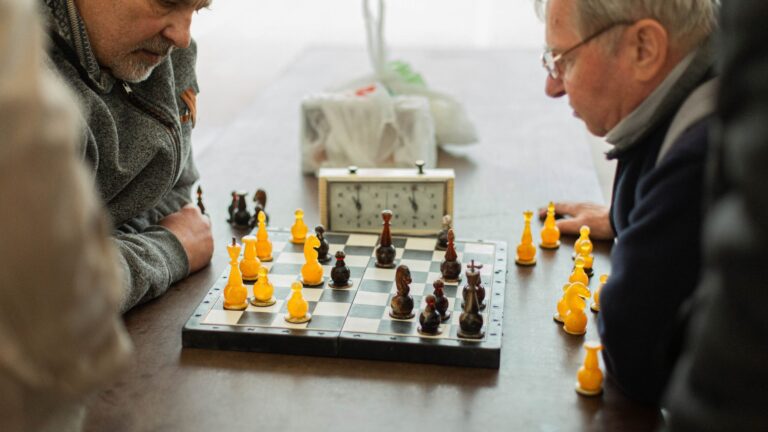
Gentle games like cards, dominoes, or simple board games work well in small groups because the rules remain trackable and the pace is controllable. A concrete example: a weekly coffee gathering with two familiar friends in a quiet setting at 10 a.m.—a time before fatigue sets in—may do more for a person’s cognitive health and emotional wellbeing than monthly attendance at a large family event. The person knows what to expect, can predict the rhythm of conversation, and leaves the gathering feeling connected rather than drained.
Modifying the Physical Environment for Small Gatherings
Even when a gathering is intentionally small and intimate, the physical space itself can support or undermine the experience. Evidence-based environmental modifications include reducing background noise by turning off televisions, radios, or other audio sources; using soft, indirect lighting rather than harsh overhead lights; and removing visual clutter that might be distracting. In a small-group setting in a dementia patient’s home, these modifications are often simple and low-cost.
If hosting a small gathering for a person with dementia, choose a quiet room away from hallways and entryways, keep the group to three to four people whenever possible, and schedule during the time of day when the person is most alert and calm. Familiar faces matter; a small group of people the person knows reduces the cognitive load of tracking who is present and what each person’s relationship is. These practical changes transform a gathering from potentially distressing to genuinely beneficial.
- —