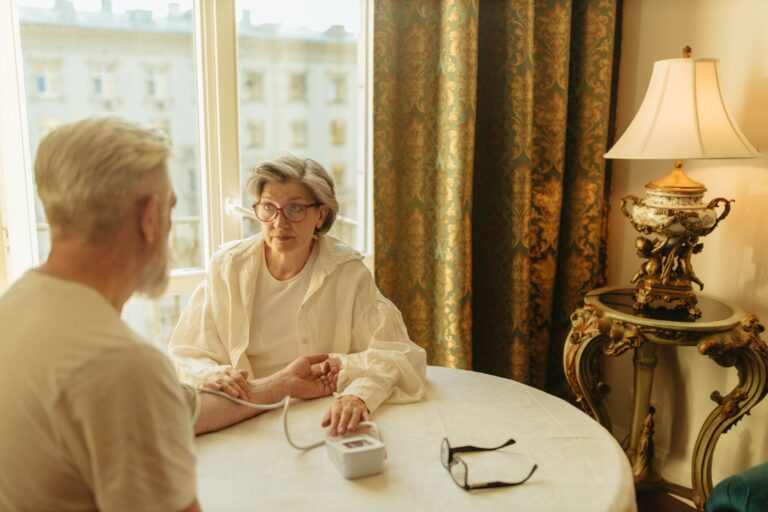
Families cope with recognition changes in dementia by shifting their expectations of interaction, finding meaning in small moments of connection, and reframing their sense of identity within the relationship. When someone with dementia no longer recognizes a spouse, adult child, or longtime friend, the initial response is often shock and grief—but families who navigate this successfully learn that connection persists even when the person cannot retrieve memories or attach names to faces. A daughter might sit with her mother for an hour in silence, holding her hand, and over time realize that her mother’s body relaxes in her presence, that she laughs at her jokes, and that the relationship has simply transformed rather than disappeared.
The challenge is neither quick nor linear. Recognition fades gradually in some cases and abruptly in others, depending on the type of dementia, its progression, and how the person’s brain is affected. Some families discover that recognition remains for certain people while vanishing for others—a spouse is forgotten but a grandchild remains familiar for longer. Others experience a heartbreaking reversal where their loved one recognizes them one day and does not the next.
Table of Contents
- Why Does Recognition Fade in Dementia?
- The Grief of Being Forgotten
- When Recognition Comes and Goes
- Maintaining Connection Without Recognition
- Managing Behavioral and Safety Concerns
- Cultural and Familial Responses to Non-Recognition
- Practical Documentation and Legacy Planning
- Frequently Asked Questions
Why Does Recognition Fade in Dementia?
Recognition depends on the brain’s ability to process faces, retrieve stored memories, and connect those memories to emotions and identity. In Alzheimer’s disease and other dementias, the accumulation of amyloid plaques and tau tangles damages the regions responsible for these functions, particularly the medial temporal lobe and areas of the cortex that link faces to biographical memory. The person may see a familiar face but cannot access the associated knowledge—who this person is, what they mean, how long they have known them. Over time, even the emotional weight of the relationship, which persists longer than explicit memory, begins to fade.
The speed and pattern of recognition loss vary widely. In frontotemporal dementia, recognition might be preserved while personality and behavior change drastically, leaving families confused by a spouse who acts like a stranger even while knowing who they are. In Lewy body dementia, fluctuations are common—the person might recognize you clearly in the morning and not at all by evening. Vascular dementia, caused by a series of small strokes, can produce patchy loss where certain memories remain islands in an otherwise eroded landscape.
The Grief of Being Forgotten
The emotional toll of not being recognized is distinct and difficult to prepare for, even when families have been told it will happen. Many people report that the first time they are not recognized by their loved one feels like a small death—a preview of the loss that will eventually come. A husband might bring flowers to his wife’s room and have her ask a staff member who this man is; he leaves thinking, “I just lost her, and she’s still alive.” This simultaneous presence and absence creates a unique form of grief that has no clear endpoint or ritual to mark it.
Some families struggle with guilt, wondering if they should feel relieved that they are no longer expected to be recognized, or if such relief marks them as callous. Others oscillate between moments of adaptation—accepting that the person has moved into a different stage—and sudden regressions into pain when the reality crashes back. A daughter who has made peace with her mother’s non-recognition might find herself devastated when her mother mistakes her for a nurse, as if the grief is happening for the first time. The limitation here is that no amount of preparation fully cushions this shock; professional support, support groups, and honest conversations with family members are necessary, not optional.
When Recognition Comes and Goes
In many forms of dementia, particularly Lewy body and vascular dementia, recognition is not binary but fluctuating. The person might recognize family members in the morning when they are most alert, forget them by midday, and have a window of recognition again in early evening. Sundowning—a phenomenon where confusion and agitation worsen in the late afternoon and evening—often accompanies these fluctuations.
For families, this unpredictability can be more taxing than complete, stable non-recognition because it requires constant recalibration. A son visiting his father each afternoon might find that some days his father greets him by name and asks about his work, while other days his father is convinced they have never met and becomes anxious at his presence. The son must learn to roll with these changes without taking them personally, to introduce himself gently each time, and to accept that some visits will feel like connection while others will feel like intrusion. Some families find that recognizing patterns—better mornings, better after meals, worse after certain medications—helps them time visits and interactions to moments when their loved one is most present.
Maintaining Connection Without Recognition
Families who adapt most successfully to recognition loss often focus on what remains: the person’s emotional responses, preferences, and capacity for sensory connection. Touch, music, familiar scents, and the tone of voice can all trigger positive responses in someone who cannot recognize the person providing them. A wife might sit beside her husband and sing songs from their early years together, and even though he cannot name her, his body recognizes the ritual, his breathing slows, and he reaches for her hand. This approach requires a deliberate reframing of what “relationship” means.
Instead of expecting conversation about shared history or mutual recognition, families learn to provide comfort and presence. This is not a substitute for the old relationship—it is qualitatively different, and the tradeoff is real. The person cannot ask about your day or express gratitude; they cannot remember that you were there yesterday. But many families report that this stripped-down connection is genuine, that their loved one is still there in some form, and that showing up matters even if the person does not retain a memory of it. Some find this liberation—they can visit without the weight of expectation to be recognized.
Managing Behavioral and Safety Concerns
When recognition fades, behavioral changes often intensify, and families must develop new safety strategies. A person who no longer recognizes a spouse might become suspicious or hostile, perceiving the spouse as a stranger or threat. Confusion about the identity of family members can trigger combativeness during bathing, dressing, or other intimate care. One family reported that their father, who had always been gentle, began to resist care from his wife because he did not recognize her as someone he should trust in such vulnerable situations.
Medication, environment design, and the presence of familiar objects can help mitigate these behaviors, but a critical limitation is that once deep disorientation sets in, behavioral management becomes reactive rather than preventive. Families often need to involve professional caregivers or facility staff who have no personal relationship with the person and thus avoid the added layer of rejection and hurt. The warning here is that some families try to manage this stage alone, believing they should be able to handle it, and end up exhausted and injured—physically or emotionally—when the person becomes aggressive or repeatedly asks the same question about a deceased relative. Professional support is not a failure; it is an acknowledgment of the limits of what any single person can sustain.
Cultural and Familial Responses to Non-Recognition
Different families and cultures approach non-recognition differently, and these frameworks shape how much distress the family experiences. In some traditions, identity is understood primarily through memory and reciprocal recognition; losing this connection feels like a fundamental unraveling. In others, identity is more embedded in family roles and ritual—the person is still “Mom” or “Grandpa” regardless of whether they know your name, and this continuity of role provides a framework for continued relationship. Some families move their loved one into a facility where hired staff manage care, partially because they cannot bear the pain of non-recognition.
Others maintain them at home and work through the grief as an ongoing process. Neither choice is wrong; both carry costs. Facility placement allows the family to return to more typical visitation and reduces the daily confrontation with non-recognition, but it may come with guilt or logistical complexity. Home care maintains a sense of continuity and presence but means confronting non-recognition every morning, every bath time, every meal.
Practical Documentation and Legacy Planning
Before recognition becomes severe, families often find value in documenting their loved one’s life, values, and stories. Video recordings of the person speaking about their own life—memories they can still access, lessons they want to pass on, the way they laughed and moved—become a form of preserved recognition. These recordings serve not primarily as a way to show the person who they are, but as a way for family members to remember who their loved one was, to hold on to the texture of the relationship beyond the point where recognition is possible.
Some families create simple visual guides in the person’s room—photographs with names and relationships clearly labeled, a timeline of major life events—not to spark recognition, which often does not happen, but to provide caregivers and visiting family members with context. A granddaughter who has never met her grandmother might look at these materials to understand who she is caring for. The person with dementia may not recognize the photographs, but other family members will use them to tell stories, to maintain a shared narrative about who this person is, and to resist the reduction that can happen when the person is perceived only through the lens of their disease.
Frequently Asked Questions
Will my loved one eventually forget me completely?
It depends on the type and stage of dementia. In advanced stages, most people lose the ability to recognize family members, but some may retain emotional responses to familiar voices and touch. Complete non-recognition is common but not universal, and emotional connection sometimes persists even when explicit memory does not.
Should I keep trying to jog their memory by telling them who I am?
Repeated corrections can frustrate both you and your loved one, especially if they are already confused or resistant. Gentle introduction combined with focusing on present connection—showing warmth, offering comfort—often works better than insisting they remember you.
Is it normal to feel relieved when they no longer recognize me?
Yes. Some family members experience relief alongside grief because non-recognition can reduce certain demands on the relationship. Acknowledging both feelings without judgment helps you process the complexity of this stage.
Can I help them maintain recognition longer?
Cognitive stimulation, maintaining familiar routines, and treating other medical conditions may help slow progression in some cases, but dementia typically continues regardless. The focus is usually on quality of life rather than halting decline.
How do I explain to grandchildren that their grandparent no longer knows them?
Honest, age-appropriate language works best: “Grandpa’s brain is having trouble remembering people right now, but he still likes spending time with you. Let’s sit quietly together.” Children often adapt more readily than adults.