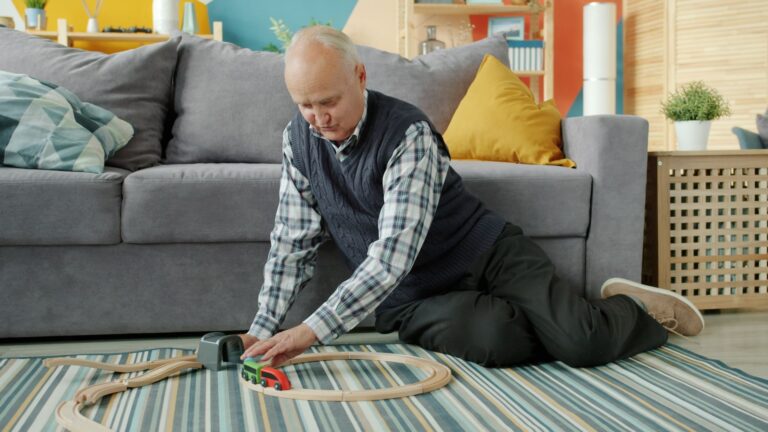
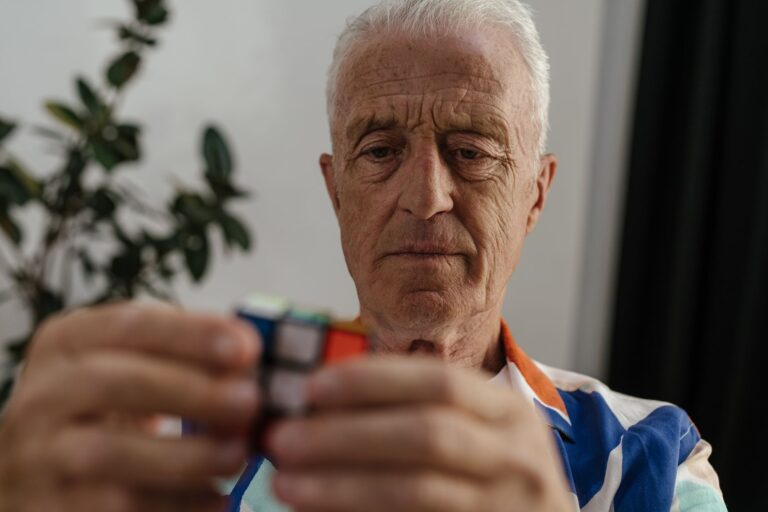
To verify a toy's dementia-care claims in 2026, compare its exact promises with FDA records, NIH and WHO evidence, and CMS coverage rules. Treat claims to prevent, reverse, cure, or treat dementia as unproven unless the seller identifies product-specific regulatory authorization and relevant clinical evidence. "Dementia toy" is a marketing term, not a regulatory category. A puzzle, robotic pet, sensory object, or game may support enjoyment and engagement without preventing cognitive decline or restoring lost abilities.
Medical information disclaimer: This article is for general educational purposes only and does not provide medical advice, diagnosis, or treatment. Always consult a physician or other qualified health professional about symptoms, medications, tests, or treatment decisions.
Official resources:
- Read the official guidance from FDA — Use this primary source to verify the official guidance.
- Read the official guidance from FDA — Use this primary source to verify the official guidance.
Table of Contents
- Does the FDA regulate the product?
- What does the evidence actually support?
- How should WHO guidance affect your decision?
- What are the practical safety and marketing red flags?
- Will Medicare pay for a dementia toy?
Does the FDA regulate the product?
The fda looks at a product's intended use, not whether its seller calls it a toy. A product promoted to diagnose, treat, mitigate, cure, or prevent dementia may qualify as a medical device and require product-specific review, according to the FDA's medical-device classification guidance. Write down the seller's precise claims.
"Provides a calming activity" differs materially from "treats dementia-related agitation." Likewise, "encourages conversation" is not the same claim as "slows Alzheimer's disease." If the seller invokes the FDA, request the product name, manufacturer, intended use, and authorization number. Check that information against the relevant FDA classification, 510(k), De Novo, premarket approval, and device-listing records. "FDA registered" alone does not mean the agency cleared or approved the product's dementia claim.
What does the evidence actually support?
Separate evidence about an activity category from evidence about a particular product. A study of supervised cognitive training does not establish that every puzzle, app, doll, or electronic game delivers the same intervention or outcome. The national Institute on Aging says lasting cognitive benefits from engaging activities remain uncertain.
It also notes that commercial brain-training games have not been shown to reproduce the results of the structured ACTIVE trial, as explained in the NIA's cognitive-health guidance. When reviewing product research, ask: Evidence that a toy holds attention or encourages social interaction may support a limited engagement claim. It does not prove prevention, treatment, cognitive restoration, or slower disease progression.
- Was the exact product tested, or only a broadly similar activity?
- Did the study include people with the same condition and dementia stage?
- Was there a comparison group?
- Did it measure enjoyment or participation, rather than disease progression?
- Were benefits maintained beyond the training period?
How should WHO guidance affect your decision?
WHO conditionally recommends considering cognitive stimulation therapy and cognitive training for people living with dementia, but rates the supporting evidence as low certainty. Its guidance on cognitive and psychosocial interventions concerns structured interventions, not automatic validation of individual consumer products. That distinction matters.
A structured program may involve trained facilitators, planned sessions, social participation, selected exercises, and monitoring. Buying a product that resembles one component does not reproduce the complete intervention. WHO's 2026 dementia-risk guidance also states that no widely available curative treatment exists and identifies continuing evidence gaps. Claims that a toy cures, reverses, or reliably prevents dementia conflict with that evidence base.
What are the practical safety and marketing red flags?
Choose activities around the individual rather than the diagnosis alone. NIA advises considering abilities, supervision needs, enjoyment, and frustration. A useful product should be manageable, appealing, and safe for that particular person.
Look closely at choking risks, sharp or detachable parts, batteries, cords, volume, cleaning requirements, and the level of supervision needed. Stop using an activity if it repeatedly causes distress, humiliation, confusion, or unsafe behavior. Marketing deserves extra scrutiny when it includes: The FDA warns that unreviewed products claiming to prevent, treat, or cure Alzheimer's are not proven safe or effective and may delay appropriate diagnosis or treatment. A toy should never substitute for assessment when a person develops new confusion, rapid decline, or a significant behavioral change.
- Claims to cure, reverse, prevent, or halt dementia
- Guaranteed cognitive improvement
- Testimonials presented as proof of medical benefit
- "Clinically proven" without an identifiable study of the exact product
- An FDA logo or "registered" language without a verifiable authorization
Will Medicare pay for a dementia toy?
Medicare Part B does not automatically cover an item because it is marketed for dementia. CMS requires durable medical equipment to satisfy five tests, including primarily serving a medical purpose and generally not being useful to someone without illness or injury; personal-comfort items are excluded under the CMS durable medical equipment rules.
Before purchasing based on a reimbursement promise, ask the seller for the billing code, supplier information, required documentation, and the specific coverage basis. A prescription or dementia diagnosis alone does not turn an ordinary toy or comfort item into covered durable medical equipment.
You Might Also Like
- How to Verify Blog News for Dementia Care Claims in 2026: FDA, NIH, WHO, and CMS sources, Evidence, and Red Flags
- What Is New With Toys for Dementia Care in August 2026? Latest FDA, NIH, WHO, and CMS sources and Key Takeaways
- What Is New With Blog News for Dementia Care in August 2026? Latest FDA, NIH, WHO, and CMS sources and Key Takeaways