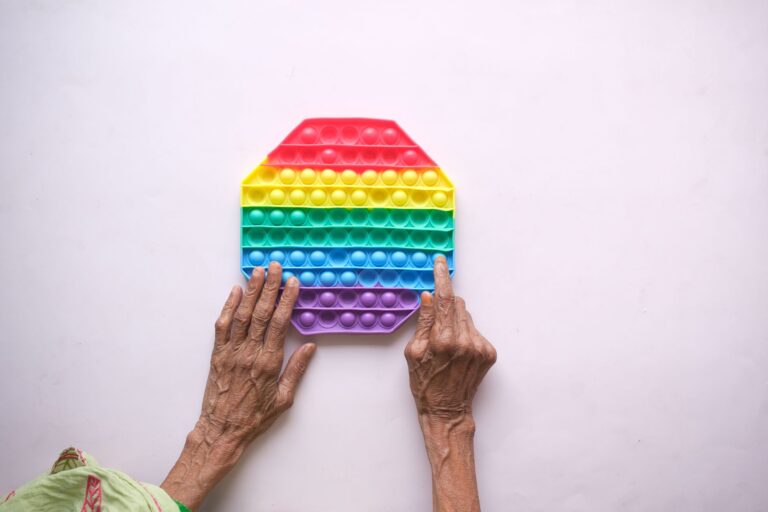
Caregivers pick toys by matching the activity to the person's current skills and lifelong interests, then adjusting it downward as memory loss progresses. They choose large, lightweight pieces with wide, soft grips, keep instructions to one short step at a time, and put enjoyment and comfort ahead of achievement.
Dementia means loss of memory and thinking skills that interferes with daily life. Arthritis means joint pain and stiffness that can make small, hard handles difficult to hold. For someone living with both, the right toy reduces frustration and hand strain while supporting calm engagement.
Medical information disclaimer: This article is for general educational purposes only and does not provide medical advice, diagnosis, or treatment. Always consult a physician or other qualified health professional about symptoms, medications, tests, or treatment decisions.
Table of Contents
- Start with skills and interests
- How do you keep play easy to follow?
- What eases arthritic hands?
- How do you keep toys safe and worth keeping?
Start with skills and interests
The Alzheimer's Association advises matching activities to current skills and familiar interests in its Activities guide. A former gardener may enjoy large-piece flower puzzles. A music lover may respond to simple rhythm instruments or large-print song cards.
Keep familiar favorites when possible, then simplify them as abilities change. Help the person get started, play at a consistent daily time, and let them watch if they prefer. The National Institute on Aging, via a VirginiaNavigator reprint, frames watching as valid participation, not failure.
How do you keep play easy to follow?
Give one task at a time with short, direct instructions. Multiple directions at once can overwhelm someone with dementia, so the Alzheimer's Association recommends breaking play into simple steps.
- Show one piece, card, or motion at a time.
- Demonstrate the step, then invite the person to copy it.
- Praise enjoyment and effort, not correct results.
- Stop while the experience is still pleasant.
What eases arthritic hands?
The Arthritis Foundation recommends built-up handles and foam grips in its Self-Help Arthritis Devices guide. Wider, softer grips are easier to grasp and put less stress on finger joints.
Add foam tubing to markers, brushes, or game pieces when handles feel thin. Treat pain as a stop signal. Functional Living Solutions Occupational Therapy and Cleveland Clinic advise changing the grip, resting, and taking breaks during repetitive crafts or games.
- Choose light items that do not require tight pinching.
- Alternate short play periods with hand rest.
- Skip activities that strain already painful joints.
How do you keep toys safe and worth keeping?
Choose large, sturdy, non-toxic toys and avoid small, detachable pieces that fit inside a choke tube. The U.S. Consumer Product Safety Commission bans small parts in under-3 products because of choking risk, as explained in its Small Parts Ban and Labeling guidance.
Confused adults who mouth objects face a similar risk, notes Rady Children's Hospital. No toy restores memory or repairs arthritic joints. Trial lightweight, large-piece sensory items such as soft squeeze balls or large-print cards. Keep only what the person uses comfortably with supervision, and remove the rest.