Did previous sits at the center of this dementia and brain health question.
Wars with authoritarian regimes historically end in one of two primary ways: through military defeat that dismantles the regime’s armed forces, or through economic collapse that removes the regime’s ability to maintain power. World War II’s defeat of Nazi Germany in 1945 exemplified the military pathway, while the Soviet Union’s collapse in 1989-91 demonstrated how economic exhaustion can topple even entrenched authoritarian systems. The current 2026 conflict with Iran presents a case study in how these historical lessons may or may not apply to modern geopolitical crises, as diplomatic status remains uncertain even as military strikes have caused substantial casualties since February 28, 2026. Understanding these historical patterns—from how previous regimes fell to what factors predict successful transitions—offers crucial context for evaluating the trajectory of contemporary conflicts with authoritarian governments.
The research shows that how an authoritarian regime falls dramatically affects what comes next. When regimes are toppled through mass revolts rather than military coups, democracy emerges roughly 45% of the time. By contrast, regimes overturned through coups have ushered in democracy only about 10% of the time. This distinction matters because it suggests the mechanism of regime change—not just regime change itself—shapes post-conflict political outcomes. As we examine both historical cases and the current Iran situation, the pattern becomes clearer: violent regime collapse tends to produce less stable democratic transitions, while mass mobilization has increasingly become the pathway that authoritarian leaders fear most.
Table of Contents
- How Have Authoritarian Wars Ended Throughout History?
- Why Do Mass Revolts Succeed More Often Than Military Coups?
- What Role Does Military Control and Autonomy Play?
- What Are the Documented Dangers of Escalatory Patterns in Military Conflicts?
- How Does Violence Itself Affect the Outcome of Regime Change?
- What Does the Current Iran Conflict Tell Us About Modern Authoritarian Confrontation?
- What Do These Patterns Suggest About Future Resolutions in Similar Conflicts?
- Conclusion
- Frequently Asked Questions
How Have Authoritarian Wars Ended Throughout History?
The most instructive historical example comes from World War II and the subsequent Cold War. Nazi Germany’s authoritarian regime ended through military defeat in 1945, with the regime’s armed forces destroyed and leadership eliminated or captured. This was unambiguously an external military victory that left no room for the regime to claim legitimacy or maintain power through any mechanism. The outcome was clear because the instruments of state power—the military and security apparatus—ceased to function. However, this form of regime change often came at enormous human cost and didn’t automatically guarantee democratic stability in what followed.
The Soviet Union’s collapse in 1989-91 followed a different mechanism: economic exhaustion and ideological delegitimization. The regime didn’t fall in a dramatic military conflict but rather through the slow breakdown of the system’s economic viability and the withdrawal of public support across Soviet territories. This collapse was facilitated by mass mobilization—the popular revolts in Eastern Europe and within Soviet republics themselves—combined with the central government’s inability to fund its massive military and security apparatus. This case demonstrates that authoritarian regimes can be ended without direct military invasion, though the conditions that make this possible (economic crisis, loss of elite consensus, mass protest movements) are highly specific. The lesson is not that one pathway is inherently “better,” but that different circumstances may require different approaches to regime change.

Why Do Mass Revolts Succeed More Often Than Military Coups?
The research on how autocracies fall reveals a striking trend: mass revolts were involved in fewer than 5% of authoritarian regime ousters during the 1960s and 1970s, but this has more than doubled since the 1990s. This shift reflects changing global conditions, improved communication networks, and shifts in how populations resist authoritarian control. When a regime is toppled through mass mobilization—large-scale public uprisings that force the government to negotiate or collapse—the population has already demonstrated that it wants political change and has organized itself to demand it. This existing organizational infrastructure and popular consensus creates a foundation for democratic transitions, which is why 45% of revolts produce democracies. Coups, by contrast, typically involve a small military faction removing a leader without broader public involvement or consent.
A coup replaces one power structure with another without addressing the underlying demand for democratic governance. This is why only 10% of coup-initiated regime changes have led to democracy. However, there’s an important limitation: this doesn’t mean all revolutions produce stable democracies or that all coups fail to democratize. Context matters enormously. If a revolutionary movement contains competing factions with irreconcilable visions, or if external powers intervene to shape the outcome, even mass revolts can produce instability. The historical record shows correlation, not causation—mass revolts create conditions favorable to democracy, but don’t guarantee it.
What Role Does Military Control and Autonomy Play?
One of the least discussed but most critical factors in regime stability is whether the military is subordinate to the regime or operates with substantial autonomy. Research shows that militaries created by authoritarian mass parties—systems where the ruling party built and sustained the military as its institution—tend to remain subordinate. The Chinese military, for example, has historically remained under Communist Party control because the party created and continuously shaped it. By contrast, militaries that were separately formed or inherited from previous political systems often achieve greater autonomy over time.
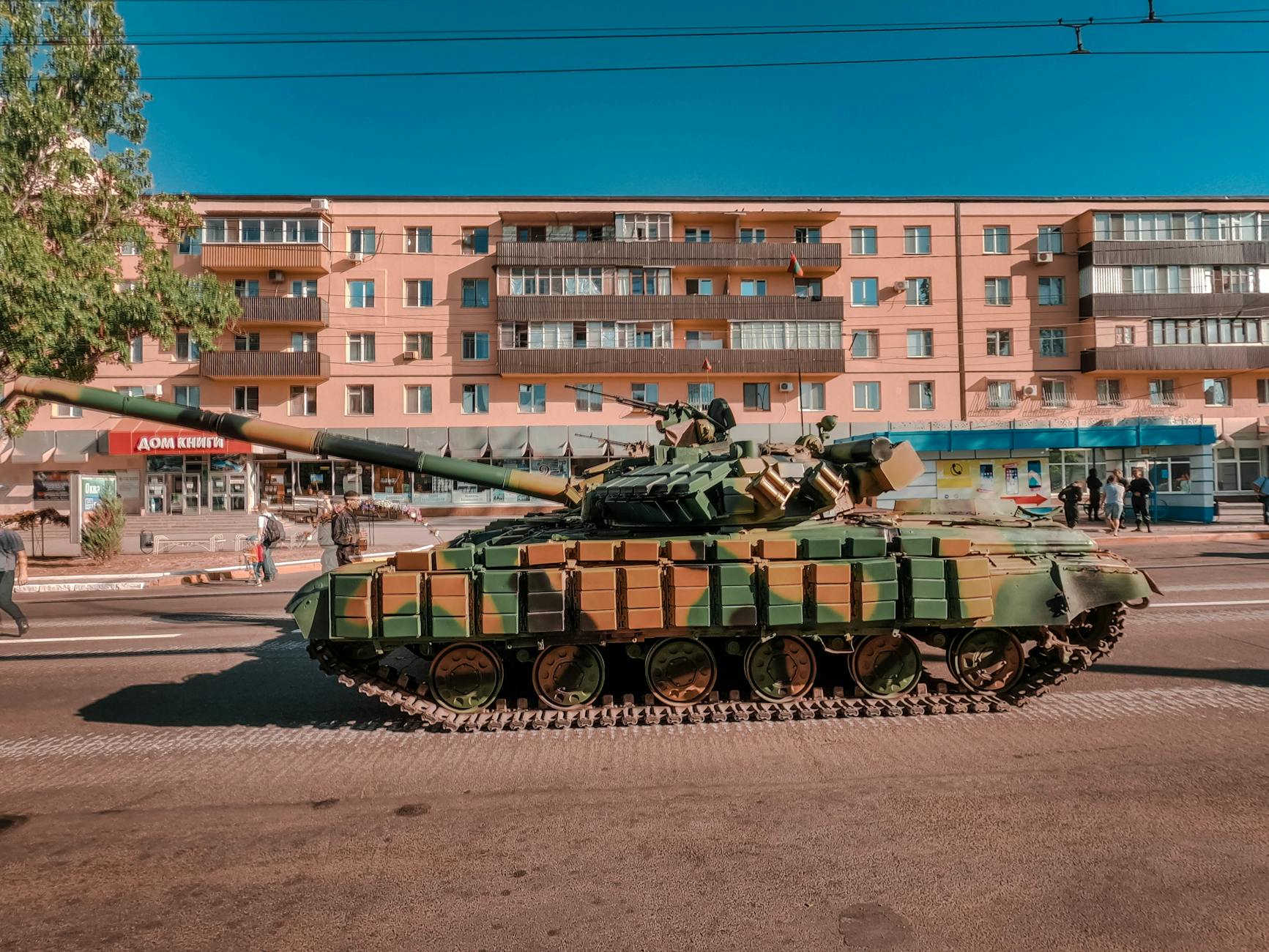
This matters because a military with autonomy can become either an ally or an opponent of regime change. If an authoritarian regime struggles to control its own military, that military might become a vector for regime change—or it might use its independence to conduct coups, which as we’ve seen produce less democratic outcomes. The current situation with iran illustrates this risk: the Revolutionary Guards Corps and regular military have distinct chains of command and competing institutional interests, which complicates both regime stability and any potential transition. An outside military power striking Iranian military infrastructure doesn’t automatically guarantee that Iran’s military will support democratic reform; it may instead consolidate military control or create conditions where a military faction seizes power through a coup. This is the double-edged quality of military intervention: it can weaken a regime, but it doesn’t necessarily create conditions for democratic transition.
What Are the Documented Dangers of Escalatory Patterns in Military Conflicts?
Comparative analysis from countries including Canada, South Korea, and Turkey reveals a concerning pattern: when civilian elected leaders rely on military force to solve domestic challenges, democratic backsliding accelerates in successive escalations. Each time a civilian government uses military intervention for what it frames as a temporary or limited purpose—restoring order, eliminating a threat, resolving a crisis—it normalizes military involvement in civilian affairs. The next time a crisis emerges, military intervention becomes easier to justify and more normalized. Eventually, the military itself may decide that direct governance is preferable to civilian leadership, leading to coup risk or democratic collapse.
South Korea experienced this cycle multiple times in its history, with military coups justified as responses to “national emergency” and subsequent democratization requiring decades of struggle. This pattern is particularly dangerous because it operates on the assumption that military action will definitively solve the political problem, when in fact military strikes often deepen the problem’s complexity. In the current Iran context, each round of military escalation raises the stakes for Iran’s leadership, both because it demonstrates military vulnerability and because it creates domestic political pressure on leaders to respond forcefully to maintain legitimacy. The 48-hour ultimatum issued regarding the Strait of Hormuz exemplifies this escalatory dynamic: it creates a deadline that forces a response, but the response may then trigger further escalation. The limitation of military-first strategies is that they often create the conditions for further military conflict rather than resolution, particularly when regime legitimacy is at stake.
How Does Violence Itself Affect the Outcome of Regime Change?
Research is clear on one point that often surprises observers: the more violent the fall of an authoritarian regime, the less likely democracy will follow. This is a robust finding across multiple studies of regime transitions. Why? Because violent transitions destroy institutional capacity, create deep grievances that must be addressed before political cooperation is possible, and often leave militaries as the only intact institution capable of asserting control. When regime change happens through violence—bombing campaigns, military strikes, armed uprisings—civilian institutions are often damaged alongside the regime itself. The more extensive the destruction, the greater the power vacuum and the more likely that a military actor will fill it, either through coup or through military administration.
The February 28, 2026 strikes on Iran—involving some 900 strikes in 12 hours targeting military infrastructure, air defenses, and leadership—represent exactly the kind of massive, rapid military campaign that this research suggests would make democratic transition less likely. The Iranian health ministry reports at least 1,500 killed, with independent human rights monitors documenting even higher numbers including both civilian and military casualties. Approximately 2,000 vessels and 20,000 seafarers have been stranded in the Strait of Hormuz, creating additional humanitarian and economic pressure. The more extensive the destruction and casualties, the stronger the pressure on any successor regime to focus on recovery and stability rather than democratic institution-building. This is not an argument for avoiding military action in all cases, but rather a warning about what its costs and limitations actually are: military power can remove a regime but cannot create the conditions for democratic governance.

What Does the Current Iran Conflict Tell Us About Modern Authoritarian Confrontation?
The 2026 Iran conflict presents a real-time test of these historical patterns. As of March 25, 2026, Iran’s Foreign Minister Abbas Araghchi has stated that U.S. messages “do not mean negotiations” and has characterized the U.S. position as “extremely maximalist and unreasonable.” This indicates that despite the significant military strikes of recent weeks, the political situation has not shifted toward resolution.
The 48-hour ultimatum demanding reopening of the Strait of Hormuz or face strikes on Iranian power plants represents continued escalation rather than de-escalation. However, there is at least one potential de-escalation signal: President Trump stated on Friday (March 21-23) that the administration is considering “winding down” military efforts in the region, suggesting that the conflict may not necessarily continue on its current trajectory. The humanitarian impact underscores the costs of the military approach: beyond the 1,500 to 3,320 killed, the economic disruption through the Hormuz blockade affects global shipping and supplies for nations dependent on energy imports through that waterway. None of this guarantees any particular political outcome—military pressure might force concessions, it might harden Iranian positions, or it might create space for negotiated settlement. The historical pattern suggests, however, that if this conflict ends through military victory (Iranian military collapse), the subsequent regime that emerges will likely not be democratic in structure unless other conditions also align.
What Do These Patterns Suggest About Future Resolutions in Similar Conflicts?
The historical record points toward a conclusion that most policymakers find uncomfortable: military power is most effective at removing regimes but least effective at creating the political outcomes you actually want afterward. WWII demonstrated that you can defeat an authoritarian military through superior force. The Cold War’s end demonstrated that economic pressure and loss of elite consensus can collapse regimes without massive warfare. The consistent finding across both pathways is that what happens next depends on factors that military action alone cannot control—particularly whether there is a pre-existing mass movement for democratic change and whether the society has surviving institutions capable of organizing post-conflict governance.
In the Iran case, the question is not primarily whether military strikes can damage Iranian military capacity or kill Iranian leadership (they clearly can), but whether any resulting regime change would produce a government less hostile to international interests or more democratic in structure. The research suggests these are not guaranteed outcomes of military victory. Instead, they depend on political factors—whether Iranian society has movements capable of organizing democratically, whether external powers would support such movements, and whether the costs of conflict haven’t destroyed the institutional capacity to govern. These are questions that military planners cannot answer through force.
Conclusion
Wars with authoritarian regimes throughout history have ended through two primary mechanisms: military defeat (as in World War II) or economic collapse coupled with mass mobilization (as in the Soviet Union’s case). The critical finding from research on regime transitions is that how a regime falls matters more than that it falls—revolts produce democracy 45% of the time, while coups succeed only 10% of the time. The more violent a regime’s collapse, the less likely democracy follows, because violence destroys the institutional capacity necessary for democratic governance. These patterns hold crucial implications for the current 2026 conflict with Iran, where military strikes have inflicted substantial casualties and economic disruption without yet producing clear political resolution.
The takeaway for understanding both history and current events is this: military power can remove regimes but cannot create political systems. The outcomes that actually matter—whether a post-conflict government is democratic, stable, or less hostile to international order—depend on political factors that exist independently of military action. The historical lesson is not that military force never matters, but that it operates within political constraints. In Iran, as in previous conflicts, the ultimate trajectory will be determined less by the military balance than by whether the resulting political space allows for organization toward democratic governance or instead narrows toward military control.
Frequently Asked Questions
Did all authoritarian regimes that fell through revolts become democracies?
No. While revolts produced democracy approximately 45% of the time historically, the other 55% either produced new authoritarian regimes or entered periods of instability. The presence of mass mobilization creates conditions favorable to democracy but doesn’t guarantee it, especially if competing factions within the revolutionary movement have irreconcilable visions of governance.
Why is military intervention less effective at creating democracy than economic pressure?
Military intervention directly destroys institutional capacity and creates grievances, while economic collapse operates through elite consensus breakdown and allows civil society organizations to grow during the regime’s weakness. Economic pressure typically gives civilian institutions time to organize, while military strikes accelerate the power vacuum problem.
Is the current Iran conflict likely to produce a democratic government?
Historical patterns suggest this is unlikely unless major political factors shift. Military strikes have damaged Iranian military capacity but haven’t yet produced either Iranian military collapse or visible mass movements demanding democracy. The trajectory will depend on political developments rather than military outcomes alone.
What happened to militaries that remained loyal to authoritarian regimes during transitions?
When militaries remain subordinate to the regime rather than achieving autonomy, they either transitioned to serving new leadership or were purged during transitions. The question of military loyalty is often the deciding factor in whether transitions are peaceful or violent.
Could the Strait of Hormuz blockade lead to regime change in Iran?
Economic pressure can contribute to regime collapse, as it did with the Soviet Union, but typically over years rather than weeks. The blockade creates economic damage but doesn’t automatically translate to either military collapse or political transition unless accompanied by other factors.
What’s the difference between military intervention to remove a regime versus military intervention to support internal opposition?
External military intervention that directly targets the regime tends to concentrate power militarily and produces less democratic outcomes. Support for internal opposition groups that already exist allows those groups to maintain independence and political vision. The difference lies in whether the military pathway replaces civilian leadership entirely or reinforces existing civilian organizing.
You Might Also Like
- How Did the U.S. Set Its Terms for a Ceasefire With Iran
- Did Trump Really End the Iran War?
- Social Media Addiction Trial Ends With Shocking Negligence Finding Against Big Tech
For more, see NIH MedlinePlus — dementia.