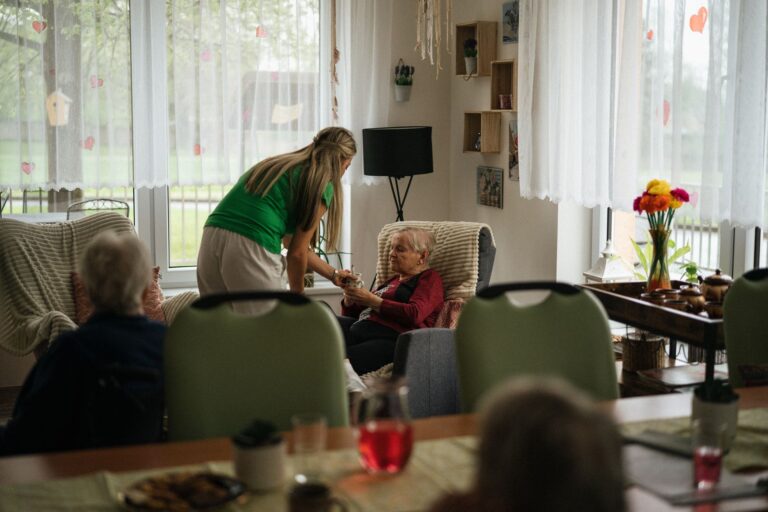
Forgetting to drink in late-stage dementia means caregivers shift from reminders to handing drinks directly, watching swallowing and offering sips often. The room gets brighter, simpler and closer, while the care plan adds small, frequent drinks, visible cups and fluid-rich foods.
Late-stage dementia means advanced memory loss plus trouble with speech, movement and swallowing. People may not feel thirst, may forget the drink in front of them or cannot ask for more. The Alzheimer's Society warns in its drinking and hydration guide that this raises risk for headache, confusion, constipation and urinary infections.
Medical information disclaimer: This article is for general educational purposes only and does not provide medical advice, diagnosis, or treatment. Always consult a physician or other qualified health professional about symptoms, medications, tests, or treatment decisions.
Table of Contents
- Why fluids get missed
- How should the drink space change?
- What changes in the daily care routine?
- What if swallowing becomes unsafe?
Why fluids get missed
Banner Health explains dulled thirst, forgotten cup-filling steps, fear of swallowing, worry about incontinence and fluid-losing medicines all lower intake. Symptoms can appear after only a few hours without fluids. That speed matters for someone who cannot say they are thirsty.
In late stages, a person may hold liquid in the mouth, forget to swallow or turn away. Caregivers often mistake this for refusal. Treat it as a signal to pause, check alertness and try again later.
How should the drink space change?
Cambridge University Hospitals NHS Trust advises in its dietary information for dementia carers that cups, light and layout shape intake. A bright, contrasting cup stands out against the table.
A familiar or clear cup shows what is inside. Keep the same cup in the same spot each time. Refill it in sight so drinking looks normal and easy.
- keep drink visible and within reach
- use easy-grip, two-handled or non-spill cup
- improve lighting and clear table clutter
What changes in the daily care routine?
The Rotherham Doncaster NHS nutrition leaflet recommends small amounts often without waiting to be asked, plus help with holding the cup. High-water foods count too, such as fruit, jelly, yogurt, soup and custard. Thickened liquids help when thin fluids slip into the airway.
When plain water is refused, the Alzheimer's Association suggests in Late-Stage Caregiving fruit juice, gelatin, sherbet or soup. Check hot-liquid temperature before serving. Offer during calm moments, not when rushed or sleepy.
What if swallowing becomes unsafe?
Elder advises keeping the person upright, alert and unhurried during drinks. Watch for coughing, cheek pocketing, wet voice or drooling. Ask for speech-therapy assessment for texture changes. In the last days of life, the National Institute for Health and Care Excellence requires daily hydration checks. The Institute covers this in its quality statement on hydration, which calls for talk about risks and benefits.
Oral drinking is normal, but aspiration is a risk. Excess assisted hydration can cause swelling and breathing difficulty. Research finds no medical benefit from tube feeding in advanced dementia and possible harm. The Alzheimer's Association supports forgoing artificial nutrition and hydration for comfort-focused palliative care at home or in the facility. Choose sips, mouth care and presence over forced fluids when swallowing fails.