Familiar prayers in memory care are short, well-known prayers used in both group services and bedside moments. Group variations use shared recitation, music and objects, while one-on-one variations use caregiver-led repetition and simple responses. Memory care here means daily support for people living with dementia-related memory loss. Familiar means overlearned prayers learned early in life that remain easier to say from memory.
Medical information disclaimer: This article is for general educational purposes only and does not provide medical advice, diagnosis, or treatment. Always consult a physician or other qualified health professional about symptoms, medications, tests, or treatment decisions.
Table of Contents
- Why familiar prayers remain accessible
- How does one-on-one prayer work?
- How are group services adapted?
- What benefits and limits should families expect?
Why familiar prayers remain accessible
People with dementia often retain the Lord's Prayer, also called the Our Father, and childhood bedtime prayers such as Now I lay me down to sleep. The Grey Nuns of the Sacred Heart advise a daily say-your-prayers time built around those texts, as described in its guide to praying during memory loss.
Chaplains report that this faith memory can persist late into dementia. Residents may recite the Lord's Prayer even when they cannot recall names. That pattern makes a known prayer a practical starting point rather than a memory test.
How does one-on-one prayer work?
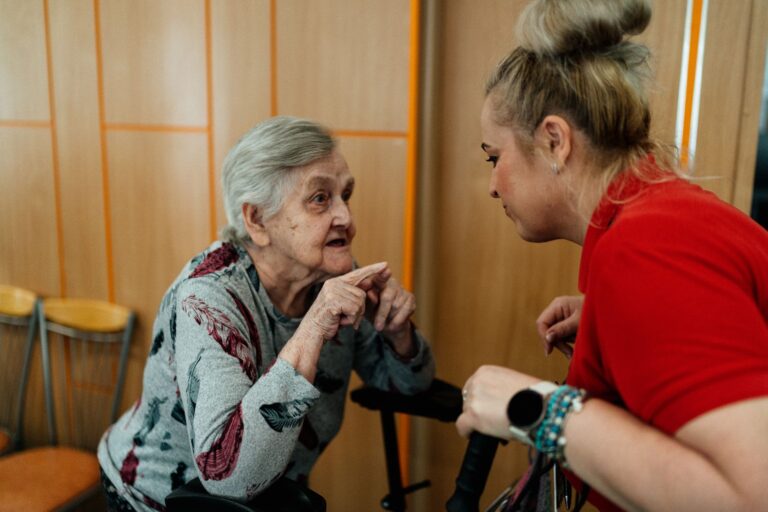
In one-on-one prayer, the caregiver leads and the person joins in a concrete way. The invitation can be a posture, a gesture, holding hands, or a short repeated phrase such as Lord, hear our prayer.
The goal is active participation within verbal limits. A simple routine helps: Keep sessions brief, calm, and consistent. Stop or switch to quiet presence if the person looks tired or distressed.
- Choose one familiar prayer and use it each day
- Say a line at a time and pause for repetition
- Offer one response phrase for the person to repeat
- Close with the same blessing or amen
How are group services adapted?
Group dementia worship replaces sermons with familiar scripture, music, prayers, Communion, and tactile objects. Religion News Service describes 45-minute services with this format held across Phoebe Ministries' four nursing homes for residents and families, in its report on dementia worship services. Leaders avoid abstract theology and use childhood-era sensory cues instead.
New York State Department of Health's EDGE Project directs leaders to use items such as rosaries, prayer shawls, candles, crosses, familiar prayer books, and Latin or Hebrew phrases, in its worship ritual guidance. Practical access matters as much as content. Large-type laminated prayer cards allow partial reading plus memory, while familiar songs, Communion, stuffed animals, and held objects give nonverbal ways to belong. Seat people close, keep the pace slow, and repeat the same order each time.
What benefits and limits should families expect?
A University of New Mexico dissertation study had nursing-home residents with moderate-to-late dementia pray about five minutes on five of seven days for four weeks. Participants used a self-chosen or supplied nondenominational prayer. The prayer group showed greater quality-of-life improvement, with themes of gratitude, reverence, satisfaction, and familiarity.
An American-Israeli study found regularly praying women had about 50 percent less mild dementia or Alzheimer's. This is an association, with cognitive and social activity as a hypothesized protection, not proof that prayer prevents disease. Families should treat prayer as comfort, connection, hope, and dignity, not treatment. For daily use, keep one laminated card with the Lord's Prayer and one bedtime prayer beside the bed.