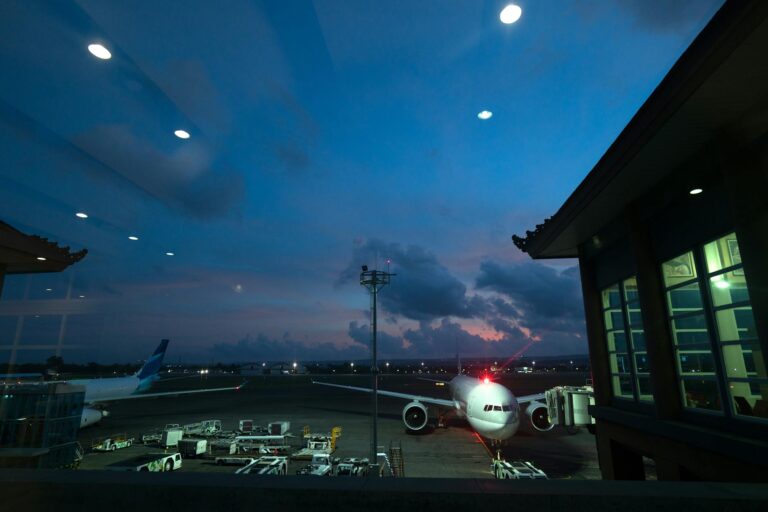
On March 22, 2026, an Air Canada flight from Montréal–Trudeau International Airport collided with a fire truck on the runway at LaGuardia Airport in New York, triggering an emergency response that closed the airport for several hours and caused cascading travel chaos across the country. This single incident led to 188 flight cancellations and nearly 4,000 delays on that day alone, with additional disruptions rippling through major U.S. hubs including JFK, Chicago O’Hare, Atlanta Hartsfield-Jackson, and LAX.
For seniors, those with dementia, and their family caregivers who depend on air travel for medical appointments, family visits, or relocations, understanding what happened during this emergency and how to prepare for similar disruptions has become essential information for safe travel planning. The broader picture revealed an aviation system already straining under multiple pressures: TSA staffing shortages caused by an extended federal government shutdown that left security workers unpaid, combined with severe weather and unusually high travel demand in early 2026. For travelers with cognitive concerns or mobility challenges, these compounding factors created not just inconvenience but genuine risks—extended time in crowded airports, missed medical appointments, confusion amid sudden itinerary changes, and the physical and emotional stress of travel disruption.
Table of Contents
- What Triggered the Cascading Airport Delays?
- Understanding the Full Scope of Travel Disruption
- The Root Cause You Need to Understand—TSA Staffing and Government Shutdown
- Why This Crisis Hits Elderly and Dementia-Affected Travelers Hardest
- Practical Steps Vulnerable Travelers Should Take Now
- The Government Shutdown’s Rippling Consequences
- Preparing for Future Disruptions—What Needs to Change
- Conclusion
What Triggered the Cascading Airport Delays?
The primary emergency occurred on March 22, 2026, when Air Canada Flight 8646 experienced a collision with a fire truck on the runway at LaGuardia Airport. The incident resulted in several injuries and required immediate emergency response protocols, including runway closure and emergency services mobilization. This wasn’t an isolated mishap—on the same day, Delta Airlines Flight DL1182 diverted from Atlanta to Tallahassee after crew members detected a mid-air technical issue, executing an emergency landing safely. These incidents, occurring within hours of each other at different major airports, demonstrated how fragile the interconnected air travel network had become by March 2026.
When LaGuardia closed following the Air Canada collision, the impact wasn’t contained to New York. Flights scheduled to depart from LaGuardia were diverted to JFK, Newark, and other regional airports. Arriving flights were held in the air or rerouted. Crews and aircraft that were supposed to operate subsequent flights became stranded, creating what aviation professionals call “cascading delays”—where one airport’s problem becomes every other airport’s problem within hours. The Federal Aviation Administration’s ability to manage this cascade was already compromised by the factors discussed below, meaning recovery took substantially longer than if the system had been operating at full capacity.

Understanding the Full Scope of Travel Disruption
The numbers reveal just how widespread the chaos became. On a single day in late March 2026, nearly 4,000 flights experienced delays across major U.S. airports, with 188 flights cancelled entirely. Chicago O’Hare recorded 239 delays and 5 cancellations on March 21, 2026. JFK saw 14 cancellations on March 23, 2026.
San Diego Airport experienced 89 delays on March 20, 2026. However, the raw numbers don’t capture what these delays meant in human terms: an elderly passenger with Alzheimer’s missing a crucial neurology appointment in another state; a family caregiver unable to reach a parent experiencing a health crisis; seniors stranded in airports for 8, 10, or 12+ hours without adequate seating or food options suitable for their dietary needs. The critical limitation of official delay statistics is that they count minutes, not human impact. A 3-hour delay might be merely frustrating for a business traveler, but for someone with cognitive impairment who becomes disoriented in unfamiliar environments, or someone with Parkinson’s or other neurological conditions that affect balance and endurance, that same delay becomes a medical risk. Airports lack adequate resources specifically designed for travelers with dementia or cognitive decline: quiet spaces, adequate seating with back support, clear signage, and staff trained to recognize and assist someone experiencing confusion or distress.
The Root Cause You Need to Understand—TSA Staffing and Government Shutdown
Behind the emergency incidents and cascading delays sat a more insidious problem: the Transportation Security Administration (TSA) was operating severely undermanned due to an extended partial federal government shutdown. Security workers had not been paid for weeks, leading to widespread absenteeism at checkpoints across the country. This meant longer security lines, less ability to screen passengers efficiently, and less capacity to handle surges in travel demand—which is precisely what occurred during the busy spring travel period. When TSA staffing drops, checkpoint lines don’t just get longer; the quality of security screening can deteriorate. Agents working multiple shifts or distracted by personal financial stress make mistakes.
Supervisory oversight becomes stretched. For vulnerable travelers, extended periods standing in crowded security lines creates physical and cognitive stress. Someone with dementia might become frightened or agitated in a chaotic checkpoint environment. Someone with balance problems might fall. The government shutdown that caused this staffing crisis was not merely a political failure—it created measurable public health consequences, particularly for the elderly and neurologically vulnerable populations who rely on flying for access to specialized medical care.

Why This Crisis Hits Elderly and Dementia-Affected Travelers Hardest
Air travel disruptions that most people tolerate as minor inconveniences become serious medical events for seniors with cognitive impairment. A dementia patient whose routine has been disrupted—who is stuck in an unfamiliar airport environment for hours longer than expected—experiences real neurological distress. Delirium, a state of acute confusion that can mimic or worsen dementia symptoms, is triggered by precisely these stressors: unfamiliar environments, disrupted routines, sleep deprivation, fatigue, and the anxiety of uncertainty. An elderly person trying to navigate rerouted flights, changed gate assignments, and contradictory information from different airline staff members may become genuinely lost, unable to find their connecting flight or luggage.
For family caregivers accompanying someone with dementia, the ripple effects extend further. A missed connecting flight doesn’t just mean rebooking; it means finding a hotel room in a strange city, managing medication schedules, finding suitable food, and managing behavioral changes that typically emerge when someone with dementia is frightened or exhausted. A sole caregiver might have to choose between staying with their confused family member or stepping away to find a hotel, food, or medication. The Air Canada and Delta incidents in March 2026 stranded thousands of passengers, many of them elderly, in exactly these situations. Airlines offered minimal support—no guarantee of hotel rooms, no guarantee of meal vouchers, no staff trained to recognize and assist passengers with cognitive impairment.
Practical Steps Vulnerable Travelers Should Take Now
If you are a senior, have a dementia diagnosis, or are a caregiver traveling with someone cognitively vulnerable, the March 2026 disruptions offer critical lessons. First, build substantial buffer time into your travel plans—not just 2 hours between connecting flights, but 4 or more hours when possible. The conventional wisdom about connection times was already questionable in 2026, and with TSA staffing problems, it became dangerously outdated. Carry printed copies of your itinerary, reservation confirmations, and medical information, not just digital versions—if your phone dies or the airport WiFi fails, you need backup documentation. Second, bring more medication, snacks, and comfort items than you think you’ll need. If your flight is delayed or cancelled, airports do not provide meals that accommodate common dietary restrictions (sugar-free, low-sodium, gluten-free, or soft foods for swallowing problems).
Bring a water bottle (fill it after security), snacks, and portable medications. For someone with dementia, bring comfort items that can help reorient them if they become confused: a photo album, a familiar object, a list of important phone numbers. Third, establish clear communication protocols with your travel companion before you depart. If you get separated, agree on a specific airport location where you’ll reconnect and a time to reconvene. Write this information on a card and keep it accessible. Someone with moderate dementia should carry identification that clearly states they have cognitive impairment and provides emergency contact information.

The Government Shutdown’s Rippling Consequences
The federal government shutdown that undermined TSA staffing in March 2026 had been ongoing for weeks at the time of the Air Canada incident, meaning it wasn’t a surprise but a predictable crisis that authorities should have mitigated. The decision to allow security workers to go unpaid despite continued work requirements was, from a public health perspective, a form of negligence. Workers facing financial hardship either call in sick or work in a diminished state—neither option creates the safety or efficiency that air travel requires.
Beyond TSA, the shutdown affected other airport operations: federal air traffic controllers, facility maintenance, wildlife management at airports (which helps prevent bird strikes that could trigger emergencies), and emergency response coordination. The Air Canada collision with a fire truck at LaGuardia occurred in an environment where airport operations were already straining. The question isn’t just what went wrong on March 22, 2026; it’s what other failures the shutdown enabled that went unnoticed.
Preparing for Future Disruptions—What Needs to Change
The March 2026 disruptions revealed that U.S. aviation infrastructure is vulnerable not just to rare emergencies but to predictable systemic failures. As long as government shutdowns can leave security workers unpaid, the system is fragile. As long as airports lack adequate resources for passengers with cognitive impairment, vulnerable populations will bear the worst consequences of disruption.
Moving forward, seniors and families should recognize that air travel is becoming less reliable, particularly for those with tight medical schedules or cognitive concerns. Airlines, airports, and the FAA have begun discussions about improving passenger support during disruptions, but changes move slowly. In the meantime, families should consider whether alternative travel methods—driving, train travel, or delaying non-urgent trips—might be safer and less stressful for cognitively vulnerable relatives. For medical travel that can’t be delayed or altered, working with a medical travel coordinator or travel insurance that includes disruption protection has become nearly essential. The March 2026 crisis will likely be studied for years as a turning point in how we understand aviation resilience and passenger welfare.
Conclusion
The emergency response at LaGuardia on March 22, 2026, and the cascading delays that followed revealed how quickly the air travel system can become unsafe for vulnerable populations. While the immediate incidents were handled without loss of life, the broader conditions that enabled disruption—federal shutdown, TSA staffing collapse, inadequate passenger support systems—remain unresolved. For seniors, those with dementia, and family caregivers, the lesson is clear: approach air travel with far greater caution and preparation than was necessary even a year prior.
If you need to fly, build buffer time into connections, carry backup documentation and medications, establish communication protocols with travel companions, and seriously consider whether the trip is necessary. If you’re planning travel for an elderly relative or someone with dementia, involve their healthcare provider in the planning process and consider whether medical travel insurance might protect against disruption. The air travel system is a convenience most people take for granted, but for those with cognitive or medical vulnerabilities, it’s an environment that requires careful navigation and realistic expectations about what can go wrong.