Reviewed by the Help Dementia Editorial Team — our editors review every article for accuracy against guidance from the National Institute on Aging, the Alzheimer’s Association, and peer-reviewed sources.
Eating more lentils can help reduce your dementia risk by up to 21 percent, according to findings from a 15-year prospective study that tracked over 13,000 participants from 2006 to 2022. When researchers followed these individuals for a median of 12.5 years, they found that 825 developed dementia, but those who maintained the healthiest plant-based diets—which include legumes like lentils as a central component—experienced significantly lower rates of cognitive decline. This protective effect isn’t marginal; it represents one of the most consistent dietary interventions associated with dementia prevention in modern research.
The research reveals something equally important on the flip side: those consuming unhealthy plant-based diets actually had a 24 percent higher dementia risk. This distinction matters because it shows that simply eating plant-based foods isn’t enough—the quality and composition of your plant-based eating pattern determines whether you’re actually protecting your brain. For someone like Margaret, a 68-year-old woman concerned about her cognitive future, adding lentils to her weekly meal rotation while reducing processed red meat became a practical, evidence-based step toward maintaining her mental sharpness as she ages.
Table of Contents
- What Does the 15-Year Lentil and Dementia Research Actually Show?
- How Do Plant-Based Proteins Like Lentils Protect Brain Function?
- The Processed Meat Factor: Why Replacing Red Meat Matters More Than You Might Think
- How Much Processed Meat Is Actually Risky?
- Nutritional Mechanisms: How B Vitamins and Fiber Support Cognitive Health
- Practical Examples: Building a Brain-Protective Diet
- The Bigger Picture: Why Diet Is Just Part of Dementia Prevention
- Conclusion
What Does the 15-Year Lentil and Dementia Research Actually Show?
The comprehensive study published in findings on plant-based diets examined detailed dietary questionnaires from thousands of participants, categorizing their eating patterns into three groups based on diet quality. Those in the highest tertile for healthy plant-based eating—featuring legumes including lentils, beans, and peas as protein sources alongside whole grains and vegetables—showed that 21 percent lower dementia risk compared to those with the least healthy plant-based patterns. Importantly, this wasn’t a small observation from a handful of cases; with 825 dementia diagnoses across the follow-up period, researchers had substantial data to confirm the association.
What made this study particularly valuable is that it didn’t just measure whether people ate plant-based foods, but evaluated the overall dietary pattern quality. Someone eating only vegan junk food wouldn’t fall into the protective category; the benefit came specifically from those consuming nutrient-dense plant foods like lentils paired with whole grains, vegetables, and minimal processed foods. The median follow-up of 12.5 years also allowed researchers to see how these eating patterns tracked with actual dementia development rather than just theoretical risk factors, giving the findings real-world relevance.

How Do Plant-Based Proteins Like Lentils Protect Brain Function?
Lentils contain a specific combination of nutrients that directly support brain health: B vitamins that regulate homocysteine metabolism (elevated homocysteine is linked to cognitive decline), fiber that supports healthy gut bacteria and reduces inflammation, and polyphenol antioxidants that protect neurons from oxidative stress. When you consume lentils regularly, you’re not just getting a protein source—you’re delivering a package of brain-protective compounds with every serving. One cup of cooked lentils provides roughly 18 grams of protein, 16 grams of fiber, and significant amounts of folate, thiamine, and magnesium, all nutrients associated with better cognitive outcomes.
A limitation worth acknowledging: while the research shows association between lentil consumption and lower dementia risk, it doesn’t prove that lentils alone prevent dementia. Genetics, sleep quality, exercise, education, and social engagement also play major roles in cognitive aging. Someone who eats lentils but sleeps poorly, lives a sedentary lifestyle, and experiences chronic stress won’t see the full protective benefit. The lentils are one piece of a larger brain health puzzle, not a standalone solution.
The Processed Meat Factor: Why Replacing Red Meat Matters More Than You Might Think
A 43-year longitudinal study tracking over 130,000 participants found something striking: replacing just one daily serving of processed red meat—think deli turkey, bacon, sausage, or hot dogs—with legumes like lentils, beans, or nuts was associated with a 20 percent lower dementia risk. This specific comparison matters because it shows the effect isn’t just about adding lentils; it’s also about what you stop eating. Someone who swaps out a daily sandwich of processed deli meat for a lentil salad isn’t just gaining the benefits of lentils—they’re eliminating compounds in processed red meat linked to inflammation and cognitive decline.
The same study found this replacement strategy slowed cognitive aging by an estimated 1.37 years. Imagine that a typical person experiences a certain rate of cognitive decline as they age; this dietary shift could be equivalent to preserving the cognitive function you’d normally have 1.37 years later. That’s a meaningful difference when compounded over decades. For someone in their fifties making this dietary change, that could mean the difference between sharp thinking at 75 or noticeably slower processing at that age.
How Much Processed Meat Is Actually Risky?
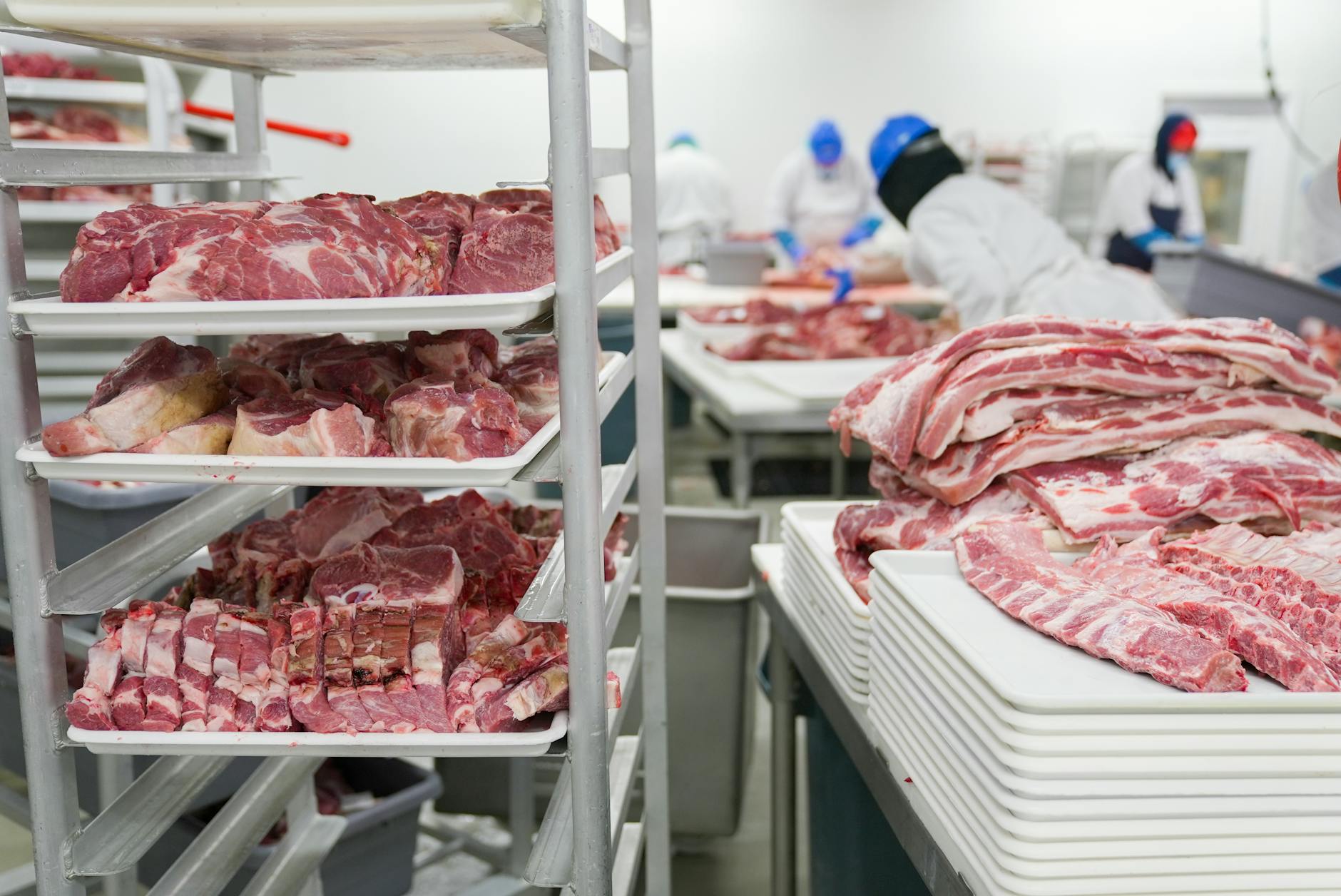
The research found that consuming approximately one ounce of processed red meat daily—roughly two servings per week spread across the week—was associated with a 14 percent increased dementia risk compared to those eating about three servings per month. This is important context because it suggests there may not be a strict on-off switch; rather, there’s a dose-response relationship where higher regular consumption creates higher risk. Someone eating processed meat just occasionally is in a very different risk category than someone eating it daily.
What makes this finding particularly relevant is that one ounce is a surprisingly small amount—about what you’d get in a single slice of deli meat or a portion of bacon. This means the detrimental effect appears with relatively modest regular consumption, not just extreme processed meat eaters. For practical purposes, this suggests that reducing processed red meat from a daily habit to an occasional indulgence could substantially shift your dementia risk trajectory.
Nutritional Mechanisms: How B Vitamins and Fiber Support Cognitive Health
Beyond the general antioxidant effect, lentils provide specific nutrients that support the biological pathways involved in memory and thinking. The B vitamins in lentils—particularly folate, thiamine, and B6—help regulate homocysteine levels, and elevated homocysteine is an independent risk factor for cognitive decline. Fiber feeds beneficial bacteria in your gut microbiome that produce compounds supporting brain health and reducing neuroinflammation.
Polyphenols in lentils, especially in red and black lentil varieties, cross the blood-brain barrier and directly reduce oxidative stress in neural tissue. One important caveat: the protective effect of these nutrients depends on your overall nutritional status and lifestyle. Someone with malabsorption issues, certain medications that interfere with B vitamin absorption, or severe stress that depletes B vitamins might not derive the full cognitive benefit from lentil consumption. Additionally, while lentils contain these protective compounds, the research doesn’t prove you can’t achieve the same benefits through other sources—beans, peas, nuts, and whole grains provide overlapping nutritional profiles.

Practical Examples: Building a Brain-Protective Diet
Consider a typical week: instead of reaching for a ham sandwich at lunch three days a week, swap it for lentil soup, a chickpea-based salad, or a lentil patty sandwich. Over a week, you’ve replaced three servings of processed red meat with plant-based alternatives. Over a year, that’s more than 150 servings of processed meat avoided. Across decades, that’s thousands of servings—exactly the kind of cumulative dietary change the 43-year research study measured.
The study specifically showed this type of gradual, sustainable replacement was what actually predicted lower dementia risk in real people. Another practical angle: adding lentils doesn’t require dramatic diet transformation. You don’t need to become vegetarian or completely eliminate meat. Adding lentils to soups, mixing them into ground meat dishes to extend the meat portion while boosting the lentil content, or having lentil-based meals twice a week creates consistent nutritional shifts without requiring someone to abandon their food preferences entirely.
The Bigger Picture: Why Diet Is Just Part of Dementia Prevention
While the research on lentils and dementia risk is compelling, it’s worth situating this within the broader context of cognitive aging. The largest research networks studying dementia—including the Framingham study and major longitudinal cohorts—show that diet accounts for perhaps 20-30 percent of dementia risk variance, with the remainder influenced by genetics, cognitive engagement, physical activity, sleep quality, stress management, and social connection. Someone following a perfect diet while experiencing social isolation, physical inactivity, and chronic stress won’t see the full protective benefit.
The forward-looking implication is that lentils and legumes are most powerful when part of a comprehensive brain health strategy. Your lentil salad at lunch works best when paired with 30 minutes of walking, adequate sleep, engaging hobbies, and social engagement. The research doesn’t suggest lentils are magic; rather, they’re a concrete, accessible, science-backed component of dementia prevention that people can implement immediately.
Conclusion
The evidence from a 15-year prospective study and supporting 43-year longitudinal research clearly demonstrates that eating more lentils, as part of a healthy plant-based diet, can reduce dementia risk by up to 21 percent. This protective effect appears to work through multiple mechanisms: providing B vitamins that regulate homocysteine, delivering fiber that supports healthy gut bacteria, and offering antioxidants that protect neural tissue. The added benefit of replacing processed red meat with lentils or other legumes appears to slow cognitive aging by approximately 1.37 years, making this dietary change one of the most concrete steps available for dementia prevention.
Starting with lentils doesn’t require perfection—adding lentil-based meals twice a week, gradually replacing processed meat sandwiches with legume-based options, or incorporating lentils into soups and salads creates measurable change without requiring dramatic lifestyle overhaul. While diet alone doesn’t prevent dementia, combining consistent lentil consumption with physical activity, cognitive engagement, quality sleep, and social connection creates a comprehensive approach to brain health as you age. The research suggests this isn’t a distant theoretical benefit; it’s a measurable change in cognitive outcomes for people who actually make these dietary shifts.
You Might Also Like
- Eating More wild blueberries Cuts Dementia Risk According to 10 Year Study
- Eating More walnuts Cuts Dementia Risk According to 5 Year Study
- Eating More turmeric Cuts Dementia Risk According to 7 Year Study
For more, see Alzheimer’s Association — medical tests.