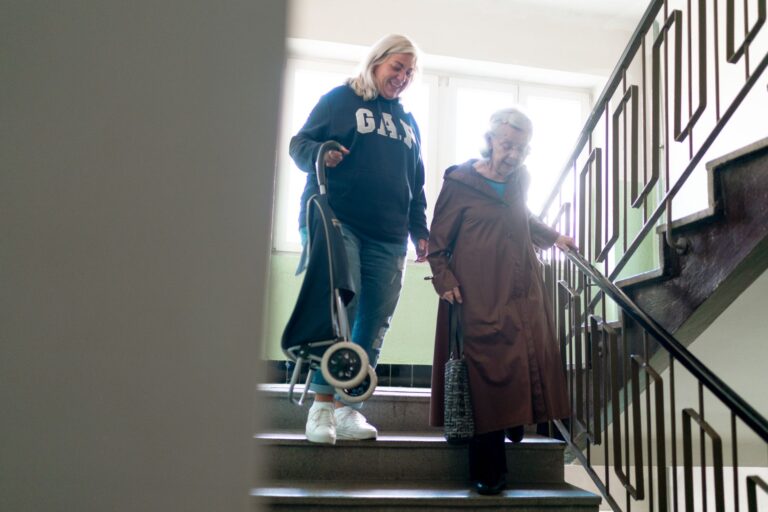
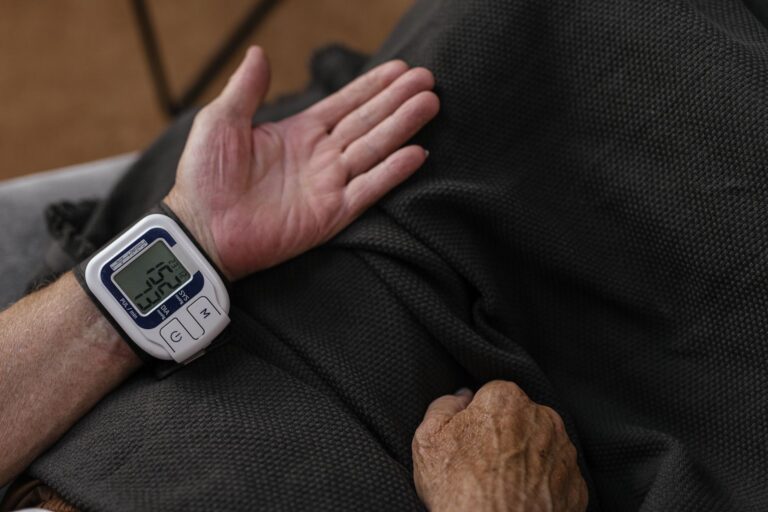
Door alarms and GPS tools address dementia wandering through different mechanisms: door alarms alert caregivers when a person leaves a monitored space, while GPS devices track their real-time location if they do wander away. Used together, they create a safety net—the alarm provides immediate notification of departure, and the GPS locator enables rapid retrieval if the person is not found nearby. A person living with mid-stage dementia might trigger a door alarm when leaving the house at night during a period of confusion, alerting an adult child sleeping upstairs; if the parent has wandered beyond the neighborhood before the alarm brings them back inside, the GPS device worn on their wrist would pinpoint their exact location for police or search volunteers.
Wandering affects up to 60% of people with dementia at some point, and each tool serves a distinct function. Door alarms work best as an early warning system for exits that should not happen unsupervised; GPS tools work best when wandering has already occurred or during outings where the person needs monitoring. Neither tool eliminates the need for active supervision or environmental modifications, but both reduce response time and expand the geographic range of safe supervision beyond what a single caregiver can physically manage.
Table of Contents
- Why Dementia Wandering Happens and When Safety Tools Become Essential
- How Door Alarms Work and Their Real Limitations
- GPS Tracking Devices and How They Enable Real-Time Recovery
- Choosing Between Tools and Combining Them for Layered Safety
- Common Implementation Problems—False Alarms, Battery Failures, and Caregiver Burnout
- Integrating Safety Tools with Environmental and Behavioral Strategies
- Specific Considerations for Nighttime Wandering and End-Stage Dementia
- Frequently Asked Questions
Why Dementia Wandering Happens and When Safety Tools Become Essential
Wandering in dementia is not random behavior—it typically stems from restlessness, disorientation, searching for lost people or places from the person’s past, or attempting to fulfill an old routine (going to work, picking up children from school). Early-stage dementia may involve purposeful walking that simply exceeds safe bounds; middle and later stages bring increased confusion about location, time, and the ability to return home. A person may walk out the front door believing they need to meet someone at a location they haven’t visited in decades, or they may leave the house at 2 a.m. because they are disoriented about the time of day.
The risk of serious harm increases with distance from home and time of day. Wandering at night is more dangerous—fewer witnesses, reduced visibility, traffic, weather exposure, and a higher likelihood of the person becoming injured or hypothermic before being found. Urban settings present traffic and abduction risks; rural settings mean vast search areas and delayed police response. Door alarms and GPS tools are most critical when wandering risk is high—middle to advanced dementia, history of attempts to leave unsupervised, or living situations where continuous one-on-one supervision is not possible.
How Door Alarms Work and Their Real Limitations
Door alarms operate on simple principles: a sensor on the door or window detects opening, and either a loud chime alerts nearby caregivers or the alarm sends a silent alert to a phone or monitoring device. Inexpensive battery-powered door chimes ($20–$50) emit a loud beep when activated; they work well in small homes where the caregiver can hear them from any room. More sophisticated systems ($200–$500) integrate door sensors, motion detectors, and phone notifications, allowing caregivers to receive alerts on their smartphone even if they are outside the house or sleeping deeply enough not to hear a beep.
The critical limitation of door alarms is that they only alert caregivers to departure—they do nothing to locate or recover a person who leaves unsupervised. A 78-year-old living with advanced dementia exits through the garage at dawn while a family member showers; the door alarm sounds, but the person is already three blocks away and moving quickly. The alarm did its job, but without a GPS locator on the person, the first 10 minutes of searching are random, and police may not be called immediately because the initial search area is unclear. Door alarms also fail if they are not armed consistently or if they are disarmed to allow routine exits (the person going to the mailbox, taking out trash), creating a false sense of security during the window when the alarm is off.
GPS Tracking Devices and How They Enable Real-Time Recovery
GPS-enabled devices worn on the wrist, clipped to clothing, or placed in a pocket transmit location data to a smartphone app or monitoring center. Consumer-grade options like Gizmo watches ($100–$150) or Apple AirTags ($29, combined with iPhone tracking) offer basic tracking; specialized medical alert devices ($30–$50/month service plus device cost) include fall detection, two-way calling, and human monitoring centers that can contact emergency services on behalf of the wearer. The accuracy of GPS varies—urban settings with clear sky provide accuracy within 10–30 feet, while dense forest, parking garages, or indoors may degrade to 100+ feet or lose signal entirely. A practical example: a 72-year-old with moderate dementia wanders away from a park while a caregiver is buying ice cream at a nearby stand.
Within seconds of noticing the empty bench, the caregiver opens the GPS app and sees the person is 0.4 miles away, moving toward a major road. This 2-minute window before the caregiver arrives allows intervention before the person crosses traffic. Without GPS, searching a 1-mile radius by foot or calling police would consume 15–30 minutes, during which the person might be hit by a car, become more disoriented, or disappear into an unfamiliar area. GPS devices also work on outings to reduce the surface area of supervision—caregivers can allow modest independence (sitting on a bench, walking a prescribed path) while maintaining the ability to locate the person instantly if they deviate.
Choosing Between Tools and Combining Them for Layered Safety
Door alarms and GPS tools serve different moments in the wandering sequence: the alarm catches departure, the GPS enables recovery. For a person living alone or with an adult child who works during the day, a door alarm alone is insufficient because no one may be present to respond to the alert. For a person on outings or in settings where departure is hard to prevent, GPS alone lacks the early-warning benefit of an alarm. Most safety-conscious families use both: a door alarm on vulnerable exits (doors and windows typically used for leaving) plus a wearable GPS device the person keeps on at all times, especially during outings or nighttime.
The tradeoff is cost and caregiver burden. A comprehensive setup—door alarms on multiple exits, a quality GPS device, monitoring subscriptions, and nightly charging routines—can cost $50–$100 per month plus $200–$500 in upfront hardware. A simpler setup—one door chime on the front door and a basic GPS watch—costs less but covers fewer scenarios. Some families choose door alarms as an interim measure, hoping to increase supervision or environmental modifications (locked doors, fenced yards) that reduce wandering risk; others prioritize GPS when the person is prone to leaving despite alarms and supervision. The choice depends on the person’s cognitive stage, the living situation, caregiver availability, and the frequency of wandering.
Common Implementation Problems—False Alarms, Battery Failures, and Caregiver Burnout
Door alarms create false alarms quickly in real households. A caregiver or visiting family member opens a monitored door and forgets the alarm is armed; the blaring chime triggers 20 times a day, and the caregiver stops hearing it or disarms the system permanently. Pets trigger motion sensors. Vibrations from heavy vehicles passing outside can set off poorly calibrated sensors.
After two weeks of nuisance alarms, the system’s protective function dissolves because caregivers learn to ignore it or avoid using it. GPS devices require constant charging—many need daily or every-other-day charging, and if a caregiver forgets or the person refuses to wear the device, it offers no protection. Some people with dementia resist wearing unfamiliar devices or become agitated by being monitored; others remove wearable items believing they are uncomfortable or unwanted. Battery failure during an outing can mean the device is offline exactly when needed most. Real-world compliance is lower than technology promises: a study of GPS devices for older adults found that 30–40% of users wore them inconsistently because of discomfort, resistance, or caregiver forgetfulness.
Integrating Safety Tools with Environmental and Behavioral Strategies
Door alarms and GPS devices work best as part of a broader strategy, not as standalone solutions. Locking doors and windows, removing car keys, securing exit routes, and using motion-sensor lights all reduce wandering risk before an alarm is needed. Daytime activity programs, scheduled walking, and addressing underlying causes of restlessness (pain, medication side effects, constipation) often reduce wandering frequency substantially. A person receiving regular physical activity and cognitive stimulation may wander less, making technology less critical.
Environmental design can prevent wandering from becoming a crisis. A memory-care community with secure perimeter fencing allows residents to walk freely within the boundary; technology then becomes a secondary backup rather than the primary safety layer. A home with a fenced yard and monitored doors creates a buffer; a person who wanders into the yard triggers an alarm, but they have not yet entered a dangerous public space. Combining these environmental controls with door alarms and GPS devices creates redundancy—the person is supervised, the environment limits how far they can go, and technology catches departures that do occur.
Specific Considerations for Nighttime Wandering and End-Stage Dementia
Nighttime wandering is particularly dangerous and common in advanced dementia. A person may wake at 3 a.m., disoriented and believing they are in a different home or time period, and attempt to leave to perform an imagined task or find a deceased relative. Door alarms on bedrooms can alert caregivers to the person leaving the bedroom; motion sensors in hallways can detect nighttime movement before the person reaches an exit. GPS devices are less useful at night (outdoor GPS can still work, but indoor accuracy is poor) unless combined with motion detection or exit alarms.
In end-stage dementia, wandering risk often decreases because the person’s mobility and motivation are reduced; at this point, door alarms become less critical and GPS becomes unnecessary unless the person is on rare outings. However, a brief window of heightened wandering risk often occurs in middle-stage dementia—the person retains physical ability and purpose-driven motivation but has lost the cognitive ability to navigate safely. This is the period when families most need to implement door alarms and GPS devices. A 71-year-old with moderate dementia made five unscheduled exit attempts over three months; their family installed door alarms with phone notifications and a GPS watch, preventing any unrecovered wandering for the subsequent 18 months until mobility declined and wandering risk naturally subsided.
Frequently Asked Questions
Can I use just a door alarm without GPS?
A door alarm alone is incomplete if you cannot respond immediately or if wandering is likely. It alerts you to departure but cannot locate the person if they do not return within a few minutes. Door alarms work well for people living with a caregiver who is always within earshot or when combined with other barriers like locked doors or fenced yards.
What is the range of GPS devices for dementia tracking?
GPS devices work outdoors within 30 feet of accuracy in open sky; accuracy degrades in cities (100+ feet), forests, or indoors. Cell-based GPS (devices using cell phone towers instead of satellites) has wider coverage but less precision. Most consumer devices work reliably within a 5-10 mile radius from your phone or monitoring center.
Will a person with dementia resist wearing a GPS device?
Yes—many people resist wearables because they feel uncomfortable, unfamiliar, or monitored. Starting with a device early in mild cognitive decline, framing it as a “watch” rather than a tracker, and using familiar styles (watches that look normal, not medical devices) can improve acceptance. Some people refuse outright, and forcing compliance typically increases agitation.
How much do door alarms and GPS devices cost monthly?
Door alarms range from $20 one-time (battery chime) to $300–$500 (smart system) with no monthly fees. GPS devices cost $30–$50 per month for monitoring services plus $100–$400 for the device itself. A combined setup typically runs $50–$100 per month depending on service choices.
What should I do if someone wanders away despite these tools?
Call police immediately with a description and last known location. Provide them with the GPS coordinates if you have them. Alert neighbors and check nearby locations where the person has mentioned going or previously wandered. Many police departments have special protocols for missing persons with dementia and can issue an elder alert (similar to an Amber Alert).
Can GPS and door alarms be used together on one device?
Some newer devices combine both—a GPS watch can also send alerts when the device leaves a designated safe zone. However, most systems use separate tools: door alarms on the home and a standalone GPS device worn on the person. Separate tools are often more reliable because if one fails, the other still functions.