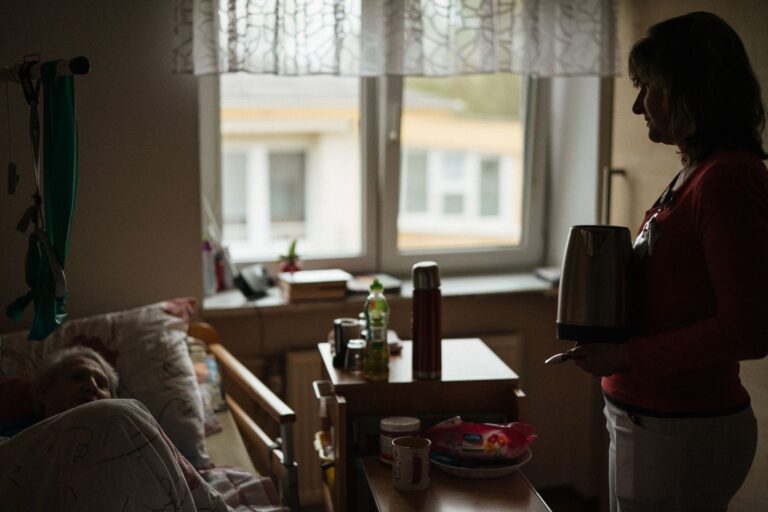
A dementia care plan for repeated questions should identify triggers, calm distress, give a simple answer, and then redirect attention. Build it step by step around the individual's abilities, routines, and response patterns. A care plan is a written set of instructions that helps caregivers respond consistently. Repetition is common in progressive dementias because the person may not remember the earlier exchange, according to the Alzheimer's Association.
Medical information disclaimer: This article is for general educational purposes only and does not provide medical advice, diagnosis, or treatment. Always consult a physician or other qualified health professional about symptoms, medications, tests, or treatment decisions.
Table of Contents
- Look for the reason behind the question
- Respond to emotion before information
- Make the answer easier to understand
- Add cues and a planned redirection
- Write and review the working plan
Look for the reason behind the question
Record what happens before, during, and after repeated questions. Note the time, people present, surroundings, wording of the question, and what helped. Look for a pattern rather than treating each question as an isolated event.
Environmental influences or unmet needs may trigger or worsen repetition. The question may also express a need for help, comfort, or reassurance. Use a brief tracking list:.
- What exactly did the person ask?
- When and where did it happen?
- Who was present?
- Did anything in the surroundings change?
- Did reassurance, an answer, a visual cue, or an activity help?
Respond to emotion before information
Ask what feeling the question may express. "When are we leaving?" could reflect uncertainty or anxiety, so another detailed explanation may be less helpful than reassurance. Acknowledge the feeling first, then answer. For example: "You're wondering what happens next.
You're safe here with me. We will leave after lunch." The Alzheimer's Society advises responding to the emotion as well as the literal question. Stay calm and patient each time. Do not argue, point out that the question was already answered, or test the person's memory. A gentle tone—and touch when it is welcome and reassuring—can reduce distress.
Make the answer easier to understand
Use short, concrete sentences with one idea at a time. Allow extra response time. If the person seems confused, rephrase the answer instead of repeating the same words more loudly.
When you need information, offer a yes-or-no question or a limited choice. For example, ask "Would you like music or a photograph?" instead of "What would you like to do now?" These approaches follow National Institute on Aging communication guidance. Prepare a standard response that every caregiver can use. Keep it brief enough to remember, but allow caregivers to adapt their tone and wording to the person's mood.
Add cues and a planned redirection
Place a written answer, clock, calendar, photograph, or note where the person will naturally see it. A note might say, "Maria will visit after lunch," while a labeled photograph can show who Maria is. Visual aids have limits. Use them only if the person can still read or recognize the cue, understand its meaning, and find it reassuring.
Remove an aid if it causes confusion or prompts more checking. After answering and reassuring, guide attention toward a pleasant, structured activity. Offer one simple next step, such as looking through photographs or listening to music. Redirection can be especially useful when boredom appears to contribute to repetition.
Write and review the working plan
Keep the plan short enough for family members and other caregivers to follow. A practical entry might read: Update the plan when a cue stops making sense or a different response works better. Contact a clinician if communication or behavior changes suddenly, because an abrupt change may reflect another medical problem or a medication side effect rather than expected dementia progression, according to the Alzheimer's Association.
- Repeated question: "When am I going home?"
- Usual pattern: Most common in a particular setting or at a particular time.
- Possible need or emotion: Confusion, uncertainty, or desire for reassurance.
- First response: Acknowledge the concern and give one calm sentence.
- Helpful cue: A meaningful note, photograph, clock, or calendar.