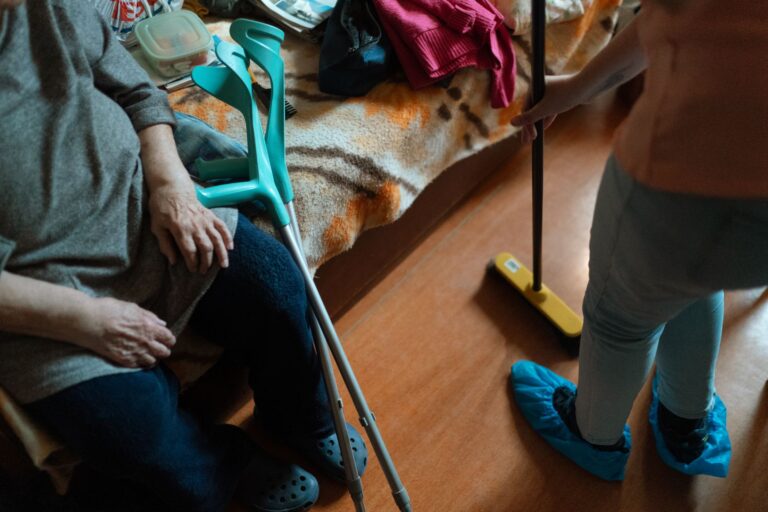
You should seek specialized care assistance when your loved one’s condition reaches a point where home care is no longer safe—typically when they require 24-hour supervision, are at risk of wandering, or can no longer manage activities like bathing, medication, or toileting independently. This transition often happens gradually, and families frequently underestimate how much help is actually needed until a crisis forces the decision. If a person with dementia has already experienced a fall, a medication error, a kitchen fire, or has been found confused outside the home, that is a clear sign that specialized care staff are needed. The most common trigger is when the primary caregiver—usually a spouse or adult child—becomes physically or emotionally exhausted.
A spouse managing a partner’s needs around the clock may experience depression, health decline, or emotional burnout that leaves them unable to provide safe care. Another typical signal is when behavioral symptoms (aggression, extreme restlessness, inability to sleep) become more intense than family members can safely manage, even with medication adjustments from a doctor. Seeking specialized care is not a failure. It is a practical response to medical complexity and safety requirements that exceed what one or two family members can reasonably handle at home.
Table of Contents
- What Are the Practical Limits of Family Caregiving?
- Recognizing When Behavioral Changes Exceed Home Management
- Understanding Different Levels of Specialized Care
- How to Assess Whether Specialized Care Is Appropriate Right Now
- Medical Emergencies and Red Flag Behaviors That Cannot Wait
- Involving Your Healthcare Team in the Care Transition
- The Financial and Practical Reality of Specialized Care
What Are the Practical Limits of Family Caregiving?
family caregivers provide enormous value and often handle remarkable challenges with love and ingenuity. However, dementia care involves specific physical and medical demands that unpaid caregivers cannot always meet safely. A person in the moderate to advanced stages of dementia may require assistance with incontinence management every few hours, physical transfers that demand proper body mechanics to prevent back injury, medication administration for multiple conditions, and monitoring for signs of infection, dehydration, or acute illness. One family member attempting to provide all of this alone, night and day, faces the real risk of making mistakes or collapsing under the strain.
The pressure compounds if the person with dementia also has other medical conditions—heart disease, diabetes, kidney problems—that require regular monitoring and medication management. For example, a daughter caring for her father with Alzheimer’s disease who also manages his diabetes and heart medications may miss early warning signs of a urinary tract infection (a common cause of delirium in older adults) because she is already stretched too thin managing his wandering behavior at night. A trained care assistant or memory care facility has protocols to catch these medical changes quickly. Adult children often carry guilt about considering specialized care while simultaneously working full-time, raising their own families, and managing their own health. This guilt is normal, but it can delay seeking help until a preventable crisis occurs.
Recognizing When Behavioral Changes Exceed Home Management
Dementia frequently brings behavioral and psychological symptoms that escalate over time: aggression, verbal outbursts, extreme agitation, resistance to care, or what families describe as “sundowning” (increased confusion and behavioral disturbance in late afternoon and evening). These symptoms do not always respond well to medication adjustments alone, and family members may find themselves unable to safely manage a person who becomes physically aggressive or who tries to leave the house repeatedly at night. A son caring for his mother with frontotemporal dementia may find that she becomes combative during bathing, making hygiene care dangerous for both of them.
Or a person may refuse to eat or drink, creating a medical crisis that requires careful monitoring and sometimes intervention by healthcare professionals. Specialized care environments are staffed to manage these situations with trained techniques, environmental modifications, and coordinated medication strategies that households cannot replicate. One important limitation: even specialized care facilities cannot prevent all behavioral symptoms, and some symptoms may actually improve once a person is in a structured environment with consistent routines and multiple staff members who are trained to redirect and de-escalate. However, family members should be realistic that medication and professional management may reduce but not eliminate these behaviors entirely.
Understanding Different Levels of Specialized Care
Specialized dementia care exists on a spectrum, and the right choice depends on the person’s current functional abilities and medical needs. Adult day centers provide supervised activities and care for several hours a day while allowing the person to remain at home; these work well for people who are still relatively independent but need social engagement and supervision. Assisted living facilities offer housing, meals, basic health monitoring, and help with daily activities but not skilled nursing. Memory care units within assisted living or nursing homes provide specialized programming for people with dementia specifically, with staff trained in dementia communication and behavior management.
For people with advanced dementia or significant medical needs, nursing homes (skilled nursing facilities) provide 24-hour nursing care, medication management, and medical oversight. A person who requires wound care, catheter management, or close cardiac monitoring will likely need a nursing home. By contrast, a person in early dementia who is still fairly independent physically but needs reminders and supervision might thrive in a less restrictive assisted living setting with memory care programming. The choice between these options depends on finances, availability in your area, and the person’s specific needs. A facility that is excellent for one person may not suit another, and families should visit multiple settings to understand the actual day-to-day experience.
How to Assess Whether Specialized Care Is Appropriate Right Now
Start by having an honest conversation with your loved one’s physician about their functional abilities and safety risks. A doctor can provide a reality check about whether home care remains safe and can document medical reasons for a care transition, which may help the person with dementia (and family members) accept the decision. Ask the physician specific questions: Can my parent safely manage medications alone? Is there a realistic risk they will wander and become lost? Can they recognize signs of illness in themselves? Next, assess the physical and emotional toll on yourself and other family caregivers. If you are sleeping poorly, feeling constant dread, experiencing health problems, or snapping at the person you love, these are warning signs that you need additional support—whether that’s in-home help, adult day services, or a full care transition.
Some families begin with part-time in-home care (a few hours a day, several days a week) to provide respite and allow the primary caregiver to recover. The tradeoff is that in-home care is usually more expensive and less reliable than facility-based care; agencies struggle with staff turnover, and continuity of care suffers. Many families find that a combination approach—perhaps in-home care for a time, followed by a transition to a facility when needs increase—makes the most practical sense. The key is making these decisions proactively, when you have time to research and plan, rather than during a crisis when options are limited.
Medical Emergencies and Red Flag Behaviors That Cannot Wait
Certain situations demand immediate professional intervention. If a person with dementia becomes acutely confused and disoriented beyond their baseline, refuses food and water, shows signs of infection (fever, painful urination, cough), or exhibits severe behavioral changes like extreme aggression or catatonia, this may signal a medical crisis requiring hospital evaluation. Families should not attempt to manage these situations at home alone.
Similarly, if a person is a serious danger to themselves or others—attempting to hurt household members, repeatedly trying to drive despite being unsafe, or exhibiting severe paranoia or command hallucinations—in-home care is not safe. One warning: families sometimes wait too long to acknowledge these risks because of guilt or denial. A person does not have to be violent to every family member every day for specialized care to be appropriate; repeated episodes of aggression, even if unpredictable, mean that the home environment is no longer safe for the person or the people caring for them. Hospitals and emergency rooms can often help facilitate a temporary placement in a specialized facility while medical crises are treated, which sometimes opens a pathway to more permanent specialized care if the home situation cannot be made safe again.
Involving Your Healthcare Team in the Care Transition
Your physician, geriatrician, or neurologist can help organize the assessment process and provide documentation that supports your decision. Many doctors routinely screen for caregiver stress and can refer you to social workers, care managers, or counselors who help families think through their options. A professional care assessment (sometimes called a home safety evaluation) can identify specific hazards and recommend modifications or care solutions.
Geriatric care managers are professionals who specialize in helping families navigate these decisions; they assess the person’s needs, tour facilities, and help coordinate the transition. While care managers charge a fee (often $150–300 per hour), they can save families significant time and often help identify options the family would not have found alone. For people with dementia and mild stroke or other neurological conditions, a neuropsychological assessment can clarify what cognitive and functional abilities remain, which helps match the person to the right care level.
The Financial and Practical Reality of Specialized Care
Specialized dementia care ranges from moderately expensive to very expensive depending on the setting and location. Adult day programs may cost $40–100 per day. In-home care, if hired privately, often runs $20–30 per hour but more if through an agency (which includes taxes, insurance, and oversight). Assisted living facilities typically range from $3,000–8,000 per month, while memory care units may run $4,000–12,000 per month depending on the region and level of care.
Nursing homes with skilled nursing care often exceed $10,000 per month. Medicare and health insurance generally do not cover custodial (non-medical) assisted living or memory care; most people pay out of pocket, use long-term care insurance if they have it, or apply for Medicaid once assets are depleted to certain thresholds. Veterans and their spouses may qualify for additional benefits. Some families move their loved one to a geographic area with lower care costs, or they split time between a family home and part-time facility care to reduce expenses while maintaining contact. It is important to start thinking about financing early—either through financial planning, insurance, or realistic assessment of family resources—rather than waiting until a crisis forces an expensive temporary placement.