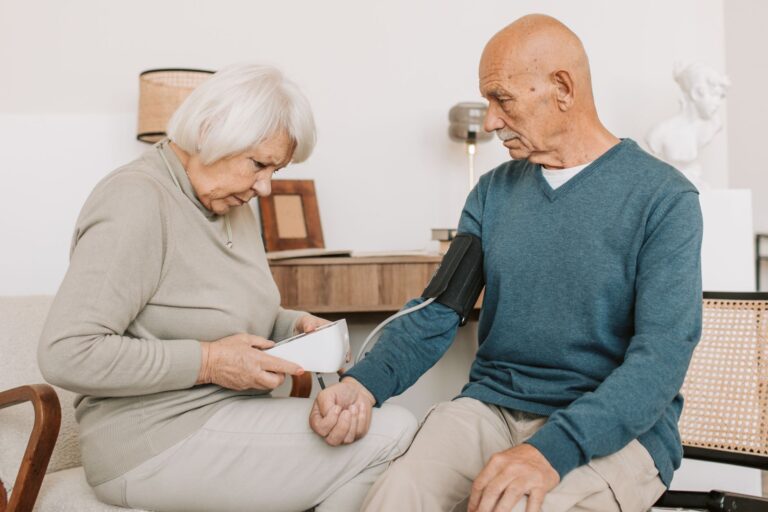
Yes, remote monitoring has genuine potential to expand Alzheimer’s research—but not in the way many assume. Rather than replacing clinical trials, remote monitoring creates new research pathways by reaching people who can’t easily visit clinics, collecting data over months instead of brief appointments, and capturing how cognitive decline actually unfolds at home. The NIH’s All of Us Research Program, which has enrolled over 700,000 participants using home-based devices and digital questionnaires, demonstrates this potential. Participants wearing commercial smartwatches and fitness trackers provide sleep data, activity levels, and heart rate patterns that researchers can correlate with cognitive assessments—information that would require expensive, repeated lab visits to gather otherwise. The real expansion happens at scale and speed. Traditional Alzheimer’s research typically enrolls 50 to 200 people per study over 2 to 5 years. A remote monitoring program using smartphones and wearables can enroll thousands and generate weekly data points per person.
Remote platforms can also reach populations historically excluded from Alzheimer’s trials: people living in rural areas, those with limited mobility, individuals who work full-time or live in assisted care facilities, and people from racial and ethnic backgrounds underrepresented in research. This diversity matters—Alzheimer’s progression, medication response, and biomarker patterns may differ across populations, but we don’t know because most long-term studies have been skewed toward white, educated, affluent participants. The tradeoff is real, though. Remote data is messier, less controlled, and harder to standardize than lab data. A clinic visit uses the same cognitive test, administered by a trained rater, in the same quiet room. A home assessment using a voice app on someone’s phone varies with background noise, internet quality, the person’s energy level that morning, and whether they’re interrupted by a caregiver or pet. Researchers building remote studies must accept lower precision in exchange for higher volume and generalizability—a worthwhile trade for certain questions, but not all.
Table of Contents
- How Does Remote Monitoring Address Recruitment Barriers in Alzheimer’s Studies?
- What Types of Data Can Remote Devices Collect for Dementia Research?
- How Does Remote Monitoring Capture Real-World Disease Progression Differently Than Clinical Visits?
- What Technical and Logistical Challenges Do Researchers Face When Setting Up Remote Monitoring?
- What Are the Privacy and Informed Consent Challenges of Continuous Monitoring in Dementia?
- How Are Emerging Technologies Expanding Remote Dementia Research?
- What Early Findings Are Emerging From Current Remote Monitoring Studies in Cognitive Decline?
- Frequently Asked Questions
How Does Remote Monitoring Address Recruitment Barriers in Alzheimer’s Studies?
Recruitment remains one of the largest obstacles in dementia research. People with early cognitive decline often don’t realize they need screening. Those with diagnosed mild cognitive impairment or early Alzheimer’s may avoid research because traveling to a clinic feels burdensome—even a 30-minute drive can be stressful when someone struggles with navigation or anxiety about unfamiliar environments. Caregivers, who often manage participation logistics, burn out from coordinating appointments on top of caregiving demands. Remote monitoring removes this friction by delivering the study to the participant rather than requiring the participant to come to the study. A concrete example: the PEARLS study (Personalized Responses to an Adaptive, Targeted, Integrated mHealth Lifestyle Intervention) used smartphone apps and occasional video sessions to enroll over 400 older adults in depression and cognitive decline prevention. Many participants would never have enrolled in a traditional weekly-visit study.
rural participants in Montana, Nebraska, and Wyoming—regions with severe specialist shortages—could participate from home. Participants who had joint pain or hearing loss didn’t face the added stress of a medical facility visit. Studies using remote recruitment have consistently expanded diversity: one analysis found that digital-first recruitment yielded 43% Black/African American participants compared to 16% in site-based recruitment for the same disease area. The limitation is that remote monitoring also selects for people with internet access, smartphones, and digital comfort. A study enrolling via a mobile app will miss people over 75 without smartphones, people with visual impairment who can’t navigate apps easily, and people from lower-income backgrounds with less reliable internet. This creates a different but still real bias—trading clinic-visit bias (healthy enough to travel) for digital-access bias (tech-savvy enough to use an app). Researchers aware of this bias can mitigate it by offering a mix of modalities: app, web portal, phone interviews, and SMS options. But pure remote studies typically enroll more women, more educated participants, and more people with higher incomes than the general Alzheimer’s population.
What Types of Data Can Remote Devices Collect for Dementia Research?
Wearable sensors and smartphones create a continuous window into daily life that no clinic visit can match. Smartwatches and fitness trackers capture sleep architecture (how much deep sleep, REM sleep, and light sleep), heart rate variability, and physical activity patterns. Sleep disturbance is common in early Alzheimer’s and is thought to accelerate cognitive decline through effects on glymphatic clearance—the brain’s nightly cleanup of amyloid-beta plaques. A wearable tracking 8 weeks of sleep data can reveal trends (progressive fragmentation, earlier wake times, reduced deep sleep) that a single polysomnography test in a lab cannot. Smartphones enable more sophisticated passive data collection. Movement speed and gait variability can be estimated from phone accelerometers; slower gait and irregular patterns correlate with cognitive decline. Voice analysis through phone-based cognitive tests or voice journaling can measure speech rate, pause length, vocabulary diversity, and voice tremor—all subtle markers of neurodegeneration that change months before someone scores lower on a memory test. Location data from GPS can indicate whether someone is leaving home less frequently or taking less-varied routes, behavioral proxies for cognitive or motivational decline.
One study from University of California San Francisco used phone movement data and keyboard typing patterns (speed, error rate, how often backspace is used) to detect subtle declines in people with normal cognition, predicting who would develop mild cognitive impairment within 2 years. The warning: passive data collection raises serious privacy and consent complexity. Continuous location tracking, voice recording, and activity monitoring generate a surveillance-like dataset. Participants may consent to “monitoring my activity” without fully understanding that they’re being tracked 24/7 or that their conversation patterns are being analyzed. Data security risks increase with continuous collection—a smartphone or wearable device is easier to hack than a single clinic database visit. One early-stage remote health app suffered a breach exposing daily mood data and medication adherence logs for 80,000 users because researchers stored data in an unsecured cloud bucket. For Alzheimer’s populations specifically, there’s an additional ethical layer: as cognition declines, participants may lose capacity to consent, and re-consent procedures for ongoing remote monitoring are not standardized. Regulatory bodies are still developing guidelines for long-term remote data collection, leaving many studies in a gray zone between strict privacy protection and research utility.
How Does Remote Monitoring Capture Real-World Disease Progression Differently Than Clinical Visits?
Clinical trial data is like a series of snapshots: cognition, blood work, and imaging taken on specific days when someone is scheduled to visit. Real-world progression is a continuous film with weather, stress, sleep disruption, infections, medication adherence, social isolation, and a hundred other variables constantly affecting performance. Someone might score lower on a cognitive test on a day they slept poorly, are fighting a urinary tract infection (common in older adults, known to cause acute confusion), or are anxious about a medical visit. Over weeks and months at home, these day-to-day fluctuations average out, revealing the true underlying trajectory. Consider a hypothetical person with mild cognitive impairment. In a clinic, they visit every 3 months. The neuropsychologist administers the Montreal Cognitive Assessment, they score 22 (normal range is 26–30), they’re told they’re stable, and they go home. Meantime, their smartwatch shows their sleep has gradually fragmented over 8 weeks—from 7 hours of consolidated sleep to 5 hours interrupted by 12+ awakenings. Their phone’s voice app, which they run weekly, shows their speech has become slower and they’re using fewer unique words in a standard story-retelling task. Their activity data shows fewer daily steps and more sedentary time, starting 6 weeks ago.
In the clinic, none of these subtle, pre-symptomatic shifts are visible. Remote data catches them. A study published in Nature Biomedical Engineering compared remote speech analysis to standard cognitive testing in 121 people with cognitive decline: remote voice metrics predicted future cognitive decline more accurately than standard tests, with a 3- to 6-month lead time. The tradeoff is that remote data is noisier. A person’s cognitive test score can vary based on how they slept, what they had for breakfast, whether they’re on their period (hormonal fluctuation affects cognition), or even the ambient temperature in their home. In a standardized clinic, these variables are controlled. At home, they’re not. This means remote studies require larger sample sizes to detect real effects and more sophisticated statistical methods to separate signal from noise. A clinic-based study enrolling 100 people might be powered to detect a true effect with 80% confidence. A remote study needs 150–200 people to detect the same effect because the natural variability is higher. This is not a flaw—larger, more representative samples are generally better science—but it’s a real cost in recruitment and data management.
What Technical and Logistical Challenges Do Researchers Face When Setting Up Remote Monitoring?
Building a remote research infrastructure requires solving problems that don’t exist in traditional studies. Participants need reliable internet, a compatible device (smartphone or wearable), and the ability to install and troubleshoot apps. For someone with advancing dementia, app crashes or confusing updates create dropout risk. A caregiver might consent to the study but not understand how to help the participant sync a wearable or charge a device. Data quality depends on consistent engagement: if someone wears their smartwatch only 2 days a week, sleep data is unreliable. Researchers must design interventions to maintain engagement—reminders, rewards, simplicity—but these add cost and complexity. Data standardization is another barrier. Different smartwatch brands use different sensors and algorithms to calculate sleep stages, heart rate variability, and movement.
A study enrolling people with their own devices (cheaper and more scalable) might mix Samsung watches, Apple Watches, and Fitbits, each with different data formats and accuracy characteristics. Pooling data across device types requires algorithmic harmonization—essentially translating between proprietary manufacturer formats—or restricting to a single brand, which reduces recruitment. Healthcare systems using electronic health records (EHRs) rarely have clean, queryable cognitive data, so remote studies can’t easily integrate clinic diagnoses with home monitoring data. One multicenter study aimed to integrate remote wearable data with EHR records from 12 health systems and spent 9 months just harmonizing blood pressure measurements across different EHR systems before beginning analysis. The practical tradeoff: more data sources and more detail increase statistical power but multiply technical complexity and cost. A minimalist study using only smartphone cognitive tests and a single branded smartwatch is easier to execute and cheaper (roughly $200 per participant for the device and 12 months of monitoring) but captures a narrower range of data. A rich study adding voice analysis, GPS location, EHR integration, and multiple wearable modalities provides richer phenotyping but may cost $500–800 per participant and require specialized data engineering. For a 300-person study, that difference is $90,000–180,000, often the difference between fundability and rejection. Researchers must decide whether breadth or depth serves their hypothesis better.
What Are the Privacy and Informed Consent Challenges of Continuous Monitoring in Dementia?
Continuous monitoring of a person with cognitive decline raises unique ethical concerns. Imagine your daily movement, sleep, conversations, and location are recorded automatically—not because you’ve committed a crime or chosen intensive medical monitoring, but because you enrolled in a research study that sounded routine. As your cognition declines, you might forget you’re in a study, might feel disturbed by the constant monitoring, or might lose the ability to withdraw. Researchers can re-consent participants, but re-consent procedures for someone with progressing cognitive impairment are legally and ethically fraught. If someone’s capacity to consent is borderline, does the caregiver make the decision? What if the caregiver and participant disagree about continuing? Regulatory frameworks are playing catch-up. FDA guidance on clinical decision support updated in 2024 still doesn’t clearly address passive, long-term remote monitoring of people with cognitive impairment. HIPAA (Health Insurance Portability and Accountability Act) applies to research, but HIPAA violations carry fines averaging $100,000 to $1.5 million per breach—and many academic institutions have modest cybersecurity. In 2023, researchers at a major university discovered their remote monitoring database was accessible without a password because a system administrator had shared login credentials in an unencrypted email.
No data was accessed, but it exemplified how quickly well-intentioned systems become vulnerable. For Alzheimer’s populations specifically, reputational damage from a breach is severe: potential participants and their families become hesitant to enroll in any remote study, slowing the entire field. A lesser-known risk is data misuse or secondary use. Participants enroll in a study about sleep and cognition. Years later, data gets accessed by an insurance company interested in predicting healthcare costs, or by a pharmaceutical company building a disease progression model, or by a law enforcement agency (under subpoena). Participants consented to research—not to commercial use or law enforcement access—but consent language is often vague (“your data may be used for research” or “data may be shared with research partners”). For a person with dementia, they never consented explicitly; a family member did. Some studies now use tiered consent, where participants consent to specific uses and data destinations, but this requires clearer up-front disclosure and limits research flexibility.
How Are Emerging Technologies Expanding Remote Dementia Research?
Artificial intelligence is making remote data more informative. Speech analysis using machine learning can detect subtle language changes—reduced grammatical complexity, shorter sentence length, more repetition, longer pauses—that correlate with cognitive decline. A person might not notice their own speech changing, their spouse might, but a doctor wouldn’t catch it in a brief clinic chat. An AI speech model listening to a 5-minute phone call once weekly can track these changes with precision. One early-stage study used AI to analyze voice samples from 200 people and correctly identified 86% of those who had progressed from normal cognition to mild cognitive impairment, compared to 62% sensitivity for standard cognitive testing.
Gait analysis from wearable sensors and phone accelerometers offers another window into neurodegeneration. The cerebellum and basal ganglia—brain regions affected early in some forms of dementia—regulate movement timing and coordination. Walking speed slows, step variability increases (steps become less consistent), and balance control deteriorates months or years before cognitive symptoms dominate. A person might feel fine cognitively but their gait signature on a wearable sensor shows deterioration. Studies have found that gait slowing predicts cognitive decline in cognitively normal older adults, and gait variability is associated with amyloid-beta burden (measured via PET imaging). This is compelling because gait is objective, continuous, requires no active participation, and happens naturally in daily life—someone doesn’t need to “perform” for a smartphone app or remember to take a test.
What Early Findings Are Emerging From Current Remote Monitoring Studies in Cognitive Decline?
Recent longitudinal studies using remote monitoring are revealing patterns invisible in traditional trial data. The PROTECT study at King’s College London, which remotely monitored over 10,000 older adults with smartphones, found that reaction time on a simple cognitive app predicted future cognitive decline better than self-reported memory concerns—and reaction time declined months before people noticed any memory problems. Another finding: cognitive scores fluctuated week-to-week based on sleep quality the previous night, with poor sleep (fewer than 6 hours, multiple awakenings) associated with a 5–10 point drop on a cognitive assessment the next day. For a typical person, this recovers after one good night. For someone with early dementia, recovery is slower or incomplete, suggesting sleep disturbance might be not just a symptom but a driver of progression. Physical activity data has revealed unexpected heterogeneity in aging.
Some 80-year-olds with normal cognition are sedentary and decline cognitively fast; others are highly active and decline slowly. Step count alone doesn’t predict cognition—but step consistency (regular daily patterns) does. A person whose daily step count swings from 2,000 one day to 10,000 the next has more cognitive decline than someone with steady 5,000 steps daily, even though both average the same. This pattern wasn’t obvious from traditional studies because researchers didn’t collect daily activity data. Remote monitoring has also shown that social activity (inferred from location data and phone communication logs) is a stronger predictor of cognitive trajectory than loneliness surveys, because people are notoriously inaccurate at reporting their own isolation. Someone who leaves their home once weekly to attend a religious service has better cognitive outcomes than someone who doesn’t, even after controlling for depression—a finding that shifts focus from general “social engagement” interventions to specific, structured activities.
Frequently Asked Questions
Do I need to buy an expensive smartwatch for a remote study?
Most remote Alzheimer’s research studies provide a device or support purchasing one. Some use commercial devices like Fitbits or Apple Watches that you may already own. Check with the specific study.
Can someone with dementia withdraw from remote monitoring if they change their mind?
Yes, participants can withdraw anytime. A caregiver can also withdraw someone in their care. Because dementia affects decision-making, researchers should explain withdrawal clearly and often repeat it.
Is my location data shared with third parties?
Policies vary by study. Ask the research team explicitly whether location data is shared, stored long-term, or shared with companies. Get the answer in writing.
What happens if the app crashes or I forget to use it?
Most studies expect some gaps in data—it’s normal. Researchers build this variation into their analysis. If you’re struggling with an app, tell your study coordinator; they can troubleshoot or simplify it.
Are there real risks to home monitoring if I have cognitive decline?
The main risk is privacy—your data is continuous and sensitive. Secondary risks include feeling surveilled or overwhelmed. Balanced against the upside: you help advance research without clinic visits, and researchers can detect subtle changes earlier.