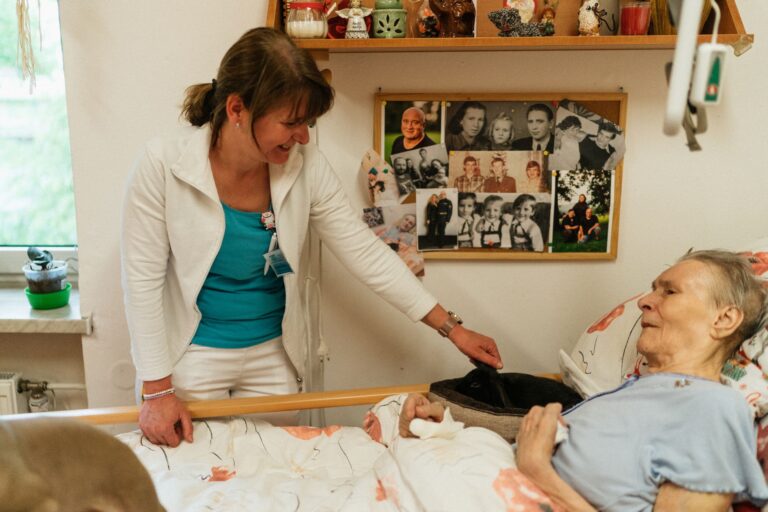
Researchers protect vulnerable dementia participants through a multi-layered system that begins with tailored informed consent and extends through institutional oversight, continuous monitoring, and legal safeguards. Unlike standard research involving cognitively intact adults, dementia research requires assessments of the participant’s decision-making capacity, involvement of surrogate decision-makers when appropriate, and explicit protocols designed to detect distress or harm. For example, a clinical trial at Johns Hopkins recruiting participants with moderate Alzheimer’s disease uses a simplified consent form written at a fifth-grade reading level, combined with capacity assessments before enrollment and quarterly check-ins that allow participants to withdraw without penalty.
The protection framework recognizes that people with dementia can participate in research ethically and often want to contribute to scientific understanding—but only when safeguards match their actual cognitive abilities. Researchers are required to balance the participant’s autonomy with their vulnerability, ensuring that consent is both meaningful and revisited as the disease progresses. Federal regulations, institutional policies, and professional guidelines all converge on this principle: protection does not mean exclusion, but rather deliberate, documented care at every stage.
Table of Contents
- What Does Informed Consent Look Like for Participants With Dementia?
- Assessing Decision-Making Capacity in Research Settings
- The Role of Institutional Review Boards and Ethics Committees
- How Research Teams Document and Monitor Ongoing Protection
- Common Risks and How Protocols Address Them
- Legal Frameworks Governing Dementia Research
- Advanced Consent Models: When Traditional Consent Isn’t Possible
- Frequently Asked Questions
What Does Informed Consent Look Like for Participants With Dementia?
Informed consent for people with dementia differs fundamentally from standard consent in both process and materials. Researchers must establish what information the participant can realistically understand and retain, then adjust presentation accordingly. Visual aids, shorter sentences, and step-by-step explanations replace dense regulatory language. Many studies provide written consent documents at multiple reading levels and conduct in-person discussions that allow participants to ask questions repeatedly without frustration. A participant might review the same risks and procedures across multiple visits, with researchers documenting that information was understood each time, not just once. The concept of “assent” becomes central in dementia research.
Assent means the participant expresses agreement with research participation to the degree their capacity allows, even if they cannot provide fully informed consent as a cognitively intact person would. A person in early-stage dementia might give informed consent independently; someone in late-stage dementia might give assent while a legally authorized representative (usually a spouse, adult child, or court-appointed guardian) provides consent on their behalf. The two must align—researchers cannot enroll someone if the participant objects, regardless of what a surrogate consents to. Documentation of this consent process is rigorous. The research record includes the capacity assessment results, the consent conversation notes, the participant’s questions and responses, and confirmation that the person agreed to participate without pressure. If a participant cannot read the consent form independently, the researcher must document which staff member presented the information and how the participant demonstrated understanding. This creates an audit trail proving that consent was not rushed or assumed.
Assessing Decision-Making Capacity in Research Settings
Before enrollment, researchers administer standardized capacity assessments to determine whether the participant can understand the research purpose, remember the risks, appreciate how the research applies to their own situation, and express a choice. Common instruments include the MacArthur Competence Assessment Tool for clinical Research (MacCAT-CR), which asks structured questions about the study protocol and evaluates understanding, appreciation, reasoning, and expression of choice. The limitation of these tools is that they measure capacity at a single moment; a person might score adequately on a Tuesday but decline by Friday, yet researchers cannot re-assess every few days in most studies. Some research protocols use multi-staged capacity assessments that occur at baseline, mid-study, and end-of-study intervals, recognizing that dementia is progressive. If a participant’s capacity declines during the study, many protocols require discussion with the surrogate decision-maker about whether continued participation remains in the participant’s best interest.
A warning here: capacity is task-specific and context-dependent. A person who cannot recall all the side effects of a medication might still understand that they prefer to stay in a study because they value contributing to science, or they might understand enough to exit a study that becomes burdensome. Capacity is not binary, and researchers trained in dementia research adjust their expectations accordingly. The assessment also identifies participants who lack capacity at baseline but retain enough understanding to assent. Researchers distinguish between people who are “incapable” of any meaningful engagement with the decision and those who can engage partially. This distinction shapes the entire consent process: the incapable participant will have consent provided entirely by a surrogate, while the partially capable participant will participate in assent alongside surrogate consent.
The Role of Institutional Review Boards and Ethics Committees
Before any study enrolling people with dementia begins, an Institutional Review Board (IRB)—or equivalent ethics committee in other countries—must review the research protocol for ethical soundness. This review examines the capacity assessment plan, the consent process, the procedures for involving surrogates, the monitoring plan for participant safety, and the risk-benefit profile specific to a vulnerable population. IRBs have the authority to require changes to protocols before approval; they can demand simpler consent forms, additional safeguards, or even recommend that certain studies not enroll people with dementia if risks are unjustifiably high. A concrete example: a pharmaceutical company proposing a drug trial in early-stage Alzheimer’s disease must detail to the IRB how participants will be monitored for cognitive decline, what happens if a participant’s capacity declines mid-trial, whether there are stopping rules for futility or harm, and how surrogate decision-makers will be informed.
If the IRB concludes that the company’s proposed informed consent document is too technical or that the monitoring plan is insufficient, the company cannot proceed until changes are made. This pre-approval oversight prevents studies from launching with inadequate protections. However, IRB review happens before enrollment, not during. This is a structural limitation. Once a study begins, ongoing monitoring and participant safety fall to the research team and, in many studies, to an independent data safety monitoring board (DSMB) that reviews adverse events and study progress at regular intervals.
How Research Teams Document and Monitor Ongoing Protection
Throughout a study, researchers track participant safety and well-being through visits, phone calls, and check-ins that extend beyond the study procedures themselves. A typical dementia research protocol includes a baseline visit where the participant and surrogate meet the research coordinator, establish trust, and provide initial consent/assent. Subsequent visits focus on both study procedures (e.g., cognitive testing, blood draws) and participant welfare checks: Is the participant still willing? Do they have new concerns? Are there signs of distress, infection, or other problems unrelated to the study but relevant to their participation? Researchers document consent repeatedly in long-term studies. If a trial lasts two years and the participant has declining capacity, the research team might conduct brief capacity re-assessments annually or when there are signs of significant cognitive change.
The rationale is that continuing enrollment without periodic re-assessment assumes the participant’s capacity is stable, which is false for progressive dementia. A comparison: standard research with cognitively intact adults might document consent once at baseline and assume it continues; dementia research treats consent as dynamic and revisits it regularly. The research team maintains detailed records of all interactions with the participant and surrogate, including any expressions of doubt, requests to stop, new medical events, or behavioral changes. If a participant develops depression, delirium, or hospitalization, the research coordinator documents this and discusses with the supervising researcher whether participation should continue. Some participants develop anxiety about study visits or forget why they are participating between appointments; researchers use these signals to reassess whether continued participation aligns with the participant’s interests.
Common Risks and How Protocols Address Them
A major risk in dementia research is that participants may not retain memory of previous consent discussions or may forget the study procedures entirely, creating confusion or distress at each visit. Protocols address this through written reminders, simplified materials left with the participant, and research coordinators who reintroduce themselves and the study purpose at each visit. However, this cannot eliminate the discomfort a participant might feel encountering an unfamiliar room and unfamiliar people, even if those people have visited before. Some participants become distressed by repeated blood draws or cognitive testing, even though they consented initially. The protocol’s safeguard is the research team’s authority to pause or stop procedures if the participant is clearly distressed, regardless of what consent documents say. Another risk is that surrogates may make decisions based on their own interests rather than the participant’s.
A guardian managing a person’s finances might view a research study as burdensome and push for withdrawal, or conversely, might hope the study treatment benefits the participant without weighing risks fairly. Protocols mitigate this by defining surrogates as “legally authorized representatives” (usually appointed through guardianship or power of attorney) and requiring that surrogates be trained on their fiduciary duty—they must decide based on the participant’s known values and best interests, not their own convenience. A warning: this duty is outlined in protocols but not always well enforced. If a surrogate is unavailable, distracted, or unsophisticated in healthcare decision-making, the researcher’s responsibility to protect the participant remains, and researchers are trained to escalate concerns to their IRB or legal team if they doubt a surrogate’s judgment. A third risk is exploitation: researchers might seek participants with dementia because they are easier to recruit (they may not remember prior bad experiences with research, or they may not fully grasp the demands) or because they are less likely to sue if something goes wrong (a person with advanced dementia cannot testify about harm). Federal regulations and professional ethics explicitly forbid viewing vulnerable populations as convenient subjects. Researchers are expected to recruit from vulnerable populations only when the research addresses questions relevant to that population—you do not study dementia drugs in cognitively intact people and then move to people with dementia; you study dementia drugs in people with dementia, but you do so with enhanced protections proportional to the vulnerability.
Legal Frameworks Governing Dementia Research
In the United States, research involving human subjects is governed by the Common Rule (45 CFR 46) and the FDA’s regulations (21 CFR 56 for IRBs and 21 CFR 312 for investigational drugs). These regulations do not single out dementia as a special category, but they do require that risks be minimized and that vulnerable populations receive additional protections. Additionally, individual states have laws governing guardianship and surrogate decision-making that intersect with research participation.
For example, some states allow a surrogate to consent to research even on behalf of an incapacitated adult, while others restrict surrogates to decisions that directly benefit the participant’s medical care—creating uncertainty about whether a surrogate can enroll someone in research aimed at advancing knowledge rather than providing immediate medical benefit. The Belmont Report, issued in 1979 after the Tuskegee scandal, established three core principles guiding research ethics: respect for persons (autonomy), beneficence (maximize benefits, minimize harms), and justice (fair distribution of research burdens and benefits). Dementia research translates these into practice: respect means ensuring assent and consent even when capacity is limited; beneficence means weighing whether the study’s goals justify the participant’s time and discomfort; and justice means ensuring dementia research is not concentrated only in nursing homes or low-income communities where residents are less able to refuse.
Advanced Consent Models: When Traditional Consent Isn’t Possible
For people with advanced dementia who lack capacity to assent or consent, researchers use models like “advance directives for research.” Before a person’s dementia progresses to the point where they lose decision-making capacity, they can document their values and preferences regarding research participation—for example, “I would want to participate in studies that might help others with dementia, even if there are small risks to me” or “I would not want blood draws if I’m not able to consent.” When that person later reaches advanced stages and a surrogate must decide whether to enroll them in a study, the surrogate refers to this advance directive and seeks to honor the person’s prior wishes. Another model is the “proxy consent” or “surrogate consent” approach, where a designated decision-maker (family member, court-appointed guardian) reviews the study protocol and decides whether the incapacitated person would want to participate, based on knowledge of that person’s values, prior wishes, or best interests.
The key is that the surrogate’s decision is not arbitrary; it is supposed to reflect what the participant would have chosen if they had capacity, or at minimum, what serves the participant’s interests. In practice, researchers meet with both the participant and surrogate together when possible, creating a shared understanding of the study and jointly deciding on participation—even if legally the surrogate makes the final decision, the participant’s assent or comfort matters for ethical participation.
- —
Frequently Asked Questions
Can someone with dementia refuse to participate in a research study?
Yes. Even if a court-appointed guardian or family surrogate consents to a study, the person with dementia can refuse or withdraw at any time. Their refusal or withdrawal is binding, regardless of what the surrogate agreed to. Researchers are trained to recognize subtle signs of distress or reluctance and honor them.
What is the difference between “assent” and “consent” in dementia research?
Consent is a legally binding agreement made by someone with decision-making capacity. Assent is agreement to participate expressed by someone with limited capacity. In dementia research, a person might assent (express willingness) while a surrogate provides legal consent on their behalf.
How often can a participant be re-evaluated for capacity during a study?
There is no fixed rule. Protocols vary—some require annual re-assessment, others re-assess when there are signs of significant cognitive decline. If a study lasts only a few months and the participant has stable dementia, re-assessment might happen once. If the study is long-term or the person’s dementia is progressing rapidly, re-assessment may occur multiple times.
What happens if a surrogate disagrees with the researcher about whether a participant should continue in a study?
The surrogate has authority over the participant’s participation decision. If a surrogate wants to withdraw the participant, the researcher must respect that choice. If a researcher has concerns that the surrogate is acting against the participant’s interests, the researcher can escalate to the IRB or seek legal guidance, but ultimately the surrogate’s decision controls unless a court intervenes.
Are there types of research that people with dementia should not participate in?
Yes. Research involving more than minimal risk (risk beyond everyday activities) requires either direct medical benefit to the participant or a compelling justification for advancing knowledge that will benefit people with dementia. Research with no connection to dementia and high risk would not be appropriate for dementia participants.
Can someone with dementia participate in research if they have no family or surrogate?
Potentially, but with heightened safeguards. Some states allow independent ombudspersons or research advocates to serve as surrogate decision-makers for people without family. The IRB reviews such arrangements to ensure an independent person is monitoring the participant’s welfare throughout the study.