Reviewed by the Help Dementia Editorial Team — our editors review every article for accuracy against guidance from the National Institute on Aging, the Alzheimer’s Association, and peer-reviewed sources.
Combining doing sits at the center of this dementia and brain health question.
The evidence is increasingly clear: combining cognitive challenges like puzzles with high-intensity exercise offers powerful protection against dementia. Recent research shows that people who engage in both puzzle-solving and vigorous physical activity significantly reduce their dementia risk compared to those who do either activity alone. The protection is substantial—seniors who maintain regular puzzle habits alongside intense workouts show 30% improvements in memory performance while simultaneously lowering their overall dementia risk by up to 45%. Consider the case of Janet, a 68-year-old who started doing crossword puzzles three times weekly and added twice-weekly HIIT sessions to her routine.
Within six months, her mental processing speed improved noticeably, and her cognitive test scores reflected sharper executive function. Janet’s experience mirrors what researchers are discovering: the brain responds powerfully when you stress it physically and mentally at the same time. This combination works because the brain has a remarkable ability to adapt and strengthen itself when challenged across multiple domains. Physical exercise increases blood flow and neuroplasticity, while mental puzzles build cognitive reserve. Together, they create a synergistic effect that isolated activities cannot match.
Table of Contents
- How Do Puzzles and High-Intensity Exercise Work Together to Guard Against Dementia?
- The Science of Exercise and Memory: Why High-Intensity Workouts Outperform Moderate Activity
- Puzzle Solving as Cognitive Training: Building Mental Reserves Against Dementia
- Creating Your Optimal Brain Health Routine: Balancing Intensity and Consistency
- Common Mistakes and Limitations in Dementia Prevention Strategies
- Real-World Examples: How People Are Combining These Approaches
- The Future of Dementia Prevention: Emerging Research on Cognitive-Physical Combinations
- Conclusion
How Do Puzzles and High-Intensity Exercise Work Together to Guard Against Dementia?
The magic happens at the neurological level. When you do a challenging puzzle, your brain activates networks responsible for attention, working memory, and problem-solving. High-intensity interval training, meanwhile, floods the brain with oxygen, triggers the release of brain-derived neurotrophic factor (BDNF), and stimulates the growth of new neural connections. combining these activities creates a dual challenge that forces your brain to adapt and strengthen simultaneously. Research on cognitive speed training demonstrates this principle clearly.
People who completed rapid object detection tasks in the 1990s showed 25% lower dementia diagnosis rates over a 20-year follow-up period. But here’s what makes the combination even more powerful: studies show that elderly persons doing crossword puzzles four days per week had 47% lower dementia risk compared to those doing puzzles only one day per week. Add exercise to that equation, and the protective effect grows stronger still. The frequency and intensity matter more than you might think. High-intensity exercise during midlife showed the lowest dementia risk compared to lower-intensity activity, suggesting that the brain responds most dramatically to vigorous challenges. The same principle applies to puzzles—sporadic engagement offers some protection, but consistent, challenging puzzle work builds stronger cognitive reserves.

The Science of Exercise and Memory: Why High-Intensity Workouts Outperform Moderate Activity
Here’s a striking finding that often surprises people: seniors doing high-intensity interval training showed improvements of up to 30% in memory performance, while moderate exercisers showed no improvement on average. This isn’t a small difference. It suggests that when it comes to brain protection, moderation may actually leave you vulnerable. The research from Boston University’s School of Public Health is sobering. Exercising during midlife ages 45-64 may lower dementia risk by 41%, but exercising during late life ages 65-88 could lower that risk by 45%. This tells us something crucial: the protective effects accumulate over time, and it’s never too late to start. However, there’s an important limitation to understand.
While these numbers are encouraging, they come from observational studies, not randomized controlled trials. We can see the correlation clearly, but the exact mechanisms require more research. The intensity component deserves special attention. HIIT works on the brain differently than steady-state exercise. The periods of maximum exertion stimulate greater increases in BDNF and improve mitochondrial function in brain cells. Moderate exercise like walking or light cycling, while certainly beneficial for overall health, doesn’t trigger these same intensive adaptations. This means if dementia prevention is specifically your goal, you need to be willing to breathe hard.
Puzzle Solving as Cognitive Training: Building Mental Reserves Against Dementia
Your brain, like a muscle, grows stronger when challenged consistently. Puzzle-solving creates what neuroscientists call “cognitive reserve”—essentially, extra mental capacity that delays the onset of dementia symptoms even after brain damage has begun. The evidence for this is substantial and specific. The 47% reduction in dementia risk for people doing crossword puzzles four days per week versus one day per week reveals something important about frequency and consistency. You’re not building reserve with occasional puzzles; you need regular engagement.
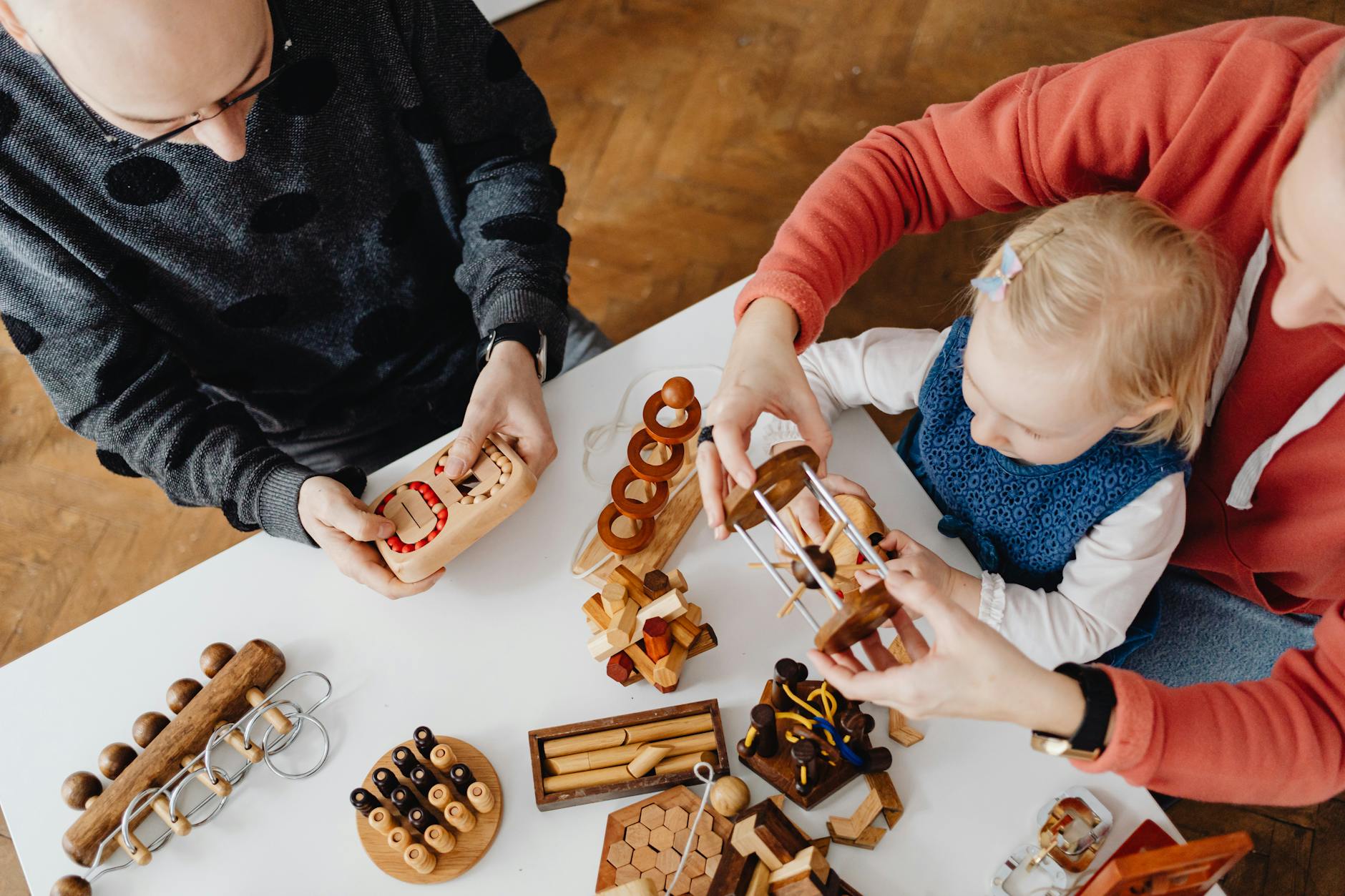
The type of puzzle matters less than the challenge level. Crosswords, Sudoku, jigsaw puzzles, and even video games that require rapid decision-making all activate the brain’s executive function networks. However, here’s a limitation worth considering: puzzle difficulty must increase over time. If you’re doing the same easy crossword every day, your brain stops adapting after a few weeks. Recent meta-analysis research shows that cognitive-physical interventions with two or more exercise components significantly improved memory and executive function compared to control groups. This suggests that combining puzzles with physical activity isn’t just additive—it appears to enhance the effectiveness of both.
Creating Your Optimal Brain Health Routine: Balancing Intensity and Consistency
The ideal dementia prevention routine doesn’t require hours of daily commitment, but it does require intentionality. Based on the research, a practical framework looks like this: three to four days per week of high-intensity interval training (20-30 minutes, including warm-up and cool-down) combined with four or more days per week of challenging puzzle work (15-20 minutes is sufficient). Here’s how this might look in practice compared to less effective alternatives. Someone doing 30 minutes of moderate-intensity walking five days per week and occasional Sunday crosswords might feel they’re being proactive about brain health. But someone doing two sessions of HIIT per week and crosswords four times weekly would likely see significantly greater improvements in memory and cognitive processing speed.
The second approach requires less total time but demands more intensity. The critical insight is that consistency matters more than perfection. Missing a puzzle day occasionally won’t erase your progress. But missing multiple weeks in a row does reset your cognitive adaptation. Think of it like physical fitness: three weeks off and you’re back to baseline. The goal isn’t an unsustainable regimen but rather building these activities into your routine so they become automatic.
Common Mistakes and Limitations in Dementia Prevention Strategies
One widespread misconception is that any cognitive activity provides equal protection. Not all puzzles are equal, and not all exercise yields the same brain benefits. People often stick with puzzle types that have become comfortable, which stops providing cognitive challenge. A crossword puzzle enthusiast who’s been doing the same difficulty level for five years may be maintaining existing skills rather than building new cognitive reserves. Your brain adapts to routine, so progressive difficulty is essential. Another limitation of the research deserves transparency: while studies strongly support both cognitive activities and physical exercise independently for dementia prevention, no specific study definitively quantifies the exact synergistic effect of combining puzzles and HIIT together.
The meta-analyses suggest the combination is beneficial, but researchers haven’t yet isolated exactly how much additional benefit comes from pairing these two approaches. This doesn’t mean the combination isn’t powerful—it means we should be cautious about making overly specific claims about percentage reductions. Perhaps the most significant limitation is individual variation. A routine that produces strong cognitive improvements in one person might produce moderate results in another, depending on genetics, baseline fitness, sleep quality, and dietary factors. Some people see measurable memory improvements within six months; others need a full year. This variation doesn’t mean the approach is failing—it means personalization matters.

Real-World Examples: How People Are Combining These Approaches
Consider the experience of Marcus, 72, who started a combined routine after his doctor noted mild cognitive decline. He began attending a HIIT class twice weekly at his local gym and committed to doing difficult Sudoku puzzles four days per week. Within four months, his partner noticed he was faster at remembering details and making decisions. His doctor’s cognitive screening tests also improved noticeably. Marcus’s success wasn’t dramatic, but it was consistent and measurable.
Then there’s Elena, a 62-year-old who worried about her family history of dementia. Rather than waiting for decline, she became proactive. Elena joined a rowing club that does high-intensity interval sessions and spent 20 minutes most mornings with crosswords and logic puzzles. Two years into this routine, her memory test scores ranked in the top percentile for her age group. While genetics play a role in dementia risk, Elena’s proactive approach demonstrates that lifestyle interventions can significantly modify risk even in those with family predisposition.
The Future of Dementia Prevention: Emerging Research on Cognitive-Physical Combinations
Neuroscience research is increasingly recognizing that brain health isn’t about isolated interventions but about comprehensive lifestyle approaches. The convergence of evidence around cognitive-physical combinations suggests we’re moving away from the old model of “exercise for heart health” and “mental activities for brain health” toward a more integrated understanding.
Future research will likely focus on optimizing the timing, intensity, and types of activities that produce the greatest dementia risk reduction. Early signs suggest that the combination approach may be especially protective for those with genetic risk factors or early signs of cognitive decline. As our aging population grows, these integrated approaches to dementia prevention will likely become standard recommendations from neurologists and geriatricians.
Conclusion
The evidence supporting a combination of high-intensity exercise and regular puzzle-solving for dementia prevention is compelling and growing stronger. Research shows that seniors engaging in both activities demonstrate superior memory performance and significantly reduced dementia risk compared to those pursuing either activity alone. The 30% memory improvements from HIIT, the 47% dementia risk reduction from frequent puzzle work, and the cumulative 41-45% protection from regular physical activity paint a clear picture: your brain responds powerfully when challenged across multiple domains consistently.
The path forward isn’t complicated, but it does require intention. Start with HIIT sessions two to three times weekly, complement that with puzzle work four or more days per week, and give yourself at least several months to see measurable cognitive improvements. Your future brain will thank you for the investment in prevention today.
You Might Also Like
- Combining playing an instrument and high intensity interval training Cuts Dementia Risk Dramatically
- Combining high intensity interval training and taking 8,000 steps a day Cuts Dementia Risk Dramatically
- Combining lifting weights twice weekly and doing puzzles Cuts Dementia Risk Dramatically
For more, see Alzheimer’s Association.