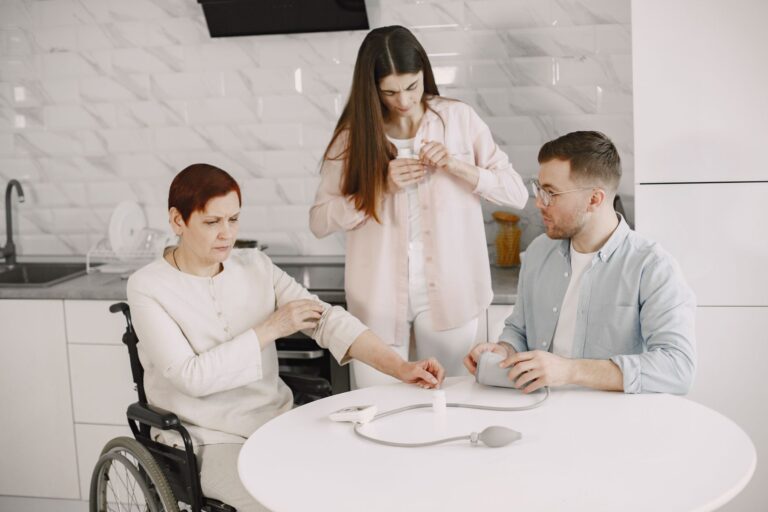
Yes. Difficulty recognizing family can arise from treatable or partly reversible conditions besides dementia.
One possibility is prosopagnosia, or "face blindness," which prevents someone from identifying familiar people by face despite seeing their facial features. The pattern and timing matter. A sudden change, broader confusion, or a new problem after illness or injury needs prompt medical assessment; recognition trouble alone cannot establish dementia.
Medical information disclaimer: This article is for general educational purposes only and does not provide medical advice, diagnosis, or treatment. Always consult a physician or other qualified health professional about symptoms, medications, tests, or treatment decisions.
Table of Contents
- Is the problem limited to faces?
- Which brain conditions can disrupt face recognition?
- When might delirium explain the change?
- Which dementia-like conditions may improve?
- What should families do next?
Is the problem limited to faces?
Prosopagnosia is a face-processing problem, not a dementia diagnosis. A person may fail to recognize friends, relatives, or even their own reflection, according to the NHS guidance on face blindness.
Families should observe what "not recognizing" means. Does the person struggle only when looking at a face, or do they also forget the relative's name, relationship, and shared history? Also note whether other cues help and whether confusion extends beyond people. These details can help a clinician distinguish an isolated recognition problem from broader cognitive impairment.
Which brain conditions can disrupt face recognition?
Acquired prosopagnosia can follow a stroke, head injury, or encephalitis because these conditions can damage the brain systems that process faces. Such causes are not dementia, although their effects may persist. In a 326-patient series, Mayo Clinic researchers found that 27.9% of acquired prosopagnosia cases had non-degenerative causes.
Infarcts, epilepsy-related conditions, and primary brain tumors were the most common categories in the 2024 Mayo Clinic case series. The researchers also identified temporary recognition loss that improved or resolved in some patients with migraine, delirium, low-oxygen brain injury, and ischemic infarcts. That percentage describes this clinical series, however, and cannot predict an individual patient's cause or recovery.
When might delirium explain the change?
Delirium causes sudden, severe confusion. Unlike a slowly developing cognitive problem, it usually begins abruptly because another medical problem has disrupted brain function. Alzheimer's Society identifies infection, pain, dehydration, medication effects, low oxygen, and metabolic disturbances as possible triggers.
Finding and treating the underlying problem is the treatment for delirium. A person with delirium may appear not to know familiar people because their overall attention and thinking are disturbed. A sudden recognition problem should therefore prompt medical assessment rather than an assumption that dementia has progressed.
Which dementia-like conditions may improve?
Several conditions can impair cognition without being a degenerative dementia. Medication side effects, endocrine or metabolic dysfunction, illness-related delirium, and depression are among the possibilities; medication effects and depression may improve with treatment.
A National Institute on Aging report also documents vitamin B1 or B12 deficiency, subdural hematoma, certain benign tumors, chronic meningitis, and normal-pressure hydrocephalus as potentially reversible or treatable dementia-like conditions. These conditions do not all typically cause isolated face blindness. Their relevance is that they can produce or worsen cognitive symptoms that resemble dementia, and appropriate treatment may halt or reverse some symptoms.
What should families do next?
Arrange prompt medical assessment for a new or sudden failure to recognize familiar people. The National Institute on Aging explains that an evaluation may cover cognition, medications, depression, laboratory causes, and brain imaging in its Alzheimer's disease fact sheet.
Bring specific observations: Rehabilitation may help some people with acquired prosopagnosia. In a 10-patient study, 11 weeks of perceptual training improved face discrimination, with some gains lasting three months, but the small study does not establish a broadly effective cure.
- When the problem began and whether it appeared suddenly
- Whether it affects faces alone or the person's broader identity and history
- Whether episodes come and go or remain constant
- Recent illness, pain, dehydration, medication changes, or head injury
- A complete list of prescription and nonprescription medicines