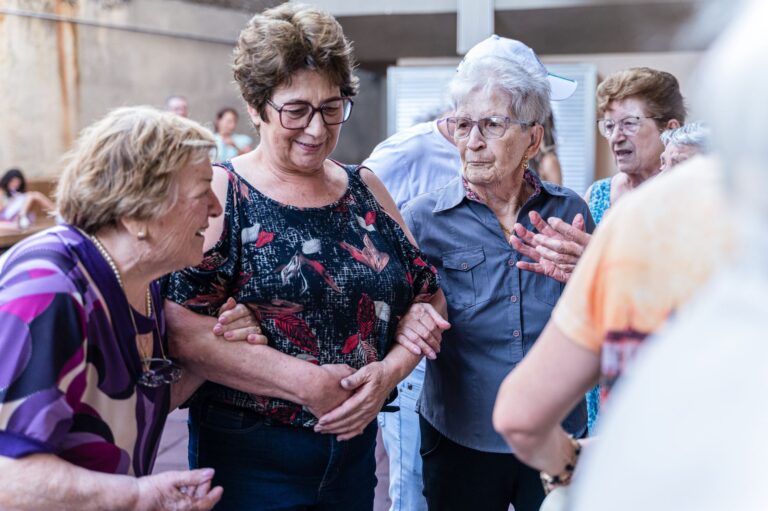
Building social sits at the center of this dementia and brain health question.
Building social networks is one of the most effective approaches to protecting cognitive health and slowing the progression of dementia and mild cognitive impairment. Research published in 2025 demonstrates that people who engage in frequent social activities show a 38% reduction in dementia risk compared to those who are least socially active, with some individuals experiencing a delay of up to five years before cognitive decline begins. For someone caring for a parent showing early signs of memory loss, this doesn’t mean occasional phone calls—it means creating sustained, meaningful connections that challenge the brain and reinforce emotional resilience.
This article explores how social networks function as a cognitive protective factor, practical strategies for building and maintaining them despite cognitive challenges, and why the quality and diversity of connections matter just as much as frequency. The mechanism behind social networking’s protective effect is profound. Social interaction stimulates multiple cognitive processes simultaneously—memory recall, language processing, emotional regulation, and complex reasoning all activate during conversation. Unlike passive activities, genuine social engagement requires the brain to track multiple perspectives, interpret emotions, and respond dynamically, creating the kind of cognitive demand that builds resilience against decline.
Table of Contents
- How Social Networks Protect Cognitive Function
- Building Networks When Cognitive Changes Are Present
- Diversity and Network Structure in Cognitive Protection
- Strategic Approaches to Maintaining Networks
- Addressing Barriers and Realistic Limitations
- The Economic and Personal Value of Prevention
- Moving Forward with Social Engagement
- Conclusion
How Social Networks Protect Cognitive Function
Social networks function as a form of cognitive reserve—they literally help the brain compensate for age-related changes and disease processes. Research from 2025 shows that larger, more diverse social networks are associated with better cognitive resilience and lower conversion rates from mild cognitive impairment to dementia. This isn’t simply about having more friends; it’s about the structure and quality of those connections. A diverse network includes people from different backgrounds, with different expertise and perspectives, which means each interaction presents unique cognitive challenges and opportunities for learning. The impact of social connection on specific cognitive abilities is measurable and striking. Studies comparing individuals who report different levels of relationship strain found a 7.42-year aging equivalent difference in processing speed performance.
Similarly, the difference between monthly versus yearly social contact frequency translated to a 3.28-year aging equivalent gap in executive function. For context, these differences are comparable to the cognitive changes someone might experience over many years of aging, yet they can be influenced by social engagement patterns. This means someone with frequent, low-strain relationships may have cognitive processing abilities similar to someone five to seven years younger. However, it’s important to recognize that not all social activities provide equal benefit. Passive social engagement—such as sitting in a room with others while watching television—doesn’t activate the same cognitive systems as active conversation and participation. The brain needs genuine interaction that requires attention, emotional processing, and meaningful exchange to gain maximum protective benefit.

Building Networks When Cognitive Changes Are Present
Building and maintaining social networks becomes more complex once cognitive decline has begun. A person with mild cognitive impairment might forget appointments, struggle to follow complex conversations, or feel embarrassed about memory lapses, all of which can lead to social withdrawal. The challenge is restructuring social connections so they remain meaningful and sustainable despite these difficulties. This might mean organizing regular, predictable gatherings rather than spontaneous outings; involving a spouse or adult child as a liaison to help with logistics; or choosing activities that provide built-in conversation starters rather than requiring someone to initiate and drive social exchanges. research on integrated social-art interventions has shown promise in enhancing cognitive function and reducing social isolation among older adults with mild cognitive impairment.
Activities that combine social interaction with creative expression—painting, music, crafts—offer advantages over traditional conversation-only socializing because they reduce pressure to perform cognitively while still providing meaningful engagement. A structured painting class attended with friends, for example, offers both the cognitive stimulation of learning and the social benefit of shared activity, without requiring someone to sustain a demanding conversation for two hours. One significant limitation is that increased social activity doesn’t guarantee cognitive benefit if the person experiencing cognitive decline feels judged or excluded by their social group. If friends or family members grow impatient with repetitive conversations or memory gaps, the emotional stress and sense of rejection can actually accelerate cognitive decline. Building networks during or after cognitive changes requires both the person with cognitive challenges and their social circle to adjust expectations and communication styles intentionally.
Diversity and Network Structure in Cognitive Protection
The diversity of a social network predicts cognitive outcomes more strongly than size alone. A person with five close friends who all share the same hobbies and perspectives might have a smaller protective effect than someone with ten connections spanning different ages, professions, and backgrounds. Diverse networks expose people to novel ideas, different communication styles, and varied cognitive challenges. Meeting a neighbor interested in history and then a grandchild interested in technology requires different mental engagement pathways than socializing exclusively with people who share identical interests. Network diversity can be created intentionally through volunteer work, community groups, or classes.
A 70-year-old with early memory concerns who volunteers at a community garden meets younger volunteers, learns new plant-growing techniques, and engages in physical activity alongside social engagement. The cognitive stimulation isn’t limited to conversation; it extends to learning new skills and adapting to unfamiliar environments. For someone managing mild cognitive impairment, volunteer roles should emphasize participation over performance—helping prepare materials rather than leading meetings, for instance—so that cognitive challenges don’t create barriers to participation. One practical example: an adult whose parent has been diagnosed with mild cognitive impairment might facilitate participation in a community choir rather than expecting their parent to independently manage social friendships. The choir provides built-in structure, weekly predictability, a shared objective (learning music), a diverse group of participants, and activities that don’t depend entirely on memory or verbal recall. These environmental supports allow social engagement to continue even as cognitive abilities change.

Strategic Approaches to Maintaining Networks
Creating a sustainable social network for someone experiencing cognitive changes requires deliberate strategies that reduce friction and maintain connection without placing unsustainable demands on memory or social performance. Regular, predictable scheduling—the same coffee group on Tuesdays, the same bridge club on Thursdays—removes the cognitive burden of remembering when social activities occur and instead creates automatic habits. Technology can support this through calendar systems, reminders, or even group chat apps that keep conversation threads organized and provide context for what was discussed previously. One effective approach is creating a “social care team” involving family members, friends, and perhaps paid caregivers who coordinate to ensure regular engagement. Rather than a person with cognitive decline needing to maintain all social relationships independently, multiple trusted people take responsibility for facilitating connection.
This might include a grandchild who visits monthly, a close friend who calls weekly, and a community center program that meets twice weekly. The person with cognitive decline participates without needing to organize or maintain these connections themselves. This approach also reduces the risk of social isolation caused by the person withdrawing due to embarrassment or memory loss. However, this approach requires ongoing communication among the care team to prevent conflicting expectations or leaving gaps in coverage. It also necessitates that the person receiving this support doesn’t feel patronized or over-managed. The distinction between respectful support and infantilizing control is critical; the goal is enabling participation in chosen social activities, not making social decisions for another adult.
Addressing Barriers and Realistic Limitations
Despite clear evidence of cognitive protection, building and maintaining social networks faces real obstacles, especially for people with advancing dementia or those living in rural areas with limited community resources. Transportation is a concrete barrier—a person without a driver’s license living far from public transit cannot easily attend social activities independently. Depression, anxiety, and other mental health conditions that frequently accompany cognitive decline can create psychological barriers to social engagement even when opportunity exists. A person might fear rejection, worry about embarrassment, or simply lack motivation and energy typical of depression. Research emphasizing the benefits of cognitive behavioral therapy interventions found that 83% of studies showed improvements in mental well-being when active engagement strategies were used, compared to lower outcomes from passive approaches.
This suggests that active intervention—whether that’s professional therapy or structured support—enhances outcomes beyond simply encouraging social activity. For some individuals, addressing underlying depression or anxiety through professional support is a prerequisite for successful social engagement. It’s also important to acknowledge that not every person with cognitive decline has adequate social resources available. Someone without family nearby, without financial resources to access paid services, and living in a community with limited programming faces genuine constraints that no article about social network benefits can overcome. Advocating for better community resources, senior center funding, and transportation services for older adults becomes as important as individual-level strategies.

The Economic and Personal Value of Prevention
The healthcare cost implications of preventing or delaying dementia are substantial. Research indicates that $500,000 in healthcare savings per capita is associated with each five-year delay in dementia onset. For a family or society, this represents not only financial benefit but also years of maintained independence, dignity, and quality of life.
A person whose cognitive decline is delayed five years might avoid institutionalization, remain capable of self-care, and maintain the ability to participate in meaningful activities and relationships. Beyond economic metrics, the personal value of delaying cognitive decline is profound. Five additional years of independence, of being able to recognize grandchildren and remember significant relationships, of contributing meaningfully to family or community—these matter deeply. Prioritizing social engagement isn’t just a medical intervention; it’s a choice to sustain the social and emotional fabric of life itself.
Moving Forward with Social Engagement
The evidence for social networking as a protective factor against cognitive decline has strengthened substantially in recent research, with systematic reviews and longitudinal studies published in 2025 providing robust confirmation. Looking forward, research exploring intervention-induced changes in social networks of people with dementia is scheduled for publication in mid-2026, which will clarify how social interventions can be optimized specifically for those already experiencing cognitive decline. For individuals and families navigating cognitive aging, the pathway forward involves recognizing social connection not as a luxury or optional activity but as a form of preventive healthcare as essential as physical exercise or diet.
The specifics will look different for every person—for one, it might be a regular card game with friends; for another, a structured community program; for yet another, regular family visits coordinated around a shared activity. The essential element is regular, genuine engagement with people and groups that stimulate thinking, challenge assumptions, and reinforce belonging. That engagement, maintained consistently over time, remains one of the most powerful and accessible tools available for protecting cognitive health.
Conclusion
Building and maintaining social networks represents a tangible, evidence-based approach to protecting cognitive function and potentially delaying the onset of dementia and mild cognitive impairment by years. The 38% reduction in dementia risk associated with frequent social activity, the documented delay in cognitive decline onset, and the capacity of meaningful social engagement to protect cognitive abilities across multiple domains provide compelling justification for prioritizing social connection. The approach is effective not because socializing is enjoyable—though it often is—but because the brain requires genuine cognitive challenge and emotional engagement to build resilience against age-related decline and disease.
If you’re supporting someone showing early signs of cognitive decline, or if you’re planning for your own cognitive aging, the priority should be on intentionally building a diverse, sustainable social structure that provides regular engagement without requiring the person to manage all relationships independently. Start by identifying what kinds of social activities feel natural and enjoyable, then create regular, predictable opportunities for participation. Involve family, friends, and community resources to create a coordinated support system. The investment in social connection today translates into years of preserved cognitive function, independence, and the capacity to remain engaged in the relationships and activities that give life meaning.
You Might Also Like
- How a New Heart Disease Approach Attracted Significant Venture Funding
- Finding Connection and Support in Spaces Designed for Those with Cognitive Decline
- Finding Connection and Support in Spaces Designed for Those with Cognitive Decline
For more, see Alzheimer’s Association — medical tests.