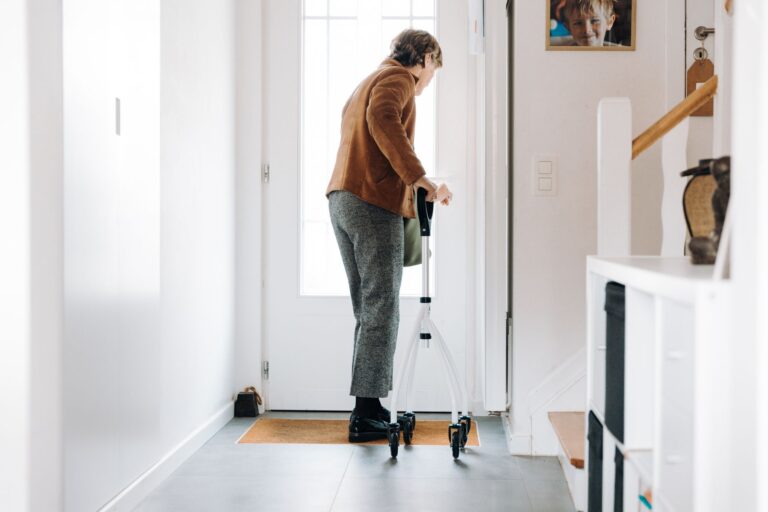
Building a realistic dementia prevention routine in midlife starts with a step count, not a gym membership. A 2022 JAMA Neurology study of nearly 80,000 UK Biobank adults found that dementia risk dropped as daily steps rose, with the largest reduction — 51% lower risk — among those averaging about 9,826 steps a day.
That number sounds steep for someone starting from a sedentary baseline, but it isn't the entry point. The same research shows meaningful benefit at far lower step counts, and a 2025 meta-analysis puts a practical target closer to 7,000 steps. The routine that protects brain health in midlife is less about hitting a perfect number and more about building a walking habit that survives a busy week.
Medical information disclaimer: This article is for general educational purposes only and does not provide medical advice, diagnosis, or treatment. Always consult a physician or other qualified health professional about symptoms, medications, tests, or treatment decisions.
Table of Contents
- How Many Steps Actually Matter?
- Does Walking Pace Matter as Much as Distance?
- Why Midlife Specifically?
- Building the Routine Without Overhauling Your Life
- What the Evidence Doesn't Settle
- Frequently Asked Questions
How Many Steps Actually Matter?
The UK Biobank study, led by del Pozo Cruz and published in JAMA Neurology in September 2022, followed 78,430 adults for an average of 6.9 years. It found no hard minimum threshold for benefit: even about 3,800 steps a day was linked to a 25% lower dementia risk compared with far less active participants. That's roughly two miles of walking, achievable in a 30-40 minute walk or broken into several shorter ones.
A 2025 dose-response meta-analysis in The Lancet Public Health, led by Ding and pooling data across dozens of cohorts, found that 7,000 steps a day was associated with a 38% lower dementia risk compared with 2,000 steps a day. The benefit curve flattens out between 5,000 and 7,000 steps, meaning the biggest gains come from moving off a low baseline rather than chasing five-figure totals. Those two studies frame the practical range for a midlife reader: progress from wherever a person currently walks toward somewhere in the 5,000-9,800 range, with every increment along the way linked to lower risk. There's no cliff where effort stops counting and no step count where it's too late to start.
Does Walking Pace Matter as Much as Distance?
Yes. The 2022 JAMA Neurology study separated step volume from stepping intensity and found intensity carried an independent benefit. Participants who reached a peak cadence of about 112 steps per minute sustained for 30 minutes showed a 62% lower dementia risk — larger than the reduction tied to total daily steps alone. That pace is a genuine brisk walk, not a stroll — fast enough that holding a conversation takes a bit more effort.
For someone building a routine, this suggests a simple adjustment once a baseline walking habit is in place: rather than only adding more minutes, add a faster segment. A 30-minute walk with even part of it at a brisk clip appears to do more than the same 30 minutes at an easy pace. This matches the World Health Organization's long-standing guidance. Its 2019 dementia risk-reduction guideline gives physical activity its strongest recommendation for cognitively normal adults, specifying at least 150 minutes a week of moderate-intensity aerobic activity, done in bouts of at least 10 minutes. That works out to about 21-22 minutes a day, achievable as a single walk or split across a day.
Why Midlife Specifically?
Dementia prevention research increasingly points to midlife — roughly ages 45 to 65 — as a window when activity habits have outsized influence on long-term brain health, not just a general health recommendation for any age. A 2025 analysis covered by the Barcelona Institute for Global Health (ISGlobal) linked increases in physical activity specifically during this age range to lower brain amyloid burden, the protein buildup associated with Alzheimer's disease. Amyloid accumulates years before symptoms appear, so activity changes in midlife may be acting on a disease process already underway, long before memory problems would prompt a doctor's visit.
This fits the broader risk-factor picture. The Lancet Commission on dementia, in its 2024 update led by Livingston and colleagues, concluded that addressing 14 modifiable risk factors across the lifespan — including physical inactivity — could prevent or delay up to 45% of dementia cases worldwide. Physical inactivity is one of the few factors on that list a person can act on directly, starting today, without medical intervention.
Building the Routine Without Overhauling Your Life
The practical task isn't choosing a step target — it's making walking repeat often enough to matter over years, not weeks. A few adjustments make that more realistic:.
- Start from an honest baseline. Check a phone's step count for a few ordinary days before setting a goal; working from an actual number beats guessing.
- Add distance before adding intensity. Build toward 7,000-10,000 steps first, then layer in a brisk 10-15 minute segment once daily walking is routine.
- Use the 10-minute bout rule. WHO's guideline counts activity in blocks of 10 minutes or more, so a lunchtime walk and an evening walk both count toward the weekly 150-minute target.
- Treat errands as steps, not detours. Parking farther out, taking stairs, or walking to a nearby store instead of driving adds up without requiring separate "exercise time."
- Protect the walk that already happens before adding a new one. A consistent 20-minute daily walk beats an ambitious plan that lapses after two weeks.
What the Evidence Doesn't Settle
Every step-count finding above comes from observational cohort studies — people who already walked more were compared with those who walked less, and their later dementia rates were tracked. That design shows a strong association, not proof that walking itself prevents dementia. An Alzheimer's Association expert cited in coverage of the 2022 JAMA Neurology findings cautioned that more research is needed before treating any step target as a guaranteed prevention tool.
The 2025 Lancet Public Health meta-analysis adds a specific caveat: its dementia-specific finding was rated only moderate certainty, resting on just two contributing studies, and it lacked age-stratified analysis. That means the 7,000-step figure is a solid population-level estimate, not a number tailored to any individual reader's age, health status, or starting fitness. People who are more active to begin with may also differ in other ways — diet, sleep, social engagement, underlying health — that independently affect dementia risk, and these studies can't fully separate those factors from walking itself.
Frequently Asked Questions
Is there a minimum number of steps needed to see any benefit?
No single threshold was found. The 2022 JAMA Neurology study linked roughly 3,800 steps a day to a 25% lower dementia risk compared with less active participants, with benefit continuing to rise at higher step counts.
Does walking speed matter if I'm already hitting my step goal?
Yes. The same study found that reaching about 112 steps per minute for a sustained 30 minutes was linked to a 62% lower dementia risk, a larger reduction than step volume alone produced.
Why does midlife matter more than starting later?
A 2025 analysis linked activity increases specifically between ages 45 and 65 to lower brain amyloid burden, suggesting this window affects a disease process that begins before symptoms do.
You Might Also Like
- Cross-Cultural Dementia Risk Programs After LatAm-FINGERS 2026: How Adults in Midlife Can Build a Realistic Brain Health Plan
- Physical Activity in the 2026 WHO Dementia Guidelines: Questions to Ask at a Brain Health Appointment
- Physical Activity in the 2026 WHO Dementia Guidelines: Practical Steps Families Can Discuss With a Clinician