The 2026 WHO dementia guidelines tell clinicians to recommend physical activity to adults with normal cognition as a core, standard part of brain health care. This matters because it changes what a good brain health appointment should include, and it gives readers specific questions to bring with them. The World Health Organization released the second edition of its guideline "Risk reduction of cognitive decline and dementia" in mid-July 2026, replacing the 2019 first edition and covering adults who do not have dementia, including people with mild cognitive impairment, or MCI, a diagnosis marking noticeable memory or thinking changes that fall short of dementia itself (PAHO). The guideline's strength of recommendation differs depending on where a patient stands, which is the first thing worth understanding before a visit.
Medical information disclaimer: This article is for general educational purposes only and does not provide medical advice, diagnosis, or treatment. Always consult a physician or other qualified health professional about symptoms, medications, tests, or treatment decisions.
Official resource:
- Read the WHO guideline, "Risk reduction of cognitive decline and dementia," second edition — Readers can review WHO's full official recommendations and evidence grading directly, including the physical activity guidance for cognitively normal and MCI patients.
Table of Contents
- What does the guideline actually recommend, and for whom?
- How much difference can physical activity realistically make?
- Why would a clinician ask about hearing, blood pressure, or smoking at a visit about exercise?
- What about supplements — should they come up instead of exercise?
- Does the activity recommendation change once someone already has dementia?
- Frequently Asked Questions
What does the guideline actually recommend, and for whom?
For adults with normal cognition, WHO issues a strong recommendation that physical activity be offered to reduce the risk of cognitive decline — meaning clinicians should raise it as standard advice, not something offered only on request (WHO guideline record via the BIGG-REC database). For adults already diagnosed with MCI, the recommendation is conditional: physical activity "may be recommended," reflecting less certainty about the size of the benefit once decline has already started (WHO guideline record via the BIGG-REC database).
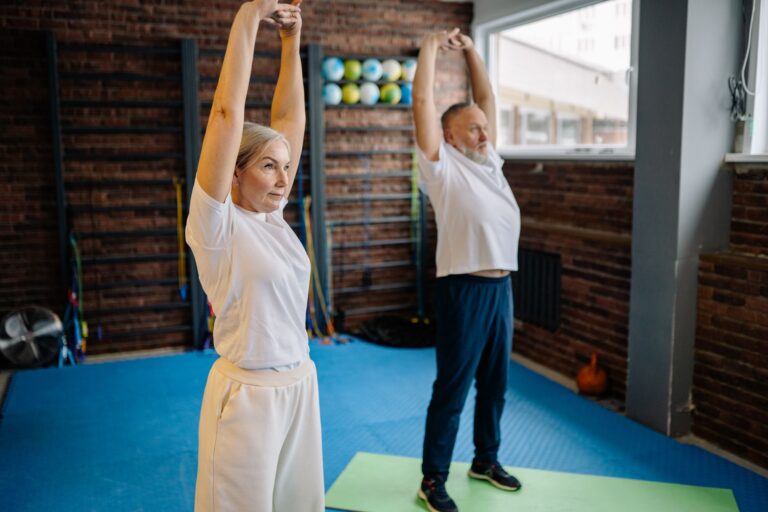
That distinction is worth raising directly at an appointment: a patient with normal cognition should expect physical activity to come up as routine advice, while a patient with MCI should ask why the recommendation is weaker and what the clinician expects it to accomplish in their specific case. Both recommendations describe the same activity mix rather than two different exercise plans: aerobic movement, muscle-strengthening exercise, and reduced sedentary time, tailored to what the person can do and is willing to do (WHO guideline records via the BIGG-REC database). A useful question at the appointment is simply: what does that mix look like for me, given my mobility, health conditions, and daily schedule?.
How much difference can physical activity realistically make?
WHO estimates that up to 45% of dementia risk is attributable to modifiable factors — physical inactivity, tobacco use, alcohol use, social isolation, air pollution, and untreated noncommunicable diseases (WHO/PAHO). That figure covers all of those factors combined, not physical activity alone, so it is a ceiling on what lifestyle change in general can shift rather than a guarantee tied to exercise by itself. This is a reasonable number to ask a clinician to translate into personal terms: given my own health history, how much of that modifiable share applies to me, and which of the listed factors are most relevant in my case?.
Why would a clinician ask about hearing, blood pressure, or smoking at a visit about exercise?
Clinician-facing coverage describes WHO's approach as individualized and multidomain, meaning physical activity is meant to be prescribed alongside other relevant risk factors — such as hearing, blood pressure, and smoking — rather than handled in isolation (Epocrates). A brain health appointment built around this guideline should not stop at an exercise prescription.
Questions worth asking to make sure the full picture is covered: Fiona Carragher, Chief Policy and Research Officer at the UK's Alzheimer's Society, publicly welcomed the guideline as the best available public-health prevention advice, citing physical activity, smoking cessation, social activity, and weight management among its core pillars (Alzheimer's Society comment). That list is a reasonable checklist to bring into the room.
- Has my hearing been checked, and does it need addressing alongside physical activity?
- Is my blood pressure at a level my clinician considers relevant to cognitive risk?
- Should smoking or alcohol use be part of this conversation too?
- Are there other domains — social activity, weight management — that should be addressed in the same visit rather than separately?
What about supplements — should they come up instead of exercise?
The guideline does not recommend vitamin B, vitamin E, omega-3, or multivitamin supplements for dementia prevention unless a diagnosed nutrient deficiency is present (coverage of the WHO guideline). If a supplement is proposed at an appointment instead of, or alongside, a physical activity plan, it is worth asking directly whether a nutrient deficiency has actually been diagnosed, since that is the condition the guideline attaches to supplement use. This question matters because it keeps the visit anchored to what the guideline actually supports rather than to an easier-sounding substitute.
Does the activity recommendation change once someone already has dementia?
A separate, earlier WHO guideline, known as mhGAP, applies specifically to people already living with dementia rather than those at risk of developing it. It recommends physical activity sessions of 30 to 45 minutes, three to four times per week, continued for 12 weeks or longer (WHO mhGAP guideline, cited in the 2026 guideline record via BIGG-REC).
This is a distinct benchmark from the prevention-stage recommendations above, built for a different population and a different goal. A family member asking about a parent or spouse already diagnosed with dementia should ask about this specific frequency and duration target, since it is not the same guidance that applies to someone trying to lower their risk before any diagnosis.
Frequently Asked Questions
Is physical activity recommended the same way for everyone?
No. Adults with normal cognition get a strong recommendation; adults with MCI get a conditional one, reflecting less certainty about benefit at that stage (BIGG-REC).
Does the guideline specify a particular workout?
It specifies a mix — aerobic activity, muscle-strengthening exercise, and less sedentary time — tailored to the person, not one fixed program (BIGG-REC).
Should someone already diagnosed with dementia follow the same activity targets as someone trying to prevent it?
No. The mhGAP guideline for people with dementia sets a distinct target of 30-45 minute sessions, three to four times weekly, for 12 weeks or more.
You Might Also Like
- Physical Activity in the 2026 WHO Dementia Guidelines: What the Evidence Supports and What It Does Not
- Physical Activity in the 2026 WHO Dementia Guidelines: Practical Steps Families Can Discuss With a Clinician
- Physical Activity in the 2026 WHO Dementia Guidelines: How the New Advice Differs From Common Online Claims