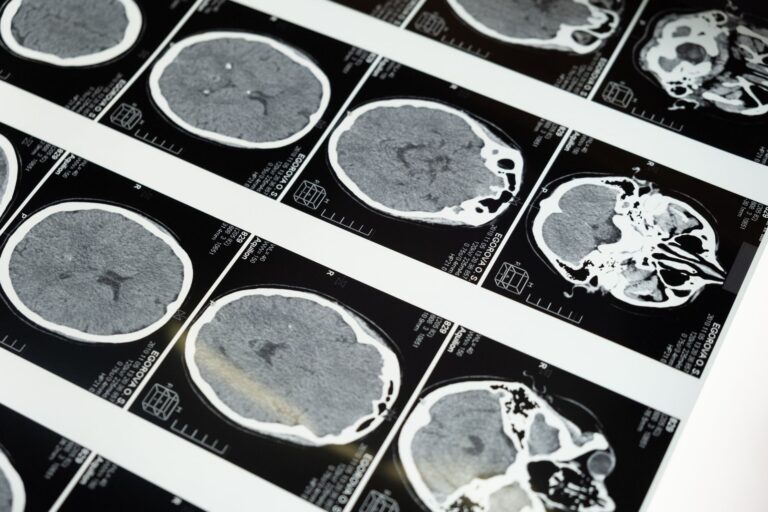
Brain health sits at the center of this dementia and brain health question.
The Brain Health Collaboratory launched by Cognito Therapeutics and Ochsner Health in March 2026 focuses specifically on advancing non-invasive Alzheimer’s care models using light and sound therapy delivered through an at-home device called Spectris™. This partnership brings together innovative neurotechnology with one of the largest regional healthcare networks in the United States, creating a research and clinical framework to test whether synchronized sensory stimulation can slow cognitive decline in Alzheimer’s disease patients. The Collaboratory represents a significant shift in how the field is approaching treatment—moving away from expensive pharmaceutical interventions toward accessible, device-based therapies that patients can use in their own homes.
This collaborative model is not entirely new, but its expansion signals growing confidence in this therapeutic approach. Cognito Therapeutics established a proof-of-concept with the first Brain Health Collaboratory at West Virginia University’s Rockefeller Neuroscience Institute in November 2025, and the Ochsner partnership marks the second major implementation. Ochsner Health operates 47 hospitals and hundreds of care sites across the Gulf South region, providing the clinical infrastructure and patient access needed to advance real-world evidence about how non-invasive therapy performs in actual clinical settings.
Table of Contents
- How Does Light and Sound Stimulation Target Alzheimer’s Disease?
- What Clinical Evidence Supports Non-Invasive Light and Sound Therapy?
- Why Partner with a Large Regional Healthcare Network Like Ochsner Health?
- What Role Does the Broader Alzheimer’s Movement Play?
- What Are the Key Limitations of Non-Invasive Device-Based Therapy?
- How Does This Fit Into the Broader Neurotechnology Landscape?
- What Should Clinicians and Patients Anticipate in the Second Half of 2026?
- Conclusion
How Does Light and Sound Stimulation Target Alzheimer’s Disease?
The Spectris device works by delivering synchronized light and sound stimulation through the brain’s natural sensory pathways—the visual and auditory systems. Rather than attempting to bypass the blood-brain barrier with drugs or requiring invasive procedures, this approach leverages existing neural structures to influence brain activity patterns. The specific mechanism targets gamma oscillations, which are brain wave patterns that researchers have linked to memory formation, cognitive processing, and overall neural network health. Alzheimer’s disease disrupts these gamma oscillations, and the theory behind Spectris is that restoring or enhancing them could help slow or prevent the cognitive decline that characterizes the disease.
What makes this approach particularly appealing for dementia care is its non-invasive nature combined with practical accessibility. Patients don’t need surgery, hospital visits for treatment sessions, or complex injections. The device is designed for at-home use, meaning patients can integrate therapy into their daily routine—a significant advantage over treatments requiring regular clinic visits or continuous medical supervision. However, the effectiveness of this approach depends heavily on consistent, long-term use. A patient who doesn’t use the device regularly or correctly will not experience the intended benefits, making adherence and patient education critical factors in real-world success.
What Clinical Evidence Supports Non-Invasive Light and Sound Therapy?
Early trial results from Cognito’s research have shown measurable benefits that go beyond what many current Alzheimer’s treatments achieve. Patients receiving Spectris treatment demonstrated slower cognitive and functional decline compared to control groups, along with marked reduction in brain volume loss—one of the most objective markers of Alzheimer’s progression. Brain atrophy is particularly significant because it’s directly observable on imaging and represents actual neurological change, not just subjective symptom improvement. These early findings suggest the device may address the underlying disease process, not simply mask symptoms temporarily.
That said, these are still early-stage results from limited trials. The critical data will come from Cognito’s larger pivotal trial, with top-line results expected later in 2026. This pivotal study is the regulatory standard that will determine whether the device can gain FDA clearance and be prescribed more broadly across the healthcare system. Until these results are published and reviewed, clinicians and patients should understand that Spectris remains an investigational device with promising but not yet definitive evidence. The gap between early trial success and pivotal trial confirmation has caught many Alzheimer’s researchers and patients off-guard before, making cautious optimism the appropriate stance at this stage.
Why Partner with a Large Regional Healthcare Network Like Ochsner Health?
Ochsner Health’s involvement is strategically important because the network operates not just a few flagship academic medical centers, but 47 hospitals and hundreds of clinical sites across Louisiana, Mississippi, and the wider Gulf South region. This scale allows the Brain Health Collaboratory to enroll diverse patient populations, test the therapy in different clinical settings, and gather real-world data about how the device performs outside of highly controlled research environments. Large healthcare networks also have the infrastructure to track long-term outcomes, coordinate care among multiple providers, and manage the logistics of a complex research program.
The partnership also addresses a critical gap in Alzheimer’s care: most neurodegenerative disease research happens at large academic centers with subspecialty expertise, while the majority of dementia patients are diagnosed and managed in community hospitals and primary care settings. By embedding the Brain Health Collaboratory within Ochsner’s network, Cognito Therapeutics can better understand how non-invasive therapy works in the real-world settings where most Alzheimer’s patients actually receive care. This is valuable not just for the company, but for the broader mission of advancing dementia care—treatments that work only in academic medical centers don’t solve the problem for the millions of dementia patients in underserved areas.

What Role Does the Broader Alzheimer’s Movement Play?
The timing of the Brain Health Collaboratory’s launch coincides with a parallel initiative: the Alzheimer’s Association launched its Brain Health Roundtable in March 2026 as a cross-sector coalition designed to elevate brain health as a national public health priority. While the Collaboratory is focused on testing a specific device, the Roundtable operates at a higher level—bringing together stakeholders across healthcare, research, policy, and patient advocacy to reshape how the United States approaches prevention, early detection, and treatment of cognitive decline. These two initiatives, while separate, reinforce each other: the Roundtable creates policy and cultural momentum for brain health investment, while the Collaboratory generates clinical evidence that new approaches actually work.
This broader movement also reflects a shift in how the field thinks about Alzheimer’s disease. Rather than waiting for a single “magic bullet” pharmaceutical that might cure the disease, the field is increasingly embracing multiple modalities: lifestyle interventions, early detection through biomarker screening, non-invasive devices, and pharmaceutical options. For patients and families, this means more options and more research pathways—but it also means the landscape is becoming more complex. A dementia diagnosis today is not a passive death sentence; it’s an opportunity to engage with a growing ecosystem of evidence-based interventions, many of which are becoming more accessible.
What Are the Key Limitations of Non-Invasive Device-Based Therapy?
While the promise of an at-home device is compelling, several practical limitations deserve serious attention. First, not all patients will tolerate light and sound stimulation equally. Some people experience sensory sensitivities, migraines, or other adverse reactions to stimulation patterns, and these factors may not be fully predictable in advance. Second, the device requires consistent adherence—if a patient has advanced dementia, they may not remember to use the device, and caregivers face significant burden in managing daily therapy sessions.
For early-stage dementia, adherence may be better, but the disease will eventually progress to stages where the patient cannot independently use the technology. Additionally, device-based therapies create questions about equity and access. Spectris will carry a cost, and that cost is likely to fall disproportionately on patients with insurance or financial resources to afford early-stage therapies. While the Ochsner partnership will help gather evidence about real-world effectiveness, it doesn’t automatically solve the problem of making non-invasive therapy accessible to rural patients, low-income populations, or communities with limited healthcare infrastructure. The promise of at-home use is real, but only if patients can actually obtain and afford the device.

How Does This Fit Into the Broader Neurotechnology Landscape?
The non-invasive stimulation approach represented by Spectris is part of a growing category of neurotechnologies designed to influence brain activity through peripheral (non-surgical) means. Transcranial magnetic stimulation (TMS) and transcranial direct current stimulation (tDCS) are established technologies in this space, used for depression and other neuropsychiatric conditions, though their role in Alzheimer’s disease remains exploratory. What distinguishes Spectris is its dual sensory approach—combining light and sound stimulation rather than relying on a single mechanism.
The gamma oscillation hypothesis also provides a more mechanistic target than some earlier neurotech interventions, potentially explaining why this approach might work where others haven’t. Understanding where Spectris fits in the treatment landscape also matters for patient expectations. This is not a replacement for lifestyle interventions like cognitive engagement, physical exercise, sleep optimization, and cardiovascular health management—all of which have strong evidence in Alzheimer’s prevention and early-stage disease management. Rather, it’s positioned as a complementary approach that might work alongside these foundational strategies.
What Should Clinicians and Patients Anticipate in the Second Half of 2026?
The pivotal trial data expected later in 2026 will be a watershed moment for this field. If the results confirm the promise of early trials, the pathway to FDA clearance becomes much more likely, and Spectris could enter broader clinical use within the next 1-2 years. If results are mixed or disappointing, it will force a recalibration of expectations around light-sound therapy and potentially shift research focus toward modified device designs or different patient populations.
Either way, the data will help answer a crucial question: can a non-invasive, at-home device actually slow Alzheimer’s disease progression in a large, diverse patient population? Beyond the Spectris pivotal trial, the broader trend toward non-invasive, accessible Alzheimer’s therapies is likely to accelerate. The Ochsner partnership demonstrates that healthcare systems are willing to invest in testing innovative approaches, and if Spectris shows benefit, it may open doors for other device-based therapies in dementia care. For clinicians managing Alzheimer’s patients today, this period represents an opportunity to engage patients in discussions about emerging options while maintaining realistic expectations about what is still investigational and what has definitive evidence.
Conclusion
The Brain Health Collaboratory launched by Cognito Therapeutics and Ochsner Health represents a meaningful evolution in how we approach Alzheimer’s therapy—moving toward non-invasive, patient-centered interventions that can be administered at home. The Spectris device’s mechanism of targeting gamma oscillations through light and sound stimulation is grounded in neuroscience, and early trial data showing reduced cognitive decline and brain volume loss is genuinely encouraging. However, the real test comes with the pivotal trial data expected later in 2026, which will determine whether this promise translates into measurable clinical benefit in a larger, more diverse patient population.
For patients and families facing an Alzheimer’s diagnosis, the expansion of the Brain Health Collaboratory reflects a healthcare system increasingly committed to testing new options beyond traditional pharmaceutical approaches. The practical reality of non-invasive, at-home therapy is appealing, but success will ultimately depend on device accessibility, patient adherence, and real-world effectiveness in clinical settings beyond academic centers. As 2026 unfolds and more data becomes available, staying informed about these developments will be crucial for anyone involved in dementia care.
You Might Also Like
- Scientists Map Aging Brain in Unprecedented Detail Revealing Clues to Alzheimer’s
- New test can now tell Alzheimer’s apart from similar brain diseases
- New Drug Target Discovered That Slashes Brain Plaques in Alzheimer’s
For more, see Alzheimer’s Association — clinical trials.