Nasal swabs sits at the center of this dementia and brain health question.
Yes, according to a groundbreaking Duke Health study published in March 2026, a simple nasal swab can detect Alzheimer’s disease in its earliest stages with approximately 81% accuracy. Researchers at Duke University developed a non-invasive test that measures gene activity in cells collected from inside the nose—specifically from the olfactory epithelium where nerve and immune cells reside. This approach directly captures disease-related changes at the cellular level, offering a window into Alzheimer’s biology that current blood tests cannot fully provide.
Consider Sarah, a 58-year-old who has no memory problems but whose family has a strong history of Alzheimer’s: this nasal swab test could identify whether she already has biological signs of the disease long before symptoms appear, potentially allowing her to begin treatment or lifestyle modifications years earlier than would have been possible with traditional screening methods. The significance of this finding lies not just in early detection, but in how the test works. Rather than looking for proteins circulating in the bloodstream, the nasal swab captures actual brain-related cells and measures thousands of genes simultaneously across hundreds of thousands of individual cells—millions of data points that paint a detailed molecular picture of disease progression. This article explores how the test works, what the research shows, what it means for patients and families, and what comes next as researchers expand this work to larger populations.
Table of Contents
- How Does a Nasal Swab Detect Alzheimer’s Disease?
- What Makes This Test Different from Current Alzheimer’s Screening?
- Can the Nasal Swab Test Detect Alzheimer’s Before Symptoms Appear?
- What Are the Practical Advantages of Nasal Swab Testing?
- What Are the Limitations and Remaining Questions?
- What Happens Next in the Research?
- What Does This Mean for People Concerned About Alzheimer’s Risk?
- Conclusion
- Frequently Asked Questions
How Does a Nasal Swab Detect Alzheimer’s Disease?
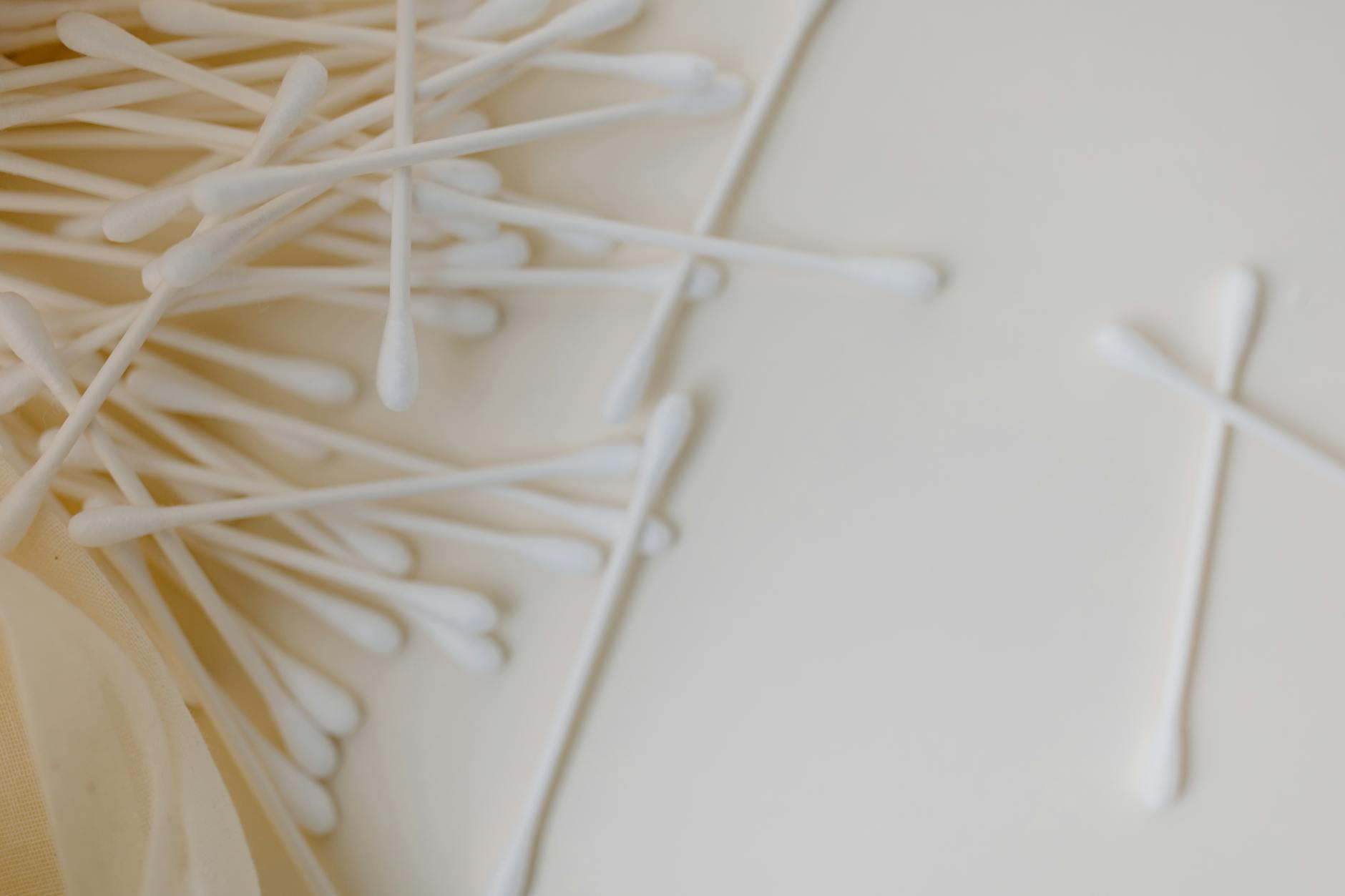
The Duke study uses a surprisingly simple procedure: a clinician places a soft swab high inside the nose to collect cells from the olfactory epithelium, the tissue responsible for smell. This tissue contains nerve and immune cells that are directly connected to the brain and reflect what’s happening in Alzheimer’s disease. Because these cells are accessible without any invasive procedures—no spinal taps, no brain imaging, no blood draws—the test is genuinely non-invasive and can be repeated easily over time to track disease progression. Once collected, researchers analyze the gene activity patterns across thousands of genes in individual cells.
The study examined gene expression across hundreds of thousands of cells, generating millions of data points. A combined “gene score” derived from this cellular data can then classify whether a person has biological Alzheimer’s changes or is healthy. In the initial study of 22 participants, this gene score correctly separated people with early Alzheimer’s and clinical Alzheimer’s disease from healthy controls approximately 81% of the time—a promising accuracy rate for such an early-stage test. The advantage over blood-based biomarkers is that nasal tissue provides a more direct view of the brain’s cellular environment and disease-related changes rather than measuring molecules that have leaked into circulation.
What Makes This Test Different from Current Alzheimer’s Screening?
Current Alzheimer’s diagnosis relies on blood tests (like phosphorylated tau and amyloid levels), positron emission tomography (PET) scans, magnetic resonance imaging (MRI), or cognitive testing. Blood tests are becoming more accessible and can detect certain protein signatures, but they measure byproducts in the bloodstream rather than direct evidence of disease in brain-adjacent tissue. Cognitive testing only detects Alzheimer’s after symptoms have already emerged, meaning the disease has been progressing silently for 15 to 20 years. Brain imaging like PET and MRI provides detailed pictures but requires specialized equipment, significant expense, and sometimes radiation exposure.
The nasal swab approach offers something different: a direct cellular snapshot of the olfactory system, which is uniquely connected to the brain and vulnerable in Alzheimer’s. However, there’s an important caveat: while the 81% accuracy rate is encouraging, it’s based on a study of only 22 people. Larger studies are needed to confirm whether this accuracy holds in diverse populations and across different stages of disease severity. The Duke and UNC Alzheimer’s Disease Research Center is expanding the research to larger groups, which will be essential before this test could become a clinical standard. Additionally, because the olfactory tissue is connected to the brain but not identical to it, the nasal swab provides valuable information about disease-related changes but cannot replace detailed brain imaging when structural damage assessment is needed.
Can the Nasal Swab Test Detect Alzheimer’s Before Symptoms Appear?
One of the most exciting aspects of this research is that the test appears capable of detecting Alzheimer’s in its preclinical stage—when people show biological signs of disease but have no cognitive symptoms or memory problems. This is significant because the preclinical stage may last years or even decades. Imagine Michael, a 62-year-old with no memory issues and no cognitive complaints, but whose amyloid and tau levels on a blood test suggest early Alzheimer’s pathology. The nasal swab could provide additional confirmation of these biological changes in brain-adjacent tissue, strengthening confidence in early intervention decisions.
Detecting disease before symptoms matters because researchers and clinicians increasingly believe that treatment during the preclinical stage—before substantial neurodegeneration has occurred—may be more effective than waiting until cognitive decline is obvious. Early detection creates a window for lifestyle interventions, potential disease-modifying drugs, or clinical trial enrollment. The nasal swab’s ability to flag people who have biological evidence of Alzheimer’s without cognitive impairment could identify those who would benefit most from preventive approaches. However, a positive nasal swab result is not a diagnosis of Alzheimer’s dementia; it indicates the presence of disease-related biological changes that may or may not progress to clinical symptoms in any given individual’s lifetime.

What Are the Practical Advantages of Nasal Swab Testing?
The practical benefits of a nasal swab test are substantial compared to alternatives. The procedure takes minutes, requires no special equipment beyond a basic swab, causes no discomfort or pain, and generates no radiation or contrast dye exposure. A person could potentially have the test done at a primary care office or community clinic, not just at academic medical centers. This accessibility contrasts sharply with PET scans, which are expensive (often $3,000 to $4,000), require specialized facilities, and can involve radioactive tracers.
Blood tests are similarly accessible but only detect circulating protein markers; the nasal swab captures tissue-level biology. Repetition is another advantage: because the nasal swab is non-invasive, it could be performed annually or more frequently to track changes over time without asking patients to undergo repeated brain imaging or spinal procedures. For someone at high risk—perhaps someone with a strong family history of Alzheimer’s or someone experiencing subtle cognitive changes—the ability to monitor disease progression easily could help clinicians adjust treatment timing and intensity. The tradeoff is that the nasal swab approach is new and not yet standardized for clinical use; most clinicians don’t currently offer it, and insurance would likely not cover it until larger validation studies are completed and regulatory clearance is obtained.
What Are the Limitations and Remaining Questions?
The most obvious limitation is sample size: the initial Duke study included only 22 participants, which is too small to establish whether the 81% accuracy rate will hold across larger and more diverse populations. People of different ages, genetic backgrounds, and disease stages may show different patterns. Some individuals with preclinical Alzheimer’s never develop symptoms, while others progress to dementia; the nasal swab may not predict who falls into which group. Geographic variation also matters—the study was conducted at Duke, a major research center, and the results may not translate directly to community settings with different equipment, training, or protocols.
Another limitation is that the nasal swab measures gene activity in olfactory tissue, not directly in the brain. While the olfactory system is affected in Alzheimer’s, changes in the nose don’t perfectly mirror changes in the cortex or hippocampus where memory loss originates. Additionally, gene expression patterns can be influenced by infection, inflammation, or other factors unrelated to Alzheimer’s, so false positives are possible. The researchers acknowledge that their gene score must be validated in independent cohorts before clinical adoption. Lastly, even if the nasal swab becomes available, a positive result would typically be followed by confirmatory blood tests or imaging, not replace them entirely—at least initially.
What Happens Next in the Research?
Duke and UNC’s Alzheimer’s Disease Research Center is expanding the nasal swab research to include larger, more diverse participant groups. The team is also exploring whether the test could help track how well Alzheimer’s treatments are working. If gene expression patterns shift in response to therapy, the nasal swab could become a way to monitor treatment efficacy non-invasively. This would be particularly valuable for people enrolled in clinical trials or taking new disease-modifying medications, as repeated testing could measure whether the drug is actually changing cellular biology as intended.
The researchers have published their findings in Nature Communications, a peer-reviewed journal, which means the work has undergone scientific scrutiny. However, publication is just the first step toward clinical adoption. Regulatory approval, standardization of the procedure, training of healthcare providers, and health insurance coverage decisions will all take time. Within the next three to five years, we may see the nasal swab test offered at specialty clinics and academic medical centers; broader clinical adoption would likely take longer.
What Does This Mean for People Concerned About Alzheimer’s Risk?
For individuals with a family history of Alzheimer’s or those experiencing cognitive concerns, this research offers hope that earlier detection and intervention may soon be possible. The nasal swab test demonstrates that biological changes in Alzheimer’s can be captured through accessible, non-invasive means—a principle that could extend to other neurological conditions as research progresses. We’re moving toward an era where detecting Alzheimer’s resembles detecting cancer: earlier detection leads to earlier intervention, potentially better outcomes.
That said, the test is not yet clinically available, and people should not seek it out expecting to use it immediately. Discussing Alzheimer’s risk with a primary care physician remains the appropriate first step, as is cognitive assessment if concerns arise. Blood tests for Alzheimer’s biomarkers like phosphorylated tau are increasingly available and can provide valuable information today. The nasal swab test represents a future possibility—one grounded in solid science—but that future is still being built through ongoing research and validation.
Conclusion
The Duke Health study published in March 2026 demonstrates that a simple nasal swab can detect Alzheimer’s disease with approximately 81% accuracy in small study populations, offering a non-invasive alternative to blood tests, brain imaging, and cognitive testing. The test measures gene activity in olfactory tissue that is directly connected to the brain, capturing disease-related cellular changes even in people who have no symptoms yet. This capability could transform how we screen for and detect Alzheimer’s, potentially opening a window for early intervention before significant brain damage has occurred.
Larger research studies are underway to validate these findings and establish the test’s clinical utility. While the nasal swab is not yet available for routine clinical use, the Duke and UNC Alzheimer’s Disease Research Center continues expanding this work, exploring how the test might track disease progression and treatment response. For anyone concerned about Alzheimer’s risk, this research signals that non-invasive, accessible screening tools are on the horizon—and that early detection, once a distant goal, is becoming increasingly achievable.
Frequently Asked Questions
Is the nasal swab test available now for patients?
Not yet. The nasal swab is still in research phases at Duke and UNC. While the initial findings are published and promising, larger validation studies are needed before the test can be offered clinically. Researchers estimate that broader availability could occur in the next few years, but timelines depend on ongoing research, regulatory decisions, and health insurance coverage determinations.
How accurate is the nasal swab test?
In the initial study of 22 participants, the combined gene score from the nasal swab correctly separated people with early and clinical Alzheimer’s from healthy controls approximately 81% of the time. This is a promising starting point, but the accuracy rate needs to be confirmed in larger, more diverse populations before being adopted as a clinical standard.
Is the nasal swab better than blood tests for Alzheimer’s?
The nasal swab and blood tests provide different information. Blood tests detect proteins that have leaked into circulation, while the nasal swab measures gene expression in tissue directly connected to the brain. Neither is inherently “better”—they may eventually be used together to provide a more complete picture. The nasal swab’s advantage is direct tissue sampling; blood tests are more established and already available clinically.
Can the test predict whether someone will develop dementia?
The test can detect biological Alzheimer’s changes, but it cannot definitively predict who will develop dementia symptoms and who will not. Some people with preclinical Alzheimer’s never develop cognitive decline, while others progress rapidly. The test identifies biological risk, not destiny.
What is the olfactory epithelium, and why is it relevant to Alzheimer’s?
The olfactory epithelium is the tissue inside the nose responsible for smell. It contains nerve and immune cells directly connected to the brain and is affected early in Alzheimer’s disease. Loss of smell is actually one of the early warning signs of Alzheimer’s, making this tissue a useful window into brain-related disease changes.
When will this test be available for clinical use?
While there is no official timeline, Duke researchers are currently expanding studies to larger populations. Clinical adoption typically requires validation, regulatory clearance, and health insurance coverage decisions. Based on the research trajectory, the test may become available at specialty clinics and academic medical centers within the next three to five years, with broader adoption following later.
You Might Also Like
- This new target could dramatically reduce Alzheimer’s brain plaques
- New Blood Tests Can Detect Early Signs of Alzheimer’s Disease
- Scientists Map Aging Brain in Unprecedented Detail Revealing Clues to Alzheimer’s
For more, see CDC — Alzheimer’s and Dementia.